Publicité

Bérenger and horse power

Authorities tend to have two reactions to press criticism. The first and most primitive one is repression – from physical elimination to censorship. Gagging and depriving journalists of the right of access to information might be another way of handling media people, who are perceived as nuisances.
But authorities may also resort to other means, from deceit to engineering. When it comes to engineering public opinion through a strong and professional press, things may be very subtle indeed. Spin masters have long learnt the art of fact whitewashing, of creating and merchandising images. Their mastery is such that laymen, and often professionals, find it difficult to distinguish real news from promotion. This is the modern threat on press freedom, the more so when these masters are hired amongst professional and seasoned journalists.
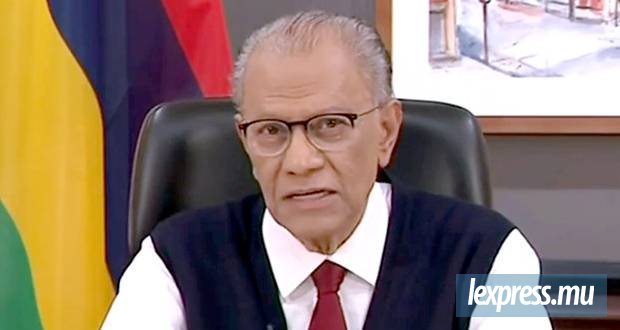
But we have no such spin masters in Mauritius. We only have appallingly incompetent “press attachés” in most ministries. Which explains partly why prime minister Paul Bérenger has taken the whip in his own hands after the government’s defeat in the by-election of Piton-Rivière-du-Rempart.
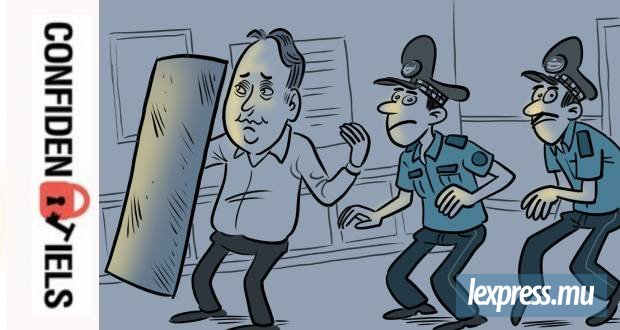
He started it by ascribing the country’s perception of a bad economic situation to press cartoonists. He then pressured the press through repeated public speeches, accusing journalists of not counterchecking their facts.
He went further in July when he stated, in a press conference, that an article concerning drug and mobile telephone availability as well as a “far west” behaviour of some armed inmates at the central prison was exaggerated.He announced an inquiry on this press article. The inquiry was carried out, despite the fact that, four days later, inmates raided the prison dispensary and left with hypodermic syringes; despite the fact that, since then, drugs, mobile telephones and sim cards have been seized on inmates.
Whatever happened to Inspector Tuyau and a lawyer inside the prison last week brought the proof of that “far west” behaviour. On this chapter, it is highly probable that the PM’s statement was the fruit of his being misled by advisers or high-ranking officials from the prison, who convinced him that the article was “exaggerated”. They had to save their skins and the PM bought their arguments. He did not have the faintest idea of the extent to which the journalist went, the number of freshly liberated prisoners, police and prison officers he met to countercheck facts and get a correct picture of the prison.
This leads us to another reaction of authorities to damaging press articles. It consists in conducting independent inquiries on facts published, sorting things out, acknowledging publicly the truth, devising remedial actions and implementing them in full transparency. The latter can lead to failure or success. But they at least give one clear result. They give public opinion the perception that problems are being addressed, and not shunned or hidden.
Unfortunately for Mauritius, the government’s path vis-à-vis the press is being copied by the private sector. Last week, the Mauritius Turf Club (MTC) took a scandalous step, denying a reporter access to press facilities at Floreal training track, the steward’s room and press box at Champ de Mars.
He is the third journalist to be thus “punished” by the MTC. We cannot say if these three journalists were right or wrong in their reporting? What we question is the power the MTC thinks it is vested with to thus treat the press. How can Jean-Michel Giraud wield such power and how can the MTC behave as a State within the State. From where does it derive such horse power? The MTC may be a private club but public’s money is at stake on every racing day. The MTC should remain under close scrutiny from the press and should learn to accept criticism and the civilised way of handling misreporting. Any alternative way will give the public a definite perception: the MTC may have too many things to hide.
Publicité
Publicité
Les plus récents