Publicité

Reading the Ocean
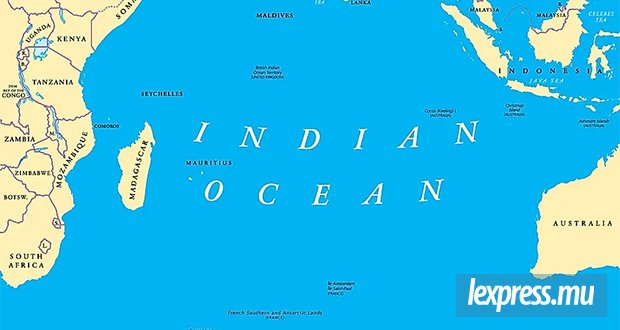
The Prime Minister’s statement to Parliament on Tuesday was reassuring in one respect. Mauritius has quietly assembled an extensive network of maritime defence and security partnerships, spanning regional organisations and trusted partners including India, France, South Africa and the United States. Together, they provide frameworks for intelligence sharing, maritime surveillance, search and rescue, joint training and the fight against organised crime. They do not, as the Prime Minister made clear, concern the exploitation of natural resources within Mauritius’s Exclusive Economic Zone. That answers yesterday’s political question. It should prompt tomorrow’s strategic one.
Are agreements enough for the Indian Ocean that is emerging? The answer, increasingly, is no. The region is undergoing its most profound strategic transformation since the end of the Cold War. The conflict around Iran did not create this shift; it exposed it. The temporary disruption of shipping through the Strait of Hormuz reminded governments that maritime chokepoints can rapidly become geopolitical pressure points, with consequences extending far beyond the Gulf. For Mauritius, whose economy depends on secure sea lanes, events thousands of kilometres away can quickly become domestic economic risks.
The world’s leading strategic think tanks are converging on the same conclusion. Maritime competition is no longer defined primarily by fleets and firepower. It is increasingly shaped by information, technology and intelligence. The decisive advantage belongs not to the country with the largest navy, but to the one that sees first, understands first and acts first. This changes how small maritime states should think about security.
Piracy remains a concern, but it is no longer the defining threat. Today’s risks are more diffuse and more difficult to detect: cyber-attacks on ports, GPS spoofing, sanctions evasion, illicit trafficking, illegal fishing, unmanned systems and vessels that deliberately disappear from digital tracking. These are the instruments of what strategists call grey-zone competition – coercion below the threshold of war.
Responding to such threats requires a different capability. The essential asset is no longer simply a patrol vessel. It is maritime intelligence. Mauritius already possesses many of the building blocks. It exchanges white-shipping information with India, participates in regional maritime information-sharing mechanisms and cooperates closely with several partners. Yet these remain largely separate initiatives. The next stage is integration.
A genuine national maritime intelligence architecture would fuse data from customs, the National Coast Guard, the police, fisheries authorities, the ports, financial investigators and cyber-security agencies into a common operating picture. Artificial intelligence can now analyse satellite imagery, vessel movements and commercial shipping data in real time, identifying anomalies long before they become incidents. For a country responsible for one of Africa’s largest Exclusive Economic Zones, such technology is no longer a luxury. It is a strategic necessity.
Cyber-security deserves equal prominence. Ports have become digital infrastructure. A sophisticated cyber-attack could immobilise trade as effectively as a blockade. The distinction between maritime security and digital security is disappearing. Nor should Mauritius underestimate the strategic value of its geography. Positioned between the Gulf, eastern Africa and Asia, it is well placed to become a regional hub for maritime information and analysis. In an era when intelligence increasingly determines influence, geography alone is no longer enough. It must be matched by capability.
The Prime Minister’s parliamentary reply demonstrates that Mauritius has invested wisely in partnerships. The next investment should be in turning those partnerships into a coherent national intelligence ecosystem. Maritime security can no longer be measured by the number of agreements signed or patrol boats acquired. It should be measured by how quickly the state can detect emerging threats, share information, anticipate disruption and protect the sea lanes on which its economy depends. The Indian Ocean is becoming one of the defining strategic theatres of the twenty-first century. Mauritius cannot change that reality. It can, however, decide whether to observe it – or help shape it.
Publicité
Publicité
Les plus récents