Publicité
Absenteeism: causes and proposals for corrective action
Par

Partager cet article
Absenteeism: causes and proposals for corrective action

Successive governments have sidelined the problem of absenteeism when everybody has been expecting a radical corrective action from the ministry. This endless expectation has converted an act of indiscipline into a common feature of school life enjoying the conspiracy of parents, pupils and teachers. Parents have tacitly submitted to their ward?s report purporting to the holiday the school takes from work. A few teachers have been alleged to be discouraging tenacious pupils from coming to school because attendance is low. Lessons can be run only in full attendance classes not for five or six stray sheep of a scattered flock. Today we all join a chorus of despairing spectators agonised by a state of affairs beyond control.
Disaffection from school touches 25 to 75% of the school population according to time-table arrangements, pressure groups in which individual students get caught within or outside the school, weaknesses of character making reasoned choices of young people difficult. Curricular delivered in a - dry as dust manner - and poor teaching that does not engage difficult and recalcitrant learners? interest cause the school to be repulsive and unattractive. Attendance has become an object of choice as opposed to compulsion in a morally stable society. The loss of parental control, in fact of family control, and the rise of greater and greater individualism resulting from awareness of personal rights have compounded the strained relationship between our youth and the school as an institution.
We have faced all these changes with a conservative mind proper for an irrelevant past and have at no point realised that new times need new attitudes and new contingencies. A child who is aware of his rights cannot be treated as a non-entity in the family. His opinions and participation in decision-making matter. Learners bring to the formal school a renovated mind while our staff and school leaders are expecting from our youth a behaviour fit for the sixties. The child?s obedience to the teacher or to rules of the school cannot be taken for granted.
The home has new living configurations. There is an absence of accountability to parents in an atmosphere where dialogue is limited to routine daily preoccupations like food, tuition fees, pocket money etc. We have brought up a young generation of whom a few are hedonistic, pleasure-seeking through indulgence in drugs, alcohol and sex at a premature age. The amount of pocket money given to them opens the avenues of pleasure at an age when certain actions were taboos for adults. Fewer and fewer youth have a strong character.
The leisure industry has spawned varied forms of entertainment that make a school day very short - pool houses, bowling etc. Syllabi are not fully covered in schools or they are covered so fast that most of the work is completed before the end of the second term.
Private tuitions are more promising not because they provide opportunities for more effective learning, but simply because they are an alternative. Why waste time at school if the same syllabus can be covered elsewhere with the same teacher? We have, in fact allowed the situation to worsen to such an extent that it now becomes not just the problem of schools, but also a national scourge that has made the European Union withdraw financial assistance to the ministry.
Tentative solutions
Is it not strange that a student population that is absent for no rhyme or reason was present on the fateful day of torrential rains? I contend that there are signs within the school calendar that demonstrate that attendance can increase in classes. In fact, tests attracted students on Wednesday 26th March. Is it not time to valorize work done by the student at school? Certain issues must be analyzed to seek a solution.
Should we not start valorizing at lower secondary level the work done at school? We must create habits that lead to school attendance because man is a creature of habits and habituation gives an act an almost ritualistic and compulsory and compulsive character.
Why is attendance low for language classes and not for science practicals? How should theory classes be held? Is it not a sign of revolt against the boredom and drabness of the traditional class? Is it not time for schools to rethink pedagogical strategies?
Shouldn?t parental participation in the upbringing of their wards become a subject for national debate? We cannot allow the dichotomy between home and school to continue. We should not go to the extent of imposing fines on parents whose children bunk classes, as was the case in UK a few years ago. We cannot let parents go on thinking that they have handed over their responsibility to the school. Last year the ministry of Women?s rights, Child development and Family welfare joined hands with the ministry of Education to track down those who play truant and straggle or loiter in streets, traffic centres, bungalows, pool houses, etc?
Shouldn?t the local police help to discourage absconders? Shouldn?t the ministry of education come up with a policy governing attendance required for promotion, taking international or local examinations? Shouldn?t rectors refuse to give testimonials to students who have exceeded a consensually agreed upon number of days of absence? Shouldn?t our schools stop being insensitive to repeated continuous absences of pupils?
We are living different times and the foundations of the school as a sacred institution must be strengthened. We cannot play truant with our own conscience. Unjustified absence is yet another form of indiscipline. Strong measures have to the taken to stop the desecration of the school. De-schooling society must not become a revisited experience.
by
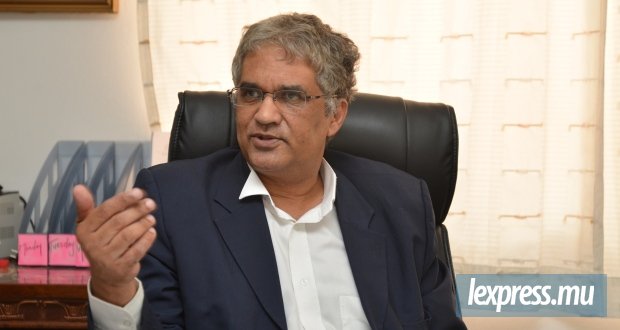
Santosh Kumar MAHADEO, former director of Curriculum, Ministry of Education
Publicité
Publicité
Les plus récents