Publicité

Mind the ?R-word?

by Akilesh ROOPUN
?The Economist? has this wholly unscientific but yet no less practical yardstick to gauge the prevailing mood in the economy. They are able to calculate through the use of a search engine the number of times the word ?recession? appears in newspapers over a given time period. The more it is mentioned in the press, the higher are the chances that the economy will eventually slip into rough waters.
In a speech he gave last week as outgoing chairman of the Mauritius Chamber of Commerce and Industry (MCCI), Marday Venkatassamy referred to the ominous word twice. That was enough to spark concern over the true health of the economy. How immune are we from the threats of negative growth rates?
An economy is technically in recession when its size shrinks for two quarters running. There are some good reasons why we should not be worried about that possibility, at least not for the moment. Gross Domestic Product (GDP) has been growing at a rate of 4% on average over the past four years, whilst a healthy 5.1% growth is forecasted for 2005.
But the MCCI says it is more worried about the growth momentum that has more medium-term implications. Since tougher times loom ahead, the economy should now be expanding at a greater pace to ensure greater resilience in the future.
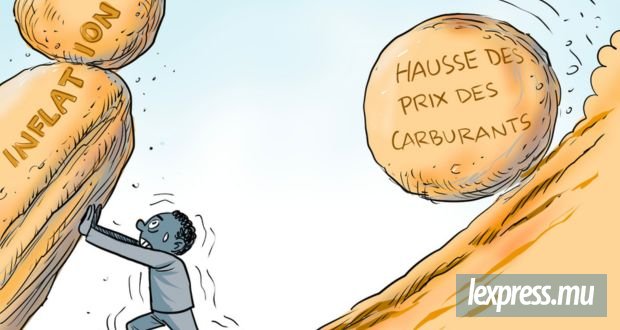
Mr. Venkatassamy uses the analogy of a car driving its way uphill. If the vehicle is slowing down while moving uphill, there are real risks that the momentum is not enough to take it to the top. At some point, gravity can even make it stop and roll back.
With the weakening of the traditional pillars of our economy, namely garments and sugar, the risks that we are heading for recession should not be understated. Especially if new activities such as IT, BPO and the like are not turning into significant engines of growth as hoped for.
Furthermore, private investment, though on an increase in absolute terms (5.5% in 2004), is falling as a percentage of GDP (22.6% in 2003 to 22.3% in 2004). A declining investment rate translates into a lower impact of investment on economic growth. Since capital formation in the private sector is a more sustainable contributor to lasting economic expansion than household expenditure (which by the way grew by a cheerful 6.7% in 2004), worries about a weakening growth momentum are not superfluous.
The ambition of the country is to generate growth rates of at least 8% per annum to join the league of high-income nations in the medium term. This is the only way forward if we want to avoid the prospect of an overall economic decline.
The United States sank into recession in early 2001, ending ten years of growth that was the longest expansion on record of the world?s largest economy. However, it quickly jumped back on the strength of the massive investment in technology upgrading and productivity improvement that American businesses had made during the boom years. We don?t have this kind of track record here and we won?t survive even a mild recession.
Poor performance on employment and lacklustre economic activity are not bad for elections only. They are even more damaging for the ever-raging battle in world markets.
Publicité
Publicité
Les plus récents