Publicité
Hippisme
Un rapport met en exergue les faiblesses de la «Horse Racing Integrity Division»
Par

Partager cet article
Hippisme
Un rapport met en exergue les faiblesses de la «Horse Racing Integrity Division»
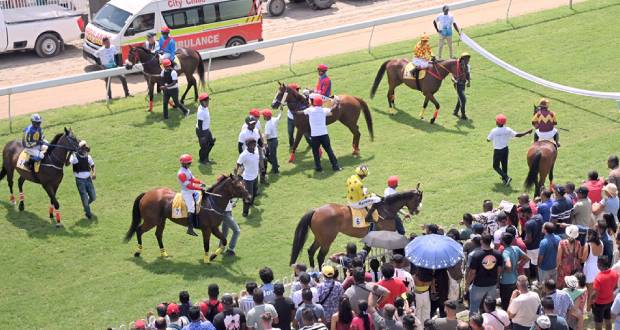
«L’express» publie en exclusivité et dans son intégralité un rapport rédigé de manière technique et circonstanciée par un ou plusieurs experts hippiques. Il dresse un bilan critique de la gestion des courses à Maurice durant la saison 2025. La précision des références, la maîtrise des règles internationales de courses et la qualité de l’analyse démontrent une connaissance approfondie du fonctionnement interne des instances de régulation et des pratiques de terrain.
Selon des informations concordantes, ce document serait déjà en possession de responsables du dossier hippique au plus haut niveau, tant au sein des autorités de régulation que des sphères décisionnelles concernées par la gouvernance du secteur. Son contenu dépasse le simple constat polémique et s’apparente à une analyse experte des risques systémiques pesant sur l’intégrité des courses mauriciennes. Le rapport met en lumière les carences au sein de la «Horse Racing Integrity Division» (HRID), pourtant créée pour restaurer la confiance après la dissolution de l’ancienne «Horse Racing Division». Malgré des moyens humains largement accrus, la saison 2025 aurait été marquée par des dysfonctionnements structurels, une application erratique des règles, des sanctions incohérentes et des enquêtes disciplinaires souvent jugées incomplètes ou juridiquement fragiles.
Les auteurs dénoncent également des manquements graves à l’intégrité des paris, notamment l’absence de contrôle effectif des changements de tactiques et d’équipement, et une gestion contestable des non-partants. Au-delà des aspects techniques, le document pointe une érosion préoccupante de l’indépendance et de la crédibilité de la HRID, évoquant des conflits d’intérêts, des nominations contestées et une proximité excessive avec certains acteurs historiques du turf. Le rapport souligne enfin que les problèmes observés ne relèvent pas d’erreurs isolées mais traduisent des défaillances systémiques, susceptibles de perdurer sans réformes profondes en matière de gouvernance, de compétence et de responsabilité.
A Critical Review of Racing Stewardship in Mauritius – 2025 Season
1. Introduction
(a) In 2025, the Horseracing Integrity Division of Mauritius replaced the former Horse Racing Division. The stated rationale for this change was that the industry required a fresh start and a new organisation to “clean up” racing.
(b) As the season is over, this report assesses the performance of the HRID from a racing perspective and opines whether it has achieved its objectives.
2. Team Investment
(a) The HRID operates with a workforce approximately four times larger than that of the former HRD.
(b) New roles were introduced, including Racing Analyst, Racing Specialist, and Deputy Chief Stipendiary Steward.
(c) Despite the significant increase in personnel, practical expertise in day-to-day race regulation declined when compared to the HRD. The lack of practical experience among the new appointees contributed to this decline, as evidenced throughout the season.
3. Lack of structure and Poor decision-making
(a) From the outset, the HRID demonstrated deficiencies in organisational structure, particularly in reporting lines and internal communication.
(b) Despite the massive employment, key operational roles, such as a permanent raceday secretary, were absent for significant portions of the season.
(c) Basic administrative matters, including the format and structure of the Stewards’ Report, caused ongoing confusion. The report format was amended four times within the first 14 race meetings, undermining consistency, transparency, and public confidence.
(d) A review of official race footage against the Stewards’ Reports reveals repeated inaccuracies. Incidents were recorded despite no such events being observable on the footage, while numerous material incidents were omitted entirely.
4. Failure to enforce declared riding tactics
(a) In terms of the Rules where a horse is instructed to race differently to its established pattern, Trainers have a duty to report this to the Stewards for the benefit of the public; however, this was not done, directly prejudicing punters and benefiting insiders who had the knowledge.
(b) Throughout the season, clear and material changes of tactics were neither questioned nor sanctioned, despite their relevance to betting integrity.
(c) Notable examples include:
(i) RM6 – R7: Summer Snow was heavily backed and sent straight to the lead after being restrained on its debut; the horse subsequently won three races under similar betting patterns.
(ii) RM7 – R6: Itsrainingwilliam was ridden to lead at all costs.
(iii) RM12 – R6: Good Council was ridden to lead at all costs.
5. Inconsistent and unexplained sanctions
(a) Identical offences attracted materially different sanctions without explanation. Some examples include:
(i) RM3 – R1: Jockey D. Bheekary (Broadway Alley) received a six-meeting suspension.
(ii) RM4 – R3: Jockey R. Perez (Quatro Five Six) received a fourmeeting suspension and a fine of Rs50,000 for the same offence. No reasons were provided to justify these disparities. Additionally, other similar rides by Perez (RM5 – Transonic), R.K. Chumum (RM7 – Captain Lannister), Danielson (RM8 – Mystery Cache) and Taka (RM3 – Short Cut) received no comparable investigation or sanctions.
6. Failure to ride horses out to the end of the Race
(a) It is a jockey’s obligation to give their mount every chance to achieve the best possible finish. One of the most fundamental ways to achieve this is by ensuring they ride the horse to the end of the race. This is particularly significant when horses are in contention for placings as, failing to comply leads to owners and Trainers losing stake money and punters losing money if their backed horse fails due to lack of effort.
(b) Despite this vital requirement in racing, no investigation was conducted and/or sanctions in the cases of:
(i) RM1 – R8: Summer Snow (D. Mansour) finished third and prejudiced the second-place.
(ii) RM12 – R3: Quatro Five Six (R. Perez) finished fifth and prejudiced the fourth-place.
(iii) RM13 – R2: Short Cut (Y. Jogahir) finished fifth and prejudiced the fourth-place.
7. Equipment declarations and betting integrity
(a) The Stewards’ approach to equipment declarations was inconsistent and insufficiently rigorous. As a general Rule, equipment changes should not be allowed after betting has been opened as, the manner in which a horse is equipped can directly impact its performance. Despite this, the Chief Stipendiary Steward granted permission for the heavily backed Fencing Captain to race with a noseband only minutes before the start.
(b) Additionally, permission was granted for the following equipment changes after betting had opened but were not recorded in the Stewards’ Reports:
(i) RM1: Quatro Five Six to race with aluminium shoes (1 August);
(ii) RM6: Sugar Blast to race with aluminium shoes (11 September); and
(iii) At an inquiry into the scratching of Itsrainingwilliam (RM4), Trainer S. Gujadhur’s attention was merely drawn to the Rules regarding shoe declarations; no enforcement action was taken.
(c) Each of the aforementioned permissions were granted without sanction or consequence.
(d) The consequence of such a lackadaisical approach was an attempt at a huge coup with Superior Force. The coup was ultimately foiled by the Gambling Regulatory Authority (GRA) which cancelled the bets despite the legal basis for such cancellation was unclear. A precedent had already been set regarding equipment changes and the Chief Stipendiary Steward acted within his power to grant the change. Had the Rules been enforced correctly, it seems unlikely this event would have occurred. Trainer Hewitson was fined a total of Rs 50000 for a horse which held over Rs 1 million in bets. It is noteworthy that both offences were for the same action act therefore, is akin to double jeopardy in law. Subsequently, Trainer Mootien (also 1 horse) was fined Rs15000 however, Trainer R Gujadhar was fined Rs15000 for 4 horses.
8. Misapplication of interference Rules and sanctions
(a) The Stewards failed to properly assess degrees of interference and apply proportionate sanctions with further inconsistency noted in the cases of:
(i) Jockey Gates who received the minimum suspension for severe interference at his first meeting;
(ii) Jockey Perez received a one-meeting suspension for a second offence;
(iii) Jockey Mansour interfered with more than half the field, was charged under a more serious Rule, yet received only a three-day suspension; and
(iv) Jockey Gates later committed a third offence in the Maiden Cup causing severe interference to multiple runners but received only a two-week suspension.
(b) Suspension rules for horses were applied inconsistently for example, Royal Sovereign (RM7) was banned for the remainder of the season due to hanging however, High Key, repeatedly intractable in the straight, raced throughout the season without sanction.
9. Failure to identify issues on Race Day
(a) Racing Stewards are responsible for identifying and managing integrity issues on race day. Despite this, more than 90% of inquiries were not recorded in interim reports, indicating issues were not identified contemporaneously. This creates uncertainty over the integrity of inquires with the Press already reporting some matters were investigated only after its publication.
(b) Despite multiple Racing Analysts and Specialists, there are no records or reports of:
(i) Stable inspections.
(ii) Targeted raids on high-risk operations.
(iii) Pre-race monitoring of betting markets.
(iv) Post-race analysis of suspicious wagering activity.
(c) No enhanced race analysis beyond standard procedures was evident.
10. Misapplication of the Non-runner Rule
(a) Declaring non-runners after the race is one of the most significant expenses in racing as, the money which is refunded from the pools have no opportunity to be re-wagered. This leads to a significant loss in income and winnings for the public. Consequently, there was a movement internationally to standardise how this Rule should be enforced.
The Rules as written are aligned with this best international practice. In terms of the Rules, a horse should only be declared a non-runner if impeded by a handler or starting gate.
(b) The application of this Rule has not been correct. Examples of such incorrect applications include:
(i) RM5 – R3: Rainwater declared a non-runner despite losing ground due to its own behaviour.
(ii) RM7 – R1: Secret Circle declared a non-runner after reacting to the gate opening; no actual impediment occurred, resulting in a fivecent deduction
(iii) RM8 – R2: Catcha Dragon declared a non-runner despite no impediment; deduction was not reported.
(iv) Captain Arrow was reported as a runner because all four feet were on the ground; while correct, no such criterion exists within the Rules, which demonstrates a lack of understanding.
11. Objections
(a) One of the main functions of the Stewards on a race day is to manage the processes involving objections. However, the Stewards appeared to have difficulty managing the 2 more significant objections of the season. In this regard in:
(i) RM 4 – R6 (MERIDIUS and WILLIAM IRON ARM) such was the unprofessionalism that, the objection itself was not reported at all in the interim report but only in the final report where the report is illogical with no reasons provided on how the Objection Board arrived at its decision; and
(ii) RM 8 – R6 (TYRION LANNISTER and MAGNUM P I) the reading of the race itself was wholly incorrect. The Stewards only considered an incident at the 150m however, failed to consider the 2 incidents thereafter, which were even more significant. The consequences of which were that the matter was not considered adequately.
12. Failure to conduct competent inquiries
(a) The skill of race reading is the most prized possession of a Steward. However, in order to be an effective regulator, a Steward required to assess a race independently from the video footage, understands the versions of the Jockey and Trainer and where necessary then test the versions through questions and clarifications in order to ensure the accuracy of such versions. This primary function has proved to be a significant hurdle for the Stewards this season. The recordings from the matters and a review of the races illustrate that the Stewards have failed to conduct competent, structured, and procedurally sound inquiries. In this regard, central evidentiary questions were often never posed to the jockey or trainer, examples include:
(i) RM1: C. Segeon (Orange Red) – No question posed regarding whether the jockey took all reasonable measures to settle his mount.
(ii) RM1: Summer Snow – Jockey reported the horse reared at the start; footage shows the horse being restrained, unaddressed by Stewards.
(iii) RM2 – R7: Shah Akbar – Inquiry failed to question whether the jockey’s early placement was sufficiently decisive.
(iv) RM5: Nordic Prince – Jockey Schwarz “pulled up” this horse costing punters thousands; Schwarz received a 1.5-month suspension, mitigated due to career stage, age, and record, some of these factors are used for minors not in mitigation for Gr1 winning Jockey. Additionally, his riding in the straight was passive, non-vigorous and a significant variation from his norm however, this did not even form part of the subject matter of the inquiry. One of the major misses of the season.
(v) RM8 – QUATRO FIVE SIX matter, the inability of the Stewards to deal with the evidence in a competent and legal manner was exposed on Appeal when the Committee described the Inquiry as an interrogation and highlighted how the Jockey had been charged and found guilty on an issue no evidence was ever led.
(b) Additional inadequate investigations:
(i) R.K. Chumun’s ride of Captain Lannister (Barbé).
(ii) Zacatoo (RM9) – Horse afforded a soft uncontested lead; second jockey stopped riding visually before the turn; no questions asked.
(iii) RM14 – R6: After Press pressure, only Let’s Play Poker was investigated; no further action.
(iv) RM1 – Summer Snow debut put simply this horse was stopped on debut. It was subsequently ridden correctly and won its next 3 when heavily backed.
(v) RM5 – Catcha Dragon – Jockey failed to move earlier and rode non-vigorously; ignored.
(vi) RM11 – Multiple incidents including jockey fall; no further action despite video evidence.
13. Animal Welfare
(a) Up to RM14, there have been 629 runners, with 127 (20.22%) returning Veterinary Reports. This high proportion indicates potential weaknesses in the protocols governing which horses are allowed to race, raising concerns for the betting public.
(b) The issue of lax veterinary oversight was evident in RM6, when Orange Red was known to be lame more than a day before the race but remained in the declarations and was only withdrawn at the start. The horse’s welfare was compromised because, had it been scratched appropriately, the race would have been abandoned. This is an unacceptable international practice that undermines the credibility and integrity of racing in Mauritius.
14. Illegitimate appointments – Lack of credibility
(a) Under the 2024 Rules (applied in 2025), the positions of Judge and Handicapper are supposed to be appointed by the GRA Board. This was not followed.
(b) The Mauritius Turf Club (MTC) sourced a Handicapper from South Africa with no prior experience in the role and whose career was largely in commentary and auctioneering. His lack of practical expertise became evident in the season’s only handicapping appeal, in which his 10-point increase for a horse that ran second was deemed incorrect.
(c) The Handicapping Review Board cited the Handicapper’s lack of experience in Mauritian racing culture as a key reason for their decision.
15. Accountability and High-Risk Stables
(a) Despite numerous reports of non-runners, horses scratched at gates, shortage of handlers, unlicensed jockeys, and missing bookmaker cameras went unaddressed by HRID and TC Jockey Club (MTCJC).
(b) Analysis of the Foo Kune stable disciplinary record demonstrates systemic failures:
(i) RM1 – Wolf Mountain: Removed from sampling area before testing; chain of custody broken; no action taken.
(ii) RM1 – D. Mansour: Impeded more than half of the field in the Duchess; only suspended 3 race meetings; heavily backed horse won.
(iii) RM1 – Fencing Captain granted last-minute equipment correction; heavily backed horse won.
(iv) Superior Force: Attempted betting coup; potential winnings > Rs1 million; fine only Rs50000.
(v) Personnel misconduct: Joey Foo-Kune and Carl Hewitson verbally attacked GRA officials; no action taken. Stable employee fined Rs30k for Facebook post.
(vi) Bon Boyage positive test: Trainer Hewitson found not guilty.
(c) This stable was identified as “high risk” in the Parry Report but remains largely unregulated.
(Ndlr : La Cour suprême a conclu que les conclusions du rapport Parry à l’égard de Paul Foo Kune étaient “wrong in law” (incorrectes en droit), notamment parce qu’il n’a pas eu l’occasion d’être entendu par la commission d’enquête.)
16. Conflicts of Interest, Questionable Independence and Erosion of Trust
(a) The HRID is intended to be an independent organization which is government funded in order to protect the public. However, the personnel employed by the GRA for the HRID all appear to have strong ties to the MTC and in most cases were employees, in this regard:
(i) despite an alleged independent selection process, the Board of the HRID racing stewards selected comprises of three members of the MTC and one ex-employee of the same MTC. Such was the desire to appoint a former employee as a Deputy Chief Stipe, the criteria for vacancy was subsequently changed in order to her to be eligible;
(ii) the majority of the Racing Specialists and Analysts currently employed all have some ties to the MTC or were employees of the Club; and
(iii) all officials which had no ties to the MTC appointed under the GRA such as the Mauritian Stipendiary Stewards and Judges were removed and replaced by effectively MTC staff with the exception of the HRID Veterinary Surgeon, a former MTC employee, who was retained. When weighed against the other candidates who applied for the various positions advertised, some of whom were significantly more qualified, it leads one to the inescapable conclusion that, the Selection Committee of the GRA was strongly under external influence from either the MTC or persons representing the Club. This coupled with the pro-MTC decision-making seen in the racing season, suggests that the HRID is merely a means to move the wages of the MTC onto the books of the GRA and for the public expense. This erodes public confidence and is contrary to the independence sought in the Parry Report.
(b) No report or investigation has been conducted following the Robin Ramburn’s report (Chairman of the Appeal Committee) regarding the amateurism of the Stewards and their fundamental violation of the right of Jockey R Perez.
(c) No investigation has been conducted into Trainer R Gujadhur’s interview on 6 December 2025.
(d) The Stewards have failed this season to adopt a new set of Rules, policies, programing, fixtures structures, handicapping guidelines, etc as promised. Instead all the policies of the previous regime was used without amendment and which lead to such confusion that the GRA had to provide a communique explaining that the Rules of 2024 which were designed specifically for the HRD was somehow applicable to the HRID also.
(e) Positive matters are some of the most important matter for inquiry as, this ensures an even playing field for all licensed persons. However, in the space of a few weeks, the Stewards irrationally accepted the explanations of Trainer C Hewitson which led to the case of Bon Boyage being thrown out without action. Shortly thereafter, in the case of Jockey B Sooful, the Stewards deliberately voided the internationally principles of strict liability in sport in order to find him not guilty despite him providing a sample containing the substance cocaine.
(f) The structure for the entire season appeared disjointed with the program for race meetings being published later, the MTCJC on numerous occasions taking decisions independent of the GRA only for there to be public retractions and the exact content republished under a different name, the Stewards Reports were scant and poorly written, the journalists were excluded from the Boardroom to create further secrecy regarding decision-making and appointments of personnel were made unreasonably late with the Head of the HRID arriving when the season was almost over.
17. Conclusion
(a) Taken collectively, these matters demonstrate systemic failures in stewarding competence, consistency, and application of the Rules.
(b) The issues are not isolated errors but repeated deficiencies across race meetings, offence types, and decision-making categories.
(c) While the HRID was established to restore confidence and integrity to Mauritian racing, the performance of the Racing Stewards during 2025 materially undermined those objectives.
(d) Without significant reform in training, structure, accountability, and oversight, the integrity risks identified will persist.
Publicité
Publicité
Les plus récents