Publicité
Digested week
Public sector - Health : The widening gap between vision and reality
Par

Partager cet article
Digested week
Public sector - Health : The widening gap between vision and reality
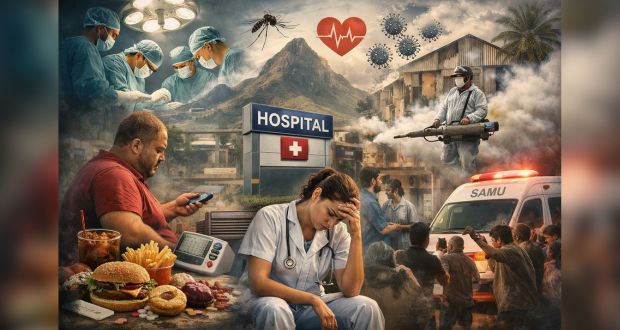
© AI-Generated by Microsoft Copilot.
Mauritius likes to present its public health system as a regional success story – modern hospitals, expanding specialised units, international partnerships and a promise of free care for all. On the surface, the system appears modern, ambitious and forward-looking. But, behind this polished façade lies a more complex and uncomfortable reality: a health sector under pressure, a workforce stretched to breaking point, and a population facing rising health threats that infrastructure alone cannot solve.
The official narrative
The Ministry of Health recently highlighted a series of achievements meant to demonstrate the country’s progress. Last week, the inauguration of the Trauma and Emergency Unit at Dr A.G. Jeetoo Hospital, the first kidney transplant performed locally, and the expansion of specialised centres for diabetes, stroke and trauma were all presented as signs of a system moving confidently into the future.
These developments are real and meaningful. The new renal transplant unit, for instance, reduces the need for costly overseas treatment and marks a major step in building local surgical expertise. Similarly, the roll-out of sterile male mosquitoes and largescale larvicide operations show a proactive approach to vector control. Mauritius also maintains active surveillance for emerging diseases such as Mpox and hantavirus, working with laboratories in South Africa and Madagascar.
On paper, the country appears vigilant, prepared and increasingly self-sufficient. But public health is not measured only by infrastructure or isolated successes. It is measured by outcomes, resilience, equity – and the lived experiences of those who keep the system running as well as those who rely on it for better health and welfare.
Hidden systemic fragility
Mauritius faces one of the highest burdens of non-communicable diseases (NCDs) in the world. One in three Mauritians is hypertensive. National data show a steady rise in prevalence, from 28.4% in 2015 to 35.1% in 2021, with women aged 65–74 particularly affected. Yet only 60% of patients receive treatment, and nearly half of them fail to control their blood pressure effectively. Mauritius lacks a national registry to track new cases, making it difficult to assess the true scale of the disease.
More than 20% of adults are diabetic. Among adolescents, 44% are prediabetic, the highest rate ever recorded globally. Obesity continues to rise, affecting both children and adults. These numbers reveal a silent epidemic that no new building can fix. They point to deep structural issues: unhealthy diets, sedentary lifestyles, limited health literacy, and insufficient early detection. The Ministry of Education is just now strengthening School Health Clubs, providing funding and a structured framework to promote physical activity, nutrition, mental health, prevention, and health literacy across schools.
At the same time, communicable diseases – once thought to be largely under control – are resurging. Chikungunya, dengue and leptospirosis have all reappeared with force. The 2026 leptospirosis outbreak, with six deaths among 21 cases, exposed gaps in environmental health, rodent control and early diagnosis. The minister himself acknowledged that Mauritius faces a more virulent strain than neighbouring islands, but the high mortality rate also reflects late presentation, comorbidities and weaknesses in community-level surveillance.
Human resources crisis
Behind every public health system are the people who make it work. In Mauritius, they are exhausted. Nurses report working 24- to 48-hour shifts without rest. Emergency doctors and frontline personnel fear for their safety during field interventions. The union further denounced the nonpayment of overtime for over a year and a lack of communication from the Ministry, noting that their letters “remain unanswered”. Many professionals are emigrating to Australia, Canada and the UK, attracted by better pay and safer working conditions.
The result is a vicious cycle: fewer staff → heavier workloads → burnout → more resignations → even fewer staff. Mauritius has 36 nurses and midwives per 10,000 inhabitants, above the regional average, but insufficient for an ageing population and rising disease burden. The gap between official staffing ratios and actual on-the-ground availability is widening.
Violence and insecurity
Healthcare workers frequently describe a gap between promises and action – especially regarding safety. The recent assault on a SAMU team in Petite-Rivière was not an isolated incident. Frontliners increasingly face aggression from patients, relatives or bystanders – often under the influence of alcohol or drugs. Hospitalised detainees pose additional risks. Unions warn that the situation is becoming untenable. They demand permanent SMF or SSU presence in hospitals, better coordination with police, and clear protocols for securing accident scenes before medical teams intervene.
The psychological toll is heavy. Although the Minister of Health has condemned violence against healthcare workers and highlighted legal penalties of up to five years’ imprisonment, the latter say they are still waiting for concrete protective measures. As one union leader put it: “Every healthcare worker has someone waiting for them at home. When we feel unsafe, our families feel unsafe too.” A recent study also showed that burnout among healthcare professionals was widespread and made recommendations for its prevention and mitigation.
Infrastructure without systems
Mauritius is building new units, but the deeper systems needed to support them lag behind. The promised e-health project is still in the making. There is no national registry for NCDs, making it difficult to track trends. Health promotion remains fragmented and underfunded. New facilities sometimes open without adequate staff, equipment or maintenance plans. The result is a paradox: modern buildings operating within outdated systems.
Mauritius invests heavily in treatment – dialysis, cardiac care, emergency units – but far less in prevention. Yet the country’s biggest killers are lifestyle-related diseases. Without a shift toward early detection, nutrition education, physical activity promotion and community-level interventions, the burden will continue to grow. Many reforms are announced with fanfare but take years to materialise.
At a crossroads
Mauritius stands at a pivotal moment. The country has the resources, expertise and international partnerships needed to build a resilient health system. However, true public health success will not come from buildings alone, but from protecting healthcare workers, strengthening prevention, modernising data systems, and addressing the social and environmental conditions that fuel disease. The choice is clear: either we align the reality with the appearance, or we allow the gap between them to widen until it becomes impossible to ignore. The future of Mauritius’s health system depends on which path we choose now.
Publicité
Publicité
Les plus récents