Publicité
Protection of children against sexual abuse: Is the legal framework enough?
Par

Partager cet article
Protection of children against sexual abuse: Is the legal framework enough?
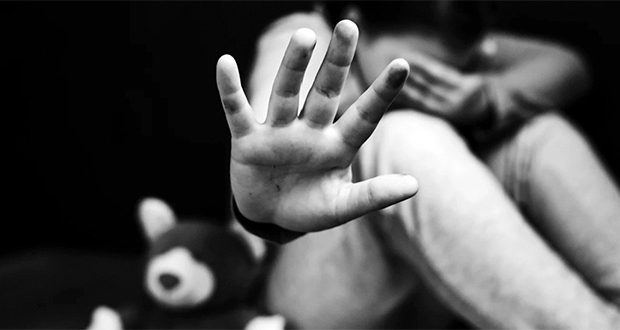
Every child has the right to feel safe.
In the wake of the incident that occurred in a school recently, and which had been widely reported and commented upon in the media, it is imperative to have a look at the law prohibiting child abuse and the manner in which such a reprehensible act should be dealt with. The United Nations Convention on the Rights of the Child (UNCRC) was adopted by the United Nations General Assembly in 1989. It was ratified by Mauritius in 1990.
In 1992, Mauritius also ratified the African Charter on the Rights and Welfare of the Child, adopted by the Organization of African Unity which was adopted in 1990. Following the ratification of the UNCRC and the African Charter, Mauritius set out to work on implementing the provisions of the two instruments in our legislation. This has been a long process culminating in the enactment of the Children’s Act 2020 on 14 December 2021, together with the Children’s Court Act 2020 and the Child Sex Offender Register Act 2020.
The legislation enacted in Mauritius affords a wide protection to a child who is defined as a person under the age of 18. Both the UNCRC and the African Charter require States to protect children from any abuse, especially sexual abuse. To that end, Article 19 of the UNCRC provides that States shall protect children from all forms of physical/ mental violence, injury, abuse, neglect, maltreatment, and exploitation (including sexual) while under the care of parents or guardians (Article 19). Article 27 of the States Parties to the African Charter shall undertake to protect the child from all forms of sexual exploitation and sexual abuse and shall in particular take measures to prevent: (a) the inducement, coercion or encouragement of a child to engage in any sexual activity; (b) the use of children in prostitution or other sexual practices; (c) the use of children in pornographic activities, performances and materials.
The provisions of the UNCRC and the African Charter have been incorporated in the Child Protection Act. There are several provisions on the protection of the child. A child should not be discriminated against marriage of a child or cohabitation with a child is prohibited; ill treatment, abandonment and corporal or humiliating punishment in regard to a child are punishable; abduction or removal of a child from a place of safety are prohibited. One of the most significant provisions of the legislation is the protection of a child from sexual abuse. Under the law, no person shall – (a) sexually abuse a child under the age of 16; or (b) cause, incite or allow a child under the age of 16 to be sexually abused by another person.
A child under the age of 16 shall be deemed to be sexually abused where the child has taken part whether as a willing, or an unwilling, participant or observer in any act which is sexual in nature for any gratification; in any activity of pornographic, obscene or indecent nature; or for any other kind of exploitation. Such acts are severely punished. Any person who commits the offence shall, on conviction, be liable to penal servitude for a term not exceeding 30 years where the child is physically or mentally handicapped. In any other case (b) to a fine not exceeding one million rupees and to penal servitude for a term not exceeding 20 years. It is quite strange that the legislator gives an option to a court of law to fine a sexual predator. This piece of legislation should be amended so that any child predator is jailed.
Child grooming is also punishable. Child grooming occurs in the following circumstances. Any person who after meeting or communicating with a child on one earlier occasion intentionally meets the child; travels, in any part of the world, with the intention of meeting the child in any part of the world; or makes arrangements, in any part of the world, with the intention of meeting the child to travel in any part of the world; and at the time he does so intends to engage in an unlawful sexual activity with the child or in the presence of the child during or after the meeting. The punishment for such an offence is 20 years’ penal servitude where the child is physically or mentally handicapped, and ten years in any other case.
‘Hush hush’ policy
Child abuse in any form appears to be a common occurrence in Mauritius. Many such acts are not reported for fear of the opprobrium it can inflict on the child and his parents. At times, the offence is treated internally by an institution or other organization, thus adopting a ‘hush hush’ policy. Any case of sexual abuse should not be subject of any internal determination. Sexual abuse of a child is a very serious offence and can damage a child for life and this is why the perpetrators should be referred to the police for a proper investigation and prosecution if the evidence so warrants. The most complex aspect resides in the fear of the child or the fear of shame of the parents to report the matter. The Children’s Act 2020 in Mauritius mandates that any person who has reason to believe a child is suffering or is likely to suffer abuse, including sexual abuse, must report it to authorities. The Act prohibits sexual abuse of children under 16 and mandates immediate reporting to ensure protection.
Any person who performs professional or official duties with respect to children, or any other person, has reasonable grounds to believe that a child with whom he is in contact with has been, is being or is likely to be exposed to harm shall report the matter to the supervising officer or to the Police. Any person who fails to comply with subsection (1) shall commit an offence and shall, on conviction, be liable to a fine not exceeding Rs 200,000 and to Imprisonment for a term not exceeding five years.
Professional or official duties include duties performed by health care professionals, including medical practitioners, nurses, psychologists, dentists, pharmacists, occupational therapists and administrators of hospital facilities; employees of child care institutions, educational institutions, reform institutions or places of safety; social workers, family counsellors, psychotherapists, probation officers and guardians ad litem; or any other person who, by virtue of his employment, profession or occupation, has a responsibility to discharge a duty of care and support towards a child.
The main issue is to get the victim of the abuse to report the matter. In a study by Darkness to light (End Child Sexual Abuse), Child Sexual Abuse Disclosure: What Practitioners Need to Know, February 2016, the authors consider that ‘research shows that many children do not disclose sexual abuse immediately after the abuse occurs. In fact, many children do not disclose the abuse for years, if they disclose at all. Many adult survivors of child sexual abuse have never disclosed their abuse to anyone. Low disclosure rates are a defining factor in the issue of child sexual abuse. Low disclosure rates are a significant part of the problem that practitioners face when working to prevent or intervene in child sexual abuse’. The authors go on to say that ‘low disclosure rates mean that those working to intervene in child sexual abuse are not able to reach the entire population of abused children. Many children suffer in silence, without access to the services they need to mitigate the long-term consequences of abuse’.
Why would a child victim of child abuse fail to report the matter? Many studies have shown that a child will not report for a variety of reasons, like threats to the child, fear of the author of the sexual abuse; a lack of opportunity, a lack of understanding of child sexual abuse or a relationship with the author of the offence. Refusal report includes shame and fear of causing trouble in the family. Many children fear their parents’ reaction and others do want to upset their parents.
Though the law punishes many forms of sexual abuse, there is still a long way to go to compel more early disclosures. The Ministry of Gender Equality and Family Welfare, the Ombudsperson for Children and all other stakeholders owe it to our children to educate them and devise ways and means to better protect them. Protection also means denouncing sexual predators.
Publicité
Publicité
Les plus récents