Publicité
Interview of…
Olivier Hein : “Small states survive not through power, but through agility, law and narrative”
Par
Partager cet article
Interview of…
Olivier Hein : “Small states survive not through power, but through agility, law and narrative”
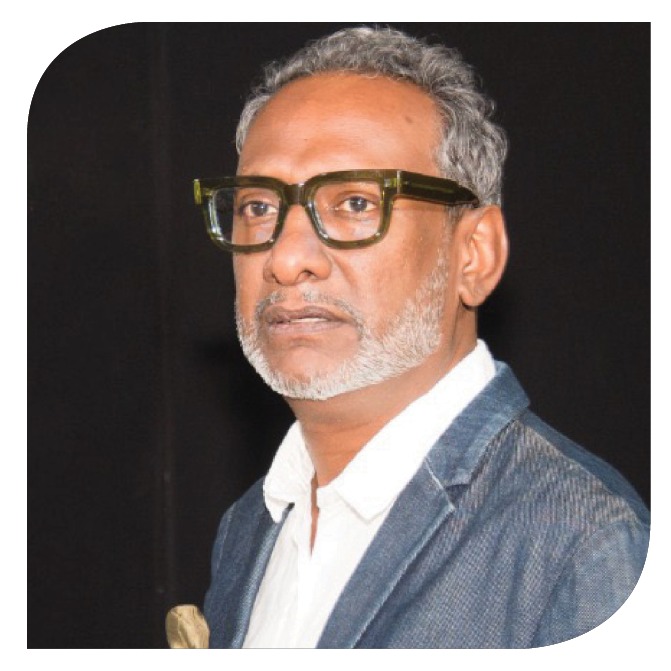
Olivier Hein, former diplomat and author of “Star and Key”.
Historian and former diplomat Olivier Hein argues that Mauritius is a strategic crossroads that has shaped global history. Raised between Mauritius and the United Kingdom, Hein served with the United Nations, the Organization for Security and Co-operation in Europe and the British Foreign Office. His book “Star and Key” (Hurst) traces Mauritius’ history from prehistory to the present, highlighting its strategic position along major maritime routes. Hein’s recent works include “Borneo: The History of an Enigma” and “Mother of the World: The Remarkable History of Turkmenistan” (2026). In this interview with Nad Sivaramen, he reflects on Mauritius’ place in today’s shifting geopolitical landscape.
? In your book “Star and Key”, you describe Mauritius as a “prized colonial chess piece.” In today’s geopolitical context—marked by the rise of India, China’s maritime ambitions, and renewed Western strategic interest—do you see Mauritius once again becoming a central square on the global chessboard of the Indian Ocean?
Arguably, Mauritius never really left the chess board, and the irony is that the same logic that drove the Dutch, French and British to seize it in succession still operates today. The only difference is that the players have multiplied. The phrase “Star and Key” was coined by the British because Mauritius sat astride the maritime routes linking Africa, India and East Asia; those same sea lanes now carry much of the world’s trade and energy. India now views the island as both a cultural extension and a strategic buffer. China has poured immense investment into its ports, infrastructure and more. The difference today is that Mauritius is no longer a pawn of empires but a sovereign state that nominally gets to choose who sits beside it. The challenge (and it is a real one) is to turn that “chessboard” status into leverage rather than vulnerability: to be a rule-maker in regional forums, not merely a square others move across.
? You have worked as a diplomat in places as diverse as Kosovo, Turkmenistan and the United States. How has your diplomatic career shaped the way you interpret Mauritian history— particularly the island’s long experience of navigating between competing powers?
Diplomacy, for all its occasional frustrations, does at least teach you to read the room: understanding who really has leverage, who is merely giving the impression of confidence that they don’t really possess, and who might be negotiating from pure fear. Working in places like the UN in New York, Kosovo or Turkmenistan teaches you how small states learn to survive in the shadow of larger ones: by using agility, maximising the use of law and maintaining a powerful narrative. When I look back at Mauritian history through that lens, I see a small island that has always been extraordinarily skilled at the art of managed dependency: playing off rival empires, using treaties and trade to carve out room for manoeuvre. The Mauritians learnt very early that survival requires knowing which power is ascending and how to be useful to it. That is not cynicism; it is a particular kind of political intelligence. Since its discovery, Mauritius has seldom had the luxury of isolation, so its skill has been to turn exposure into opportunity. My time watching post-Soviet states navigate between Russia, China and the West only reinforced that reading.
? The unresolved legacy of the Chagos Archipelago remains one of the most sensitive geopolitical issues in the region. From a historian’s perspective, how does the Chagos saga fit into the longer story of Mauritius as a strategic “Star and Key” in imperial and postcolonial politics?
The Chagos story, sadly, is not an anomaly; it is the latest chapter of a very old book about strategic islands and distant decisions. When the world was all about empires, territories were rearranged to suit naval routes and military priorities, never the people who lived on them. The expulsion of the Chagossians in the late 1960s and early 70s is a story that could have come from the bleakest chapters of the 19th century … except it happened in living memory. From a historian’s perspective, it reveals something important: the formal end of empire does not mean the end of imperial logic. What feels different today is that international law and global public opinion now play a far bigger role in how such disputes unfold. The recent moves toward restoring Mauritian sovereignty show that moving slowly through the courts can work. But the ultimate test is not just legal recognition; it is whether the Chagossians themselves can return. Chagos remains both a wound and a test case: can a small state like Mauritius rewrite an imperial ending?
? Today the Indian Ocean is often described as the new centre of global power politics. How do you see Mauritius positioning itself diplomatically between major actors such as India, China, the USA and France?
With considerable skill and considerable anxiety, in roughly equal measure. Mauritius has traditionally practised a form of quiet multilateralism, which in reality has meant maintaining strong historical ties with Europe, deep cultural connections with India, growing economic links with China and more besides, while formally remaining non-aligned. Historically, even when it had little agency of its own, the island survived and ultimately thrived by never putting all its bets on a single nation. I would argue that that logic still applies, but it works best in purely peaceful times. The question is what happens when the great powers start demanding clearer allegiances, as they increasingly are. (...)
? Mauritius has produced remarkable writers—from Marcel Cabon to Ananda Devi—whose work reflects the island’s layered identity. As both historian and storyteller, how do you see literature shaping the way Mauritians understand their own past?
Profoundly, and arguably more than formal history does. Mauritian literature has often done what official histories could not: giving a voice to those who were silent in history books. Often this has branched into broader features of Mauritian society, and Ananda Devi for example has not shied away from demonstrating uncomfortable fractures in Mauritian society (gender, class, perceived harmony, etc.) with a precision that no diplomat or historian could achieve. Mauritian fiction has allowed its people to inhabit multiple memories at once, with each carrying a different history. Literature on a small island does something particular and powerful: it gives people permission to say out loud what official culture prefers to leave unsaid. To that end, as a historian, I see literature as more of a parallel archive; it doesn’t replace documents, so much as reveals the starker emotional truths hidden behind them. The challenge I set myself in writing Star and Key was to try to write history with some of that same honesty: I was frankly rather tired of the sanitised version that serves tourism, and I felt the real, complicated and sometimes brutal story needed to be retold.
? Your book emphasises Mauritius as a meeting place of civilizations—African, Indian, European and Chinese. Do you think this cultural pluralism is Mauritius’ greatest strength, or does it remain a fragile balance that requires constant political imagination?
I would say both, and to pretend otherwise would be a little dishonest. Mauritius’s pluralism is its greatest achievement but also an ongoing project. The island was never “naturally” multicultural; it was assembled through slavery, indentured labour and colonial hierarchy, and those stark realities don’t vanish by themselves. The fact that an island with no indigenous population became home to Africans, Indians, Europeans and Chinese, and managed to hold together as a functioning democracy, is not a small achievement; plenty of far larger nations have failed at it. Pluralism works here partly because each community has learnt to share power in a very precise calibration. If you disturb that calibration, whether via inequality, demographic shift or demagogy, that well-earned outer casing of harmony becomes more fragile than it looks. Most Mauritians are of course well aware of that. From my experience elsewhere, what always turns diversity into sustained strength is sustained political imagination: that might mean institutions that protect minority rights, or an education curriculum that tells everyone’s story, and a peace of mind among the public that leaders are resisting the temptation of ethnic arithmetic when devising policy. Pluralism will always be a strength, but the price to pay for it is an eternal vigilance that it is being constantly worked on, and not taken for granted.
? Beyond geopolitics, Mauritius faces environmental pressures–from coral degradation to climate change. How does the island’s environmental history fit into the broader narrative you describe in “Star and Key” ?
It is inseparable from it, and sadly that story began almost immediately. The first thing the Dutch did when they arrived in the late 16th century was start cutting down the ebony forests. Many endemic species, not just the dodo, were gone within a century of human settlement. The transformation of the island’s ecology from wilderness to plantation is the physical expression of the same forces that shaped its human history: extraction, monoculture and the subordination of long-term resilience to short-term profit. Throughout Star and Key, my aim was to try to show that ecology is not a backdrop to political history but in fact one of its main actors: after all, whoever controls the land, water and reefs usually controls the island’s future. Today’s reality of coral bleaching, coastal erosion and forest degradation are merely the latest chapter of that same story. Small islands feel global environmental shifts earlier and more intensely than most places. Mauritius cannot afford to treat environmental history as a separate subject from political history. For a nation that describes itself as “ocean state”, the two are, to my mind, one and the same argument.
? Your work blends rigorous historical research with a narrative style that reads almost like an adventure story. Was this a deliberate attempt to make Mauritian history accessible to a global audience?
Entirely deliberate! Mauritius has a history full of cyclones, shipwrecked pirates, naval battles, spies and revolutions: there’s nothing dry about it. I wanted the book to be read by the Mauritian diaspora in London or Melbourne as readily as by a historian in a university library, and I wanted readers in Delhi, Paris or Beijing to feel that this small island sits somewhere inside their own global story. Popular history is not lesser history. Some of my favourite authors are narrative historians who have proved that rigour and readability are not in tension. Mauritius is a place where the history of empire, migration, ecology and sovereignty converge on a speck of land in the middle of an ocean in often spectacular ways. There is genuinely dramatic material to deal with. If people are gripped by the narrative, they are more likely to stay for the nuance. My job was simply not to flatten it.
? If Mauritius was once the “Star and Key” for empires navigating the Indian Ocean, what should its role be in the 21st century? A financial hub, a diplomatic bridge between continents, or perhaps a cultural voice reminding the world how small islands can shape global history?
All three things you mention, but it’s the combination that is the point. The 21st-century Star and Key has the chance to be a ‘connector of flows’: finance, law, data, culture and more. The financial hub role is real and unquestionably valuable, but still vulnerable; any shift in international tax rules, for example, could undermine it overnight. The diplomatic bridge role is more durable because it is rooted in a unique geography and demography: no other country sits at that intersection of African, Indian and European worlds. This is where small states like Mauritius can come into their own: acting as connectors precisely because they are not seen as a threat by those larger, globally ambitious powers. But the cultural voice may be the most enduring asset of all. Small islands have often shaped global history out of all proportion to their size: think not just of what came out of Mauritius but also Malta and Singapore during the age of sail. The goal therefore should be a role that is profitable, principled and plural: not just one more tax haven or transit point on someone else’s map, but a conscious actor reminding a distracted world how diversity, pragmatism and strategic imagination can produce something extraordinary.
? Mauritius often prides itself on being a bridge between continents and civilizations. But bridges can also become places where everyone passes without stopping. Has Mauritian diplomacy been too cautious—too eager to please every power in the Indian Ocean—rather than asserting a clearer strategic voice of its own?
There is perhaps some merit in that critique, and a risk that in trying to offend no one, Mauritius could become indispensable to no one. That said, the island has been extraordinarily good at not making enemies, which from my experience is a genuine diplomatic art, but sometimes I get the impression that it is somewhat less good at articulating the even harder part, which is what it is actually for. Mauritius’s non-aligned tradition made enormous sense in the Cold War. Whether it remains adequate in a world of sharpening alignments is a real question. A bridge is most useful when it has tolls and rules, not when it is simply a free passage, and as I researched this book, what became clear was that Mauritius’s most successful historical moments came when it articulated clear interests and built coalitions around them. Mauritius has the credibility, the relationships and the historical standing to be a genuine voice on Indian Ocean governance, on small island climate justice, on the rights of diaspora communities worldwide. That is genuinely amazing for such a small island. But the key is asserting those priorities without losing the flexibility that has historically been its strength.
? Mauritius has fought tirelessly for the return of the Chagos Archipelago in the name of sovereignty and historical justice. Yet some critics argue that the island’s economic model—dependent on foreign capital, offshore finance and external markets—creates another form of dependence. Is Mauritius truly sovereign in the 21st century?
Sovereignty is always a matter of degree. This is as true for Mauritius as it is true for most nations, and very few countries these days enjoy complete economic autonomy. The struggle for Chagos has been a powerful journey of historical justice and legal sovereignty, and it matters enormously. But fighting for Chagos in the name of sovereignty while simultaneously designing elements of the economy around the preferences of foreign investors is a tension that deserves honest acknowledgement. Yet equally true is that sovereignty today is less about flags on maps and more about room for manoeuvre, whether that means in technological, economic or environmental matters. The Chagos campaign has amply displayed that Mauritius can sustain a long, principled fight when it chooses to. The follow-on question is whether that same determination can be brought to building a robust economic architecture that reduces dependence rather than merely rebadging it.
? Your book reminds us that Mauritius was once the “Star and Key” coveted by empires precisely because of its strategic location. If history teaches anything, it is that small islands in great oceans rarely remain neutral for long. In a world of renewed great-power rivalry, what is the greatest mistake Mauritian leaders could make today?
On the one hand it’s not really my place to say, but the history books suggest two potential and related risks, and they reinforce each other. The first is assuming that geography no longer matters, and that the strategic pressures which shaped this island for four centuries have somehow dissolved. They haven’t; if anything they have intensified. The second, and perhaps more dangerous, is assuming that the skills which served Mauritius so well in the past - nimbleness, studied ambiguity and the careful cultivation of every great power simultaneously - will be sufficient for what is coming. In periods of genuine great-power competition like today, quiet neutrality can sometimes look like weakness, and each great power, eventually, will demand a clearer answer. The mistake for Mauritius would be to drift passively while larger powers shape the region’s future, reducing Mauritius once again to being a prize rather than a player. I think the Mauritian leadership is well aware of this. Invariably, the best course tends to be neither reckless neutrality nor blind alignment, but a clear and transparent national strategy: “This is who we are, that is who and what we want to be, and these are the ends, ways and means of how we’re going to get there”. Once you have this, and communicate it, Mauritius is far less likely to be treated as a pawn on someone else’s chessboard, but more as a conscious actor with its own agency that understands geopolitics perfectly well, knows how to survive it, and knows exactly where it is going.
Between Diplomacy and History
Raised between Mauritius and the United Kingdom, Hein served as a diplomat with the United Nations, the Organization for Security and Co-operation in Europe (OSCE) and the British government, with postings in Kosovo, Turkmenistan, the United States and France. Those experiences, he says, sharpened his understanding of how small states navigate the pressures of larger powers — a theme that runs through his historical work. His book “Star and Key”, published by Hurst, traces the history of Mauritius from prehistory to the present day, arguing that the island’s location at the crossroads of major maritime routes made it a prized strategic outpost for successive empires. Hein has since broadened his exploration of overlooked histories. His latest works include “Borneo: The History of an Enigma” (Hurst, London, 2026), which examines the little-known past of the vast Southeast Asian island, and “Mother of the World: The Remarkable History of Turkmenistan” (Hurst, May 2026), a study of Central Asia’s surprising role in global history. Hein often writes about overlooked historical figures and unconventional episodes from the past. He is also a well-known voiceover artist in the United Kingdom. He lives in the Cotswolds with his wife, Natasha, and their two children, Alexander and Beatrice. In this interview with Nad Sivaramen, Hein reflects on Mauritius’ strategic place in the Indian Ocean, the legacy of the Chagos dispute, and the challenges facing small states navigating an era of renewed greatpower rivalry.
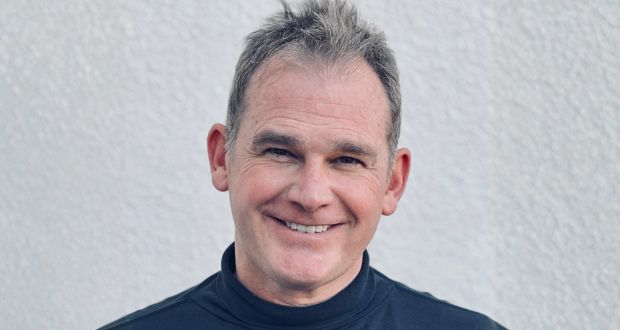
 ■ Working at home in Cheltenham, UK, earlier this year.
 ■ On a 2025 research trip in the Andes for the next book, on the history of Peru.
Publicité
Publicité
Les plus récents