Publicité
Interview
J.J. Messner : “Mauritius’ robust financial sector could be ideally positioned to invest in African mining”
Par
Partager cet article
Interview
J.J. Messner : “Mauritius’ robust financial sector could be ideally positioned to invest in African mining”

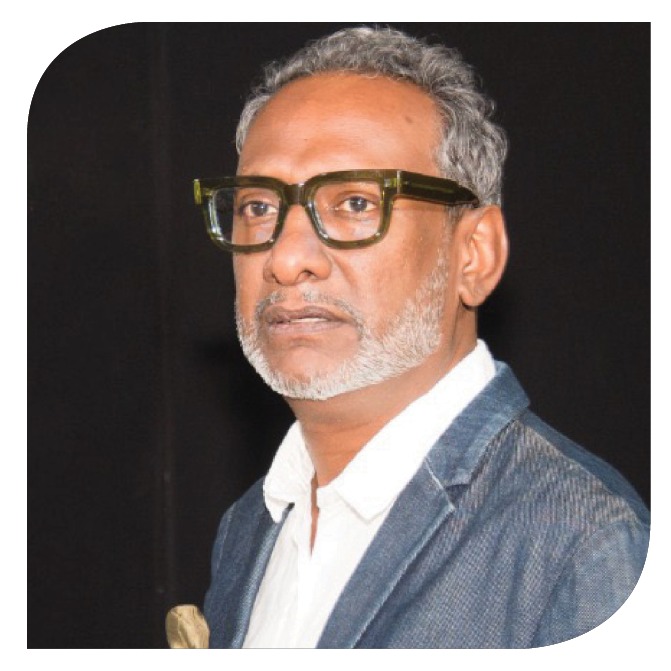
Mauritius may lack its own rare earth deposits, but its strategic location and stable financial infrastructure position the island to play a key role in the global rare earth and critical minerals landscape. In this interview, J.J. Messner, Sector Lead for Purchasing at the Initiative for Responsible Mining Assurance (IRMA), explains the difference between rare earths and rare minerals, highlights the geopolitical and environmental challenges of the sector, and explores how countries like Mauritius can engage responsibly in the race for these indispensable resources.
To begin with, could you clarify the difference between rare earths and rare minerals? The two terms are often used interchangeably, but they are not the same thing.
There are a couple of common misconceptions here – first, which minerals are “rare earths”, and second, whether they are rare at all. Rare earth elements may be “critical minerals”, but critical minerals are not necessarily rare earth elements. Rather, the rare earth elements are a narrow set of 17 chemically similar metals, like neodymium, dysprosium, and gadolinium, that are critical for high-value applications. Contrary to their name, rare earth elements are actually rather abundant – any rarity that may exist is relative to their occurrence in economically viable deposits.
Rare earths are essential to modern technologies – from smartphones and wind turbines to fighter jets and MRI machines. Why are these 17 elements so indispensable, and what makes them so difficult to extract and process?
The discussion about rare earth elements may seem a distant concept, but you are guaranteed to have rare earth elements in your house – or even right now in your hand – as they are commonly found in everything from consumer electronics to cars, frequently as a key ingredient in magnets. Their indispensability arises from the lack of alternatives that can easily be substituted either in terms of capability or performance. Though rare earths are counterintuitively abundant, they are not commonly found in economically viable deposits. Even when extracted, processing these materials tends to be expensive, energy-intensive, and highly polluting.
China currently controls 60-70% of rare earth production and nearly 90% of refining. How has Beijing used this dominance as a tool of leverage in the past, and what risks does this concentration pose for countries like India, the United States, and Europe?
China’s dominance of rare earth mineral production has been a long-term investment – or gamble, depending on one’s perspective – that has paid off handsomely. In the 1990s, countries such as the United States ramped down their production as there was significantly less market demand for the materials and little profit to be had. China filled that gap and now, decades later, dominates it.
Market concentration of any critical mineral is a significant risk. China has demonstrated both now and in the past its willingness to control access or throttle exports as a strategic tool. Only this year, China imposed export restrictions on several rare earth minerals in response to U.S. tariffs. These policies are not just targeted at the United States; in the past, China has pursued similar restrictions on other countries, such as in 2010 when it restricted exports of rare earth elements to Japan in response to a maritime incident near the disputed Senkaku (or Diaoyu) Islands. This strategy is therefore not new.
The world’s green transition depends heavily on rare earths. Demand is projected to triple or even quadruple by 2040. How do you see this demand shaping global supply chains, and could it slow down the shift to clean energy if supply remains concentrated?
The demand for mining, particularly in pursuit of the green transition, is increasing exponentially. However, unlike critical minerals such as nickel, lithium, or cobalt, which are indispensable for current battery technology, the role of rare earth elements in the green transition tends to be more focused on performance rather than criticality. For example, the use of neodymium, praseodymium, and dysprosium in permanent magnets makes wind turbines more efficient and compact. Similarly, magnets within electric vehicle motors use between 1 and 2kg of rare earth minerals in every vehicle to increase motor efficiency.
That said, rare earth elements also have significant strategic value in defense applications, such as missile guidance systems. So, while their importance is often framed (not inaccurately) as being critical to the green energy transition, there is a larger national security aspect to the issue.
The United States, Europe, India, Japan, and Australia are all scrambling to secure independent supplies through new mining projects, recycling initiatives, and stockpiling. In your view, how realistic is it that these efforts will reduce reliance on China in the medium term?
Reducing market concentration of minerals and reliance on any one actor is a two-part equation. First, from a mining perspective, the minerals are where they are – a country either has economically viable deposits or it doesn’t. In that sense, countries are scrambling to ensure that even if they don’t have specific minerals under their feet, at least they have strategic partners. In either case, new mines can take decades to come online, so there is no overnight solution.
Second, from a processing perspective, even if a country gains strategic advantage in mining, it can potentially lose that advantage if it lacks processing capacity and needs to ship raw materials to another country – like China – for refining. For genuine supply security, both extraction and processing are necessary to address in tandem.
Separately, recycling can provide some additional feedstock, but it currently has several major strategic flaws: the ability to reclaim postconsumer materials, the cost and environmental impacts of processing those materials, and the mathematical reality that recycled material cannot keep up with the exponentially growing demand for minerals.
Africa and Latin America have emerged as key frontiers for rare earth and critical mineral exploration. From your experience in Africa, how are governments balancing the opportunities of foreign investment with concerns about resource nationalism and sovereignty?
Governments in resource-rich countries have, to some extent, learned from the past. Some countries, particularly in Africa, have recently introduced new mining laws aimed at revenue maximization and asserting sovereignty over strategic assets, coupled with policies that seek to require minerals processing localization (with the value addition that brings) as well as emphasizing job creation and infrastructure development. But legal reforms and well-meaning policy priorities only go so far – unpredictability and instability continue to dampen investor confidence, and without sufficient investment, mining will lack the necessary capital to scale as needed in the coming years. A mine’s lifespan can run for multiple decades, meaning long-term stability is a necessary element for investment. Resource nationalism as a policy may gain popular support, but it can seriously harm market and investor confidence, and reduce the willingness of investors to commit in the future.
From a market perspective, producer countries can also assert sovereignty through export controls. The DR Congo recently restricted cobalt exports to curb global oversupply and stabilize prices. Given that the DR Congo holds over 70% of global cobalt reserves – a necessary ingredient in batteries for everything from smartphones to electric vehicles –, this demonstrates the scope of producer countries to exert their own market influence.
Superpowers increasingly treat rare earths as geopolitical instruments rather than mere commodities. Do you think this competition risks turning into a fullscale “tech war”, where control of supply chains could determine who leads the next industrial and military revolutions?
One could argue that the current geopolitical realities of the trade in rare earths are simply the latest iteration of conflicts throughout history over the control of natural resources. Perhaps the more significant longterm risk is a trend toward resource nationalism and against free markets, accompanied by increased cost and inefficiency – all driven by a motivation for supply chain security.
In the short term, there is significant risk that the trade in critical minerals and the technology they enable – like magnets, chips, and semiconductors – becomes increasingly restricted. The next industrial and military revolutions will be led by those with the technology and innovation, but control over the materials that enable that technology and innovation may indeed become the source of geopolitical flashpoints.
For countries like Mauritius, strategically placed near African supply routes but without deposits of their own, where do you see the opportunities in the global rare earth race – logistics, refining, or policy frameworks for responsible sourcing?
A country cannot choose whether it is ‘blessed’ with economically viable mineral deposits, but it can choose how to engage in other stages of the minerals value chain. There are four key opportunity areas for a country without significant mineral deposits.
First, a country can be a base for mining companies. Unlike some of its mineral-rich neighbors, Mauritius boasts a level of political stability and financial and institutional infrastructure that those countries lack. Already, Mauritius is home to various mining companies that operate on the continent.
Second, and similarly, a country can be a base for mining services companies, such as those specializing in mining technology that helps improve operations across the continent – something Mauritius already does.
Third, a country can invest in value addition. A significant challenge for Africa in general is that it loses much of the value of its minerals by exporting raw materials to other countries for processing – once processed, these minerals command a significantly higher price. Though Mauritius has limited precious metals refining capacity, the energy intensity and environmental impacts of minerals processing at a larger scale may not be compatible with the country’s broader interests.
Fourth, a country can invest in mining itself, either through equity investment or loans, regardless of whether it has minerals of its own. Mining is in severe need of access to capital to continue scaling to meet current and future demand. Mauritius’ robust financial sector could be ideally positioned to invest in African mining.
Finally, you’ve worked on issues of responsible sourcing and human rights in mining. How can the world meet soaring demand for rare earths without repeating the mistakes of past resource booms – environmental degradation, corruption, and exploitation?
As a society, we are thoroughly dependent on mining. Yet mining is fundamentally impactful to the environment and the people around it. The term “resource curse” vividly conceptualizes the conflict, exploitation, environmental degradation, and weak governance often associated with natural resource extraction.
The current growth in mineral demand is largely fueled by the green transition, which is intended to reduce society’s damaging reliance on fossil fuels. To propel that positive transition on the backs of those negatively impacted by mining would simply be robbing Peter to pay Paul. The mining-enabled green transition therefore needs to be equitable, where the means are just as important as the ends.
Standards for responsible mining are an important starting point. The IRMA is a global framework that provides a roadmap for mines to ensure they meet the highest standards across environmental, social, and governance issues. Over 100 mines worldwide are already implementing the IRMA Standard to improve their performance, increase transparency, and reduce risk, particularly for the environment and impacted communities. Interestingly, much of the uptake of this voluntary standard is being driven by customer demand, as brands seek to ensure their products – be they cars, smartphones, computers, industrial machines, or even jewelry – are free from negative supply chain impacts.
Bio
J.J. Messner is the Sector Lead for Purchasing at the IRMA, where he supports some of the world’s largest tech, automotive, energy, and jewelry brands with responsible minerals sourcing and supply chain traceability. Prior to joining IRMA, he led responsible sourcing of raw materials for Microsoft. He is based in Grand-Baie.
Publicité
Publicité
Les plus récents