Publicité
«AI Impact Summit 2026»
Face aux cybermenaces, le ministre des TIC appelle à repenser la gestion des risques
Par

Partager cet article
«AI Impact Summit 2026»
Face aux cybermenaces, le ministre des TIC appelle à repenser la gestion des risques
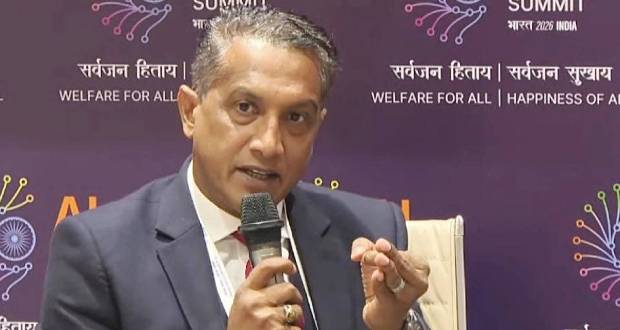
À l’occasion de l’AI Impact Summit 2026 à New Delhi, le ministre de la Technologie de l’information, de l’innovation et de la Communication (TIC), Avinash Ramtohul, a lancé un appel fort en faveur d’une approche intégrée de l’intelligence artificielle (IA) et de l’expertise humaine pour renforcer la résilience face aux catastrophes. Intervenant lors de la session intitulée «AI for Resilience: Closing the Technology Adoption Gap in Disaster Risk Reduction», le ministre a exhorté les dirigeants mondiaux à reconnaître le cyberespace comme un nouveau front critique de la gestion des catastrophes. Selon lui, les menaces numériques peuvent être aussi dévastatrices que les inondations ou les cyclones.
Avinash Ramtohul a souligné que la nature des catastrophes a profondément évolué. Aux aléas naturels s’ajoutent désormais cyberattaques, ransomwares et défaillances d’infrastructures numériques essentielles. «Une perturbation des systèmes digitaux peut paralyser les services d’urgence, les réseaux d’eau et d’électricité ou encore compromettre la sécurité publique, avec des conséquences comparables à celles d’une catastrophe physique», a-t-il averti. Ila ainsi plaidé pour des stratégies de gestion des risques intégrant à la fois menaces physiques et numériques.
Le ministre a mis en avant le potentiel des «jumeaux numériques», ces répliques virtuelles détaillées d’infrastructures et d’espaces publics. Ces outils permettent aux secours d’accéder en temps réel aux plans des bâtiments, réseaux de services publics et localisation des occupants, facilitant des interventions plus rapides et plus précises. Couplés à l’imagerie thermique et aux capteurs d’occupation, ils peuvent améliorer considérablement la connaissance de la situation lors d’incendies, inondations ou autres crises.
Toutefois, Ramtohul a mis en garde contre une dépendance excessive à des systèmes d’IA entièrement automatisés dans des opérations vitales. Si l’IA peut appuyer les systèmes d’alerte précoce et la prise de décision, la supervision humaine demeure indispensable pour éviter erreurs, manipulations ou fausses alertes. Évoquant la vulnérabilité de Maurice, petit État insulaire exposé aux crues soudaines et aux phénomènes météo extrêmes, le ministre a rappelé le déploiement de mécanismes d’alerte, notamment via des systèmes de diffusion cellulaire. Il a insisté sur un principe fondamental : dans la gouvernance des risques comme dans l’usage de l’IA, l’humain doit rester au centre des décisions critiques.
******
Veemal Gungadin, CEO of Mauritius Telecom: "Mauritius seeks B300 GPUs to accelerate AI ambitions"
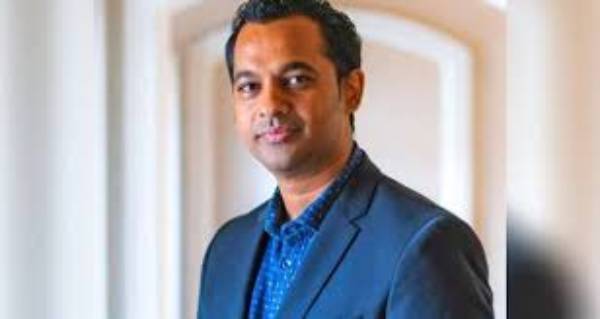
Dans une publication sur LinkedIn, Veemal Gungadin, CEO de Mauritius Telecom (MT), revient sur sa participation à l’India AI Impact Summit à New Delhi et lance un message d’urgence pour Maurice. Entre course mondiale aux GPU (processeurs), câbles sousmarins stratégiques et bataille pour l’accès au calcul intensif, découvrez son message.
«I just spent a week in New Delhi at the India AI Impact Summit. Here is what I saw that the headlines won’t tell you. This was the first global AI summit ever held in the Global South. The energy was unlike anything I have experienced at a tech event. Thousands of young people, not as observers but as participants. When Sundar Pichai took the stage, the reaction was what you would expect at a concert, not a policy summit.
India’s median age is 29. The demographic dividend is not a projection. It is in the room with you. But here is the insight I kept coming back to. India is not competing with the US or China on frontier AI models. India’s play is AI application at population scale, on sovereign infrastructure. UPI transformed payments for a billion people. Aadhaar created a digital identity layer most countries cannot replicate. AI is the next layer on that stack.
When NVIDIA announces 20,000 more GPUs at subsidised rates, when Google commits $15 billion in subsea cables with Bharti Airtel, when Tata Communications ships a voice AI platform in 40 languages... this is not aspiration. This is execution! Is it perfect? No. But when you combine policy commitment, private capital, demographic energy, and national will, the direction becomes difficult to reverse. Now here is where it gets personal. I lead Mauritius Telecom. Small island nation. 100% fibre coverage, 5G, five submarine cables, Tier IV data centre, AI deployed in our public schools. We punch above our weight. But sitting in that room, I felt what every small-nation leader felt: the window is real, and it is not permanent. Our Minister of ICT and I met with NVIDIA’s senior leadership. India just announced 20,000 additional GPUs on top of 38,000 deployed. Mauritius is requesting a few hundred B300 GPUs. The answer: approximately one year lead time.
That is the AI diffusion gap in one conversation. When a nation that has built the infrastructure and the governance still faces a year-long queue for compute, you understand that diffusion does not happen by default. It happens when you fight for it. And we are fighting. When Google announced America-India Connect, a new subsea cable from Visakhapatnam to South Africa running straight across the Indian Ocean, our Prime Minister raised Mauritius’ inclusion directly with Prime Minister (PM)Modi. That cable passes through our waters. Mauritius should be on it. Our PM made that case, and it is now on the bilateral agenda.
This is what it looks like when a small nation refuses to be a spectator. India can be an extraordinary partner for the Global South. But partnership requires both sides moving at pace. If we wait, the cables get laid, the compute gets allocated, the standards get set, and we inherit the outcome rather than shape it. What I take away from New Delhi is urgency. I believe we can match it. But belief is not enough. Execution is what counts. And the clock is running."
Publicité
Publicité
Les plus récents