Publicité
Mauritius at a Crossroads
Climate Risk as an Engine for a Biotech Future
Par

Partager cet article
Mauritius at a Crossroads
Climate Risk as an Engine for a Biotech Future
A Review of the «World Bank Group Country Climate and Development Report» (February 2026)
Mauritius is no stranger to reinvention. In one generation, it moved from a mono-crop sugar economy to an upper-middle-income nation powered by tourism, financial services, manufacturing, and fisheries. But the World Bank’s Country Climate and Development Report (CCDR), February 2026 makes one thing unmistakably clear: the old growth model has run its course.
Public debt has surged to 88.5% of GDP, productivity is plateauing, and growth is increasingly consumption-driven rather than innovation-led (World Bank, 2026). At the same time, climate change is no longer a distant threat – it is a structural economic risk.
Cyclones, coastal erosion, water stress, marine heatwaves – these are not environmental abstractions. They threaten the very pillars of Mauritius’ economy. And yet, the CCDR reframes climate change not as a crisis alone – but as an inflection point. A pivot moment. A chance to redefine growth.
Climate is the Constraint – and the Catalyst
Mauritius contributes just 0.01% of global greenhouse gas emissions yet faces disproportionate exposure as a Small Island Developing State (SIDS) (World Bank, 2026).
Without adaptation:
• GDP could fall by up to 4% by 2050
• A compound shock scenario could trigger a 10% contraction in a single year
Nearly one-third of the population lives in coastal zones – making climate risk a socio-economic threat, not just a physical one. But the report’s deeper message is strategic:
Adaptation is not defensive.
It can be economically generative.
Done right, climate response becomes a platform for structural transformation.
The 3Rs – And a Missing Fourth
The CCDR proposes a clear national framework: Reinforce, Reorient, Reduce. Strengthen fiscal foundations. Shift economic sectors toward resilience. Reduce climate vulnerability. All necessary. But insufficient. Because Mauritius does not merely need resilience. It needs renewal. And renewal requires a fourth “R”: Reinvent.
Reinvention Through Science
Tourism must evolve toward high-value sustainability. The blue economy must protect marine ecosystems.
Renewables must reshape energy security. But none of these alone will generate the productivity leap Mauritius now requires. The next engine of growth must be knowledge-driven. It must be innovation-led. It must be biotech-enabled. Climate change is already forcing Mauritius to rethink water systems, agriculture, marine ecosystems, public health resilience. These are not just adaptation challenges. They are biotech opportunity spaces.
Climate Meets Biotech
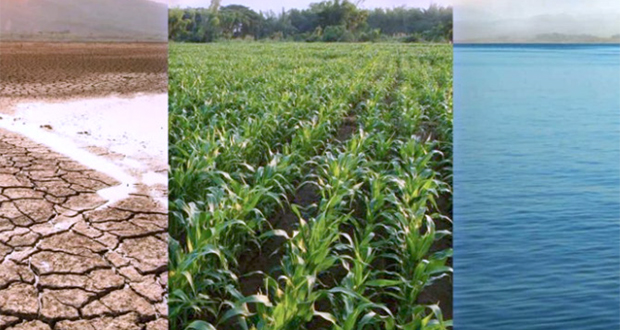
The CCDR identifies water scarcity as the central constraint to Mauritius’ future – with only ~3% of rainfall effectively utilized due to infrastructure loss (World Bank, 2026). This is not just a civil engineering problem. It is a biological systems problem:
• Drought-resistant crops
• Microbial soil resilience
• Climate-adaptive aquaculture
• Marine bio-economy platforms
• Bio-based materials for coastal protection
Similarly, ocean warming and reef degradation threaten fisheries – but they also open pathways into:
• Marine genomics
• Algal bio-industries
• Blue biotechnology
Climate pressure is reshaping Mauritius’ economic terrain. Biotech can reshape its response.
Investment: From Infrastructure to Intelligence
The CCDR estimates Mauritius needs: US$5.6 billion in additional investment between 2026–2050 with a US$213 million annual climate finance gap (World Bank, 2026).
Public finance alone cannot fill this. Private capital must be mobilized. But capital follows:
• Return
• Differentiation
• Innovation
Tourism resilience attracts funding. Renewables attract infrastructure finance. But biotechnology attracts:
• Venture capital
• Strategic partnerships
• Knowledge investment
If Mauritius wants not just resilience but leadership, climate adaptation must intersect with innovation ecosystems.
From Island Risk to Innovation Hub
Mauritius has historically thrived by turning constraints into catalysts. Sugar became textiles. Textiles became services. Services became finance. Now climate must become science.
A climate-resilient Mauritius must evolve into:
• A blue biotech hub
• A tropical climate-adaptation research platform
• A regenerative agriculture innovation centre
This is not aspirational rhetoric. It is economic necessity. Because survival alone does not restore growth. Only reinvention does.
Conclusion: Adaptation is Not Enough
The CCDR’s central insight is powerful: Climate adaptation is not merely about protection – it is about transformation.
If Mauritius:
• Reinforces its institutions
• Reorients its sectors
• Reduces vulnerability And crucially,
• Reinvents its economic future through science and biotechnology
Then climate risk becomes not a ceiling – but a springboard. Mauritius can move from being a climate-vulnerable island to a climate-innovation state.
Publicité
Publicité
Les plus récents