Publicité
Sceptical Najaf residents are desperate for peace
Par

Partager cet article
Sceptical Najaf residents are desperate for peace

Residents of the bloodied city of Najaf want peace so badly that some will take any leader who can stabilise Iraq even one hated across the Arab world.
?Give us anyone who can stop this destruction. We don?t care who it is or where he comes from. We will even accept an Israeli, even (Prime Minister) Ariel Sharon,? said Abdullah Sultan, an unemployed 50-year-resident of Najaf.
?We are caught right in the middle of the fighting. Look at my neighbour?s house. A mortar landed here. It must stop.?
Talk of Sharon leading Iraqis could get someone lynched in this fiercely anti-Israeli country. It shows just how desperate some have become.
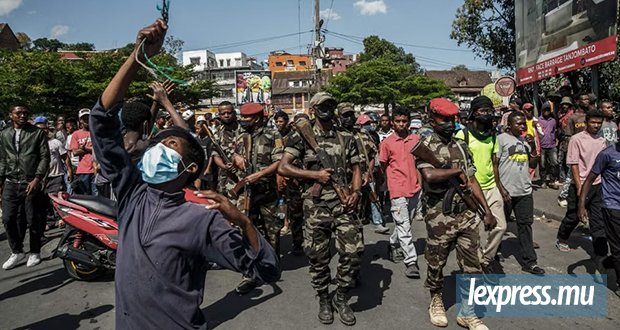
After two weeks of fighting between militiamen loyal to firebrand Shi?ite cleric Moqtada al-Sadr and US marines, Najaf?s people were doubtful that signs of a possible end to battles would silence menacing guns and mortars.
Fighting continues
A conference which chose a national assembly said Sadr had agreed to government terms to end the crisis but both sides soon set conditions and US officials talked of tough measures to stamp out Sadr?s rebellion.
In Baghdad, US forces overran yesterday the city?s mainly Shi?ite suburb of Sadr City, a powerbase for the radical cleric, witnesses said.
In Najaf, fighting had continued overnight after the possible breakthrough was announced and snipers and artillery gunners began firing again yesterday morning as a few Iraqis ventured out to the streets to test the mood.
Most were sceptical, especially people like Talib Moussa, a 35 year old labourer pointing to a large shell hole in a house. ?What peace? I don?t believe it. Look at this hell,? he said.
When interim Prime Minister Iyad Allawi began heading Iraq?s interim government in late June, Iraqis thought his background as a member of Saddam Hussein?s toppled Baath Party would enable him to crush insurgents and criminals shaking the country.
Aside from suicide bombings and kidnappings, he has yet to end Sadr?s stubborn rebellion that is posing the biggest challenge yet to his government.
Confidence in Allawi was not felt along the battered alleyways of Najaf, a city that is sacred to millions of Shi?ites around the world and crucial for Iraq?s stability as the centre of power for the country?s majority sect.
A few Iraqis trickled to the small section of a market while keeping an eye on American tanks down the street as snipers in Sadr?s Mehdi Army militia sporadically squeezed the trigger.
Khayriyya Moulid, a tired elderly woman in a black veil, sat on a street littered with brick fragments hoping to sell a few cups of milk. Nobody was buying.
?If God is willing he will help us,? she said, pointing to the sky as women down the street offered dates covered with flies.
As a tense Najaf waited to see if Sadr?s militiamen would give in to demands to leave the Imam Ali shrine they are holed up in, some Iraqis took refuge in humour to cope with the uncertainty.
?At least I have a satellite dish. When I see all those beautiful European countries I feel so sad for Iraq,? said labourer Jassim Abboud, 47.
?Then again at least I have those channels now. In the old days we only had access to news coverage of Saddam and his family. They informed us when he was going to the bathroom.? His neighbours laughed, something rare in Najaf.
<B>Michael Georgy</B>
Publicité
Publicité
Les plus récents