Publicité

Fresh start for heritage trust site

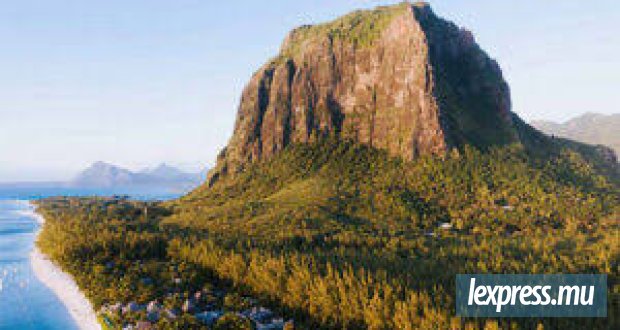
The controversial project of building a cableway up the Morne mountain and other projects such as the construction of luxury villas have all aborted and the place is now in line to become a World Heritage Site. The mountain is interesting from three points of view: its geographical position, its flora and it historical associations.
Speakers on the bill included the prime minister, who declared that the Morne was a ?sacred? place for him, and that, if the cableway project had gone ahead, ?it would have been a violation of history.? Ironically enough, it was when looking at photographs presented by the would-be site developers that he realised the importance of protecting the beauty of the place.
The firm Innovative Leisure Ltd presented the project in 1999: a cableway to the summit and tourist attractions such as snack bars and restaurants. This project caused quite a upheaval since people quickly concluded it would destroy the symbolism of the summit as an unattainable refuge for maroons. Another project of luxury villas near the mountain was presented under the Integrated Resorts Scheme. It is now out of the question to go on with the projects and the government is demonstrating through the bill that it is now moving in a totally different direction.
<B>Protection and research</B>
The Bill has three objectives. To begin with, the management and promotion of The Morne as a historical site will be done through projects such as the creation of a museum to encourage people to take an interest in the history of the place. Then, the endemic fauna and flora on or around the mountain will be protected. Finally, more scope will be given to research and publications on the site.
The legends surrounding the mountain ? considered popular truth by some ? have inspired many historians and authors. The most famous one is that when slavery was abo-lished on 1st February 1835, a detachment of British soldiers climbed the mountain to inform the maroons of this development. But, thinking that the soldiers had come to capture them, the slaves preferred liberty through death and threw themselves from the summit of the mountain. Some say that is why the mountain is called The Morne (the mournful one).
Some accounts of voyagers such as Maximilien Wilkinsky, who talked about The Morne being a ?place where fugitive slaves hide from their masters?, were the only evidence of maroons on Le Morne for a long time.
And in fact it has never been conclusively proved that maroons did actually live on the mountain. However archeological research, conducted by Professor Amitava Chowdhury, since 2002, has revealed that there is evidence suggesting that they did. ?We have excavated three grottos and found evidence such as rock alignments, stones arranged for seating and deposits of soil and ash in which lots of animal bones have been found. We have also discovered artifacts that must have been brought there.? When this evidence is analysed, taking into consideration other historical factors, it can be tentatively put forward that the occupational remains found point towards maroon presence. Another factor that contributes to this conclusion is that other maroon sites have similarities with the Morne grottos. But in the Maroon Investigation Project submitted, it is recommended that further historical and archeological research be done.
The Morne is not only a site of archeological importance, but also from an environmental point of view. In 1973, Joseph Gueho rediscovered the endemic national flower, the Trochetia Boutoniana, then thought to be an extinct species, on The Morne. Other rare species such as the Hibiscus Columnaris are found in the surroundings.
But now is the time for action as the biggest part of the work still has to be done. To start with, the members of the Morne Heritage Trust Fund have to submit a technical dossier with arguments to convince UNESCO to recognise the place as a World Heritage Site. The prime minister mentioned this while recalling the proposal of UNESCO consultants to group The Morne, Ilot Bénitier and the Black River Gorges in a ?cluster? to include them in the list of World Heritage Sites.
Publicité
Publicité
Les plus récents