Publicité

The daily struggle

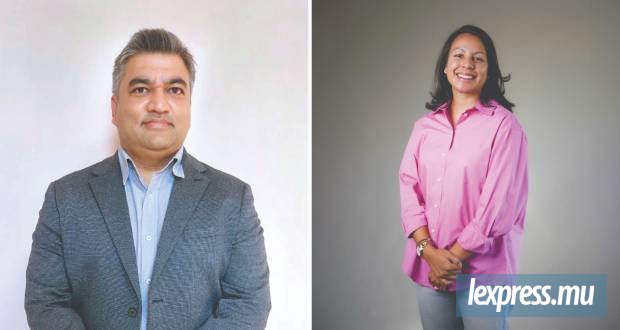
I will focus mainly on women at decision-making level in the private sector in Mauritius. I am Chief Executive Officer (CEO) of the Sugar Investment Trust Group, which, contrary to what many believe, is neither a parastatal nor a public sector company but owned by private shareholders. I am also chairperson of the Mauritius Post and Cooperative Bank Ltd as well as director on a number of private sector companies’ boards where I have the privilege of being the only woman director. My sector of activity is mainly in agriculture, particularly cane growing, sugar milling, energy generation, leisure and banking. The above sectors are male-dominated.
Two key historical events have revolutionised women’s situation in Mauritian society. Firstly, free education in 1976 allowed parents to stop discriminating between girls and boys for secondary education. I would not be here today, had there not been free education. Access to secondary and university education opened a whole new perspective for women who were otherwise condemned to doing household chores.
Secondly, women’s economic independence exploded in the late 1970s and early 1980s when traditional housewives left their homes for the EPZ factories. This opportunity brought additional income to households and improved their standard of living.
The above two events have fundamentally changed the status of women in our society. Women are today better educated, better informed and “in full bloom”. Coupled to this, with access to Internet and the media, women are today capable of assuming the highest jobs in any organisation. Within the above context, we could say the question is no longer how more women will reach top management level but when.
Private v/s public
With regard to the PricewaterhouseCoopers report on Women at Executive Level in Mauritius that there are six times more women in the public sector than in the private sector, it is important to stress that staff lists in government and parastatal bodies are easily available and therefore all women in middle, senior and top management were captured in the survey.
However, in the 100 Top Companies, having been myself the editor of earlier editions, I know that it captures mainly the board of directors, CEOs and possibly a number two in every organisation. I am not sure that all women holding similar positions in middle or top management in the private sector could have been captured in the survey as it was the case in the public sector. I do not think that the comparison between the private and public sectors is really as dramatic as the survey shows.
Let me now share my experience as a woman executive at decision-making level in the private sector. I deal everyday with top executives in the private sector and in government. I also deal with people at grassroots level – shareholders, labourers, artisans, small planters or trade unions. My personal experience is that there are no barriers to reaching top management level if you have strong determination and if you work very hard. I have never experienced any form of gender discrimination. In the beginning it is indeed an overwhelming and daunting experience but I have never been made to feel that I am a woman among men. I have had the opportunity of negotiating major and sometimes very tough deals with men on the other side of the table be it in the private sector or in government. I have had to implement tough decisions such as redundancy plans or coordinating construction works with men who are technical experts around the table. I cannot say that even once my views have not been retained because I was a woman. I think that in Mauritius we are lucky to have this mentality. Despite the fact that women rarely play golf and do not go for hunting parties, their voice is still heard and respected in boardrooms.
So few at the top?
Women have today gained such hard won access to education and training in all fields. Why are they not reaching top positions? Where is the problem? Is it in the workplace with our bosses? Can we then say that if we introduce an Equal Opportunities Act this problem will be addressed? Is it a cultural problem? Or is there a problem generally in all societies? Is this a problem in Mauritius only or is this a problem in all societies across the world?
Could it be that women are not ambitious enough? I was recently reading an article in the Harvard Business Review on how accomplished women in top positions in America surveyed felt uncomfortable and even “guilty” about being ambitious. The research has found that recognition is a very strong engine that drives and motivates any person. However, women often shy away from recognition.
Although women are no longer denied access to training in most professional areas, in fact their academic achievements are frequently higher than their male counterparts, yet they have come up against an even more powerful barrier to their ambition. In fact, women have greater opportunities for pursuing their own goals now than at anytime in history. But doing so is socially condoned only if they have first satisfied the needs of all their family members: husbands, children, elderly parents.
You know today that for a woman, who has completed her education and is starting her career and pursuing her ambition, it is also the time when she would tend to get married and have children. She then has to make the very tough decision to hold on or abandon. Having to make career decisions at the same time as learning to be a parent with all that it requires and working around the clock is indeed a very strong obstacle that women are still facing today.
Women who want to reach the top today must cope with the job structure to accommodate the life cycle of men with wives who don’t have full-time careers. And they still suffer from the social pressure to fulfil the traditional “feminine” role. Too often, these situations put women before choices between downsizing their career or simply abandoning it. Some will come back after their children have been raised. But there again it is another uphill battle.
Mistaken
perception
Being at top management and decision-making level often means working very late, taking work home and combining household chores with work responsibilities. It means travelling overseas and reaching home stressed and irritated with rough and tough days at work. If you are starting a family, this is an extremely different balance to maintain. The woman is under social pressure and moral obligation not to neglect her responsibilities at home. Most likely she would choose to downsize or abandon her career because giving priority to her career is perceived as normal and in fact even desirable for a man but a woman would be looked down on society. There is very often a perception of glamour in such positions. However, everyday reality is a very different story.
My concluding remark is that women today are professionally well qualified, competent and capable of reaching senior management positions. I also believe that the opportunities are there for them to reach top positions. However, there are few women in these positions today because the requirements of these positions are such that many women have no other choice than to contain their aspirations and ambitions.
I personally work an average of 14 hours a day; I take a heavy workload home every day and at weekends; for the last ten years, I have taken holidays only twice. My company owes me some 8 to 9 months of untaken leave. Is this sustainable for a woman in her family and in society? Certainly not? When my family wants to go out at weekends, most often we will have an argument because I cannot go as I have some work to complete. This is indeed a daily struggle and a difficult balance to maintain. Add to this the fact that women at the top are very often lonely. They do not have time for social life, they do not play golf or go to hunting parties or happy hours. They do not have any mentoring support.
So what is the way forward? I must admit, I do not have the answer…
<B>Jyoti Jeetun
CEO of State Investment Trust</B>
Publicité
Publicité
Les plus récents