Publicité

From coolie to citizen

The annual celebrations of the arrival of indentured labourers on 2nd November constitute a landmark in our history and they are opportunities, not for rejoicing but for a soul-searching quest into the agonising pages of our past, to sensitise the younger generations about the long and winding path to emancipation from rags to riches. Coolitude has indelibly marked the history of Mauritius. The Aapravasi Ghat bears witness to the flow of indentured labourers and was the gateway through which throngs of immigrants marched relentlessly to their fates. The struggle towards emancipation was an epic one and a tale of toil, sweat, tears and blood. The saga of the Indian immigrants was long and uphill.
After the Emancipation Act (1834), the British Parliament offered £2 million as compensation for the abolition of slavery and the white settlers turned towards India for fresh labour and emigration started on an unprecedented scale. “If agriculture was one lifeblood of the colony, it’s in immigration itself that it drew on its main food” (Christian Wiehe, Director of the Chamber of Agriculture). The first agricultural labourers under “engagement” arrived at Aapravasi Ghat in 1829. It was a group of Indian and Chinese coolies, recruited in India and Singapore by private enterprise and without the participation of the government. The Chinese coolies felt they had been cheated and subsequently revolted against the harsh and inhuman treatment meted out to them. But they were deported immediately by the colonial masters. It is wise to note that we were all but united in our diasporas! This year the national celebration has taken on a new dimension with the participation of various Sino-Mauritian cultural associations under the dynamic initiative of the Hua Lien Club at the Caudan commemorative monument.
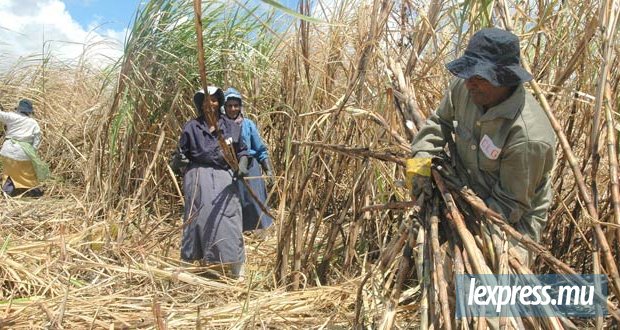
The ships, tossed on high seas, carried them to unknown destinations. Historian Huguette Ly Tiao Fan in her book ‘Lured Away’ gave a vivid account of the sad and miserable plight of Indian immigrants in their quest for a better future. They left their homeland for greener pastures. The cries of woe and suffering reverberated through the rugged steps of Aapravasi Ghat. Under the crack of whips they were coerced to toil like beasts of burden beyond the limits of human endurance under the scorching sun. They watered stoically the sugar cane fields with their sweat, tears and blood. They were tamed to silence without anyone to defend their rights. Uprooted and far from their families, they travelled in gloomy galleys across the ocean in inhuman conditions. Some unfortunate ones died during the crossing due to exhaustion and unhygienic conditions. They were subjected to inhuman treatment, reminiscent of the days of slavery. They were thrown as chattels into sugarcane estates like wild beasts. They lived in a police state; their liberty was confiscated. They wore shabby clothes made of “sack goni” and “langouti” and were given hardly anything to eat. Living conditions were rigorous under a sort of feudal system. The white plantocracy inflicted fines in the form of wage cuts as well as physical violence and brute force.
“The colonial masters broke the bones of the indentured labourers but lamentably failed to break their spirit” (The Global Indian Family of Anand Mulloo). The baitkas resisted strongly against the onslaught of Christian conversion and they were a very powerful institution to safeguard and consolidate Indian culture. At nightfall in remote villages, in their thatched houses, under the vacillating light of earthen lamps, they chanted the hymns of Ramayana and Mahabharatha thinking nostalgically of Mother India. They battled hard for their cultural identity and they have weathered many a storm to uphold their indomitable dignity. As in any diaspora, they yearned to return one day to their ancestral land in their old age.
Our history is smeared with the blood, sweat and tears of these “wretched of the earth”. There was even sexual exploitation of women on sugar-estates. The arrival of Adolphe de Plevitz heralded a new era for the downtrodden. He for one dared to voice out his feelings even though his life was at stake and castigated the horrifying system of coolitude. His cry of revolt found an echo in some quarters. A Royal Commission was set up in 1875 and it became a historic event. De Plevitz had made history and the world came to know the atrocities of such an inhuman system. Some white planters were in arrears for six months in their payment of salaries to the coolies. The reign of terror came to an end with de Plevitz.
The visit of Mahatma Gandhi in 1901 to Mauritius, though meteoric, constituted a new step in the emancipation of Indian indentured labourers. His meeting with the Indo-Mauritians at Taher Bagh in Port-Louis bore momentous results. He exhorted them to participate fully in local politics and launched the ‘Back to the Vedas’ movement. He set the ‘Arya Samaj Renaissance’ in motion over the island. The visit of Mahatma Gandhi was messianic and he sensitised the Indian immigrants about their sad plight to shatter the shackles of exploitation. Coupled with this, Manilall Doctor (a barrister and a journalist) came to urge the importance of education, a powerful engine to climb the social ladder.
In 1940 the return of Professor Basdeo Bissoondoyal from India after his studies brought a new impetus among Indian labourers to fight for their emancipation. He launched the movement of Jan Andolan with his Satyagraha in 1947. He set up “a sense of unity and purpose, pride in their culture, confidence in their collective strength and above all organised leadership (Voices of the Diaspora of Anand Mulloo). The Indian immigrants started developing pride in their Indian-ness. It was no longer a curse to be born an Indo-Mauritian. They assumed a sense of dignity and started walking with their heads up.
Closer to us, the struggle of Sir Seewoosagur heralded new hopes for the Indian working class. With his vision and humanism, he gave the coolies’ descendants their rightful place in our multi-racial and multi-lingual society. He led them to the Promised Land. He gave them a sense of pride. Indo-Mauritians have not lost their Indianness, their dharma and their culture unlike in Reunion Island. Guadeloupe and Martinique. Thanks to SSR they have not been robbed of their ancestral heritage. With the proclamation of free education, he broke open the doors of schools to all and he set in motion a social engineering unprecedented in our history. From thatched mud-walled houses to palatial residences, from ox-cart to BMW, the Indo-Mauritians have striven hard to clamber to the top. On this occasion let us pay a glowing tribute to Indian Indentured Labourers:
No gold did they find nderneath any stone They touched and turned Yet .................... Every stone they touched, Into solid gold they turned. (Vishnamitra Ganga “Aashutosh”)
Philip LI CHING HUM
Publicité
Publicité
Les plus récents