Publicité
The last or lost opportunity
Par

Partager cet article
The last or lost opportunity
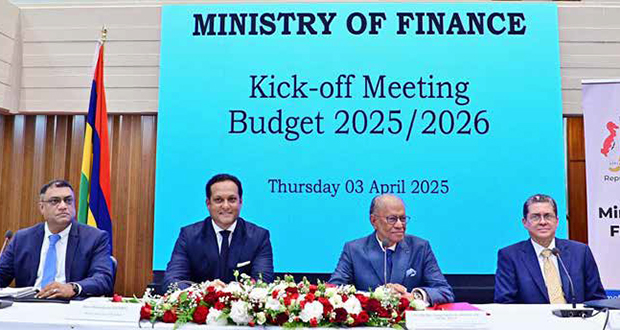
«The forthcoming budget is the right time to highlight what has been achieved and where we are heading not only on paper but in practice».
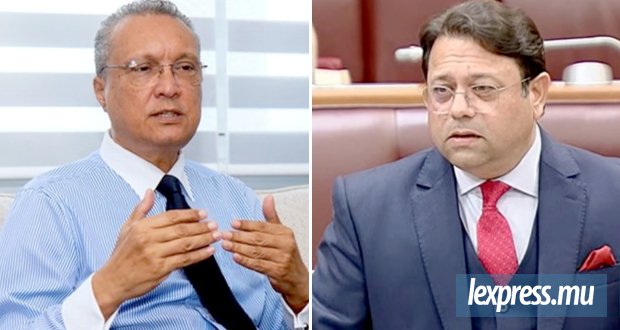
The resignation of Hon. Paul Bérenger, the Deputy Prime Minister (DPM), has not been shocking since it had been brewing for quite some time. It does not lead to a crisis situation nor does it disrupt the functioning of the government for two reasons. First, most of the ministers and parliamentarians have chosen to remain in the alliance which obviates the need for any reshuffle. Second, even if the MMM parliamentarians had followed their leader, the Labour Party and other partners in the alliance have a comfortable majority in the National Assembly and will continue to manage without much turbulence. But it has ushered a crisis of its own making for the MMM calling into question the ownership of the party itself. How will this unfold is yet to be seen.
The criticisms of the former DPM go beyond the difference in management style between him and the Prime Minister. He was critical of the supposedly “gang of five” in the entourage of the Prime Minister. He decried the slow pace of progress on the economic front with the economy struggling to take off, which he attributes to a lack of economic leadership and decision-making. He opined that the country needed a full time Minister of Finance to drive the economy with all implications it entailed for the balance of power between the two major partners. He questioned the lethargy in decision-making on the part of the Prime Minister and the high degree of bureaucracy.
While the appointment of a Minister of Finance makes sense as has been evoked by many economic observers, the Prime Minister reckoned that the gravity of the economic situation required his personal engagement. In normal times, it requires a full time Minister of Finance to manage the complexities of the economy. In a dire economic situation, it is all the more necessary. In the heat of the moment and the passion that it generates the argument seems strong. However, whatever be the merits of the case, the appointment of a Minister of Finance can be discounted offhand as it would imply giving in to the demand of the former DPM which no prime minster would concede. As it is said, it is now “renvoyé aux calendes grecques”. If one wants to promote his ideas and opinions, differences have to be managed internally and not by way of press conferences which render any compromise impossible. The cumulation of the function of minister of finance by the Prime Minister is not unprecedented. In the early nineties, Sir Anerood Jugnauth performed the dual role and even had time to preside over the protracted tripartite negotiations.
A snail’s pace
Whatever criticisms are levelled against the government are implicitly self-criticisms since the former DPM was part of the government in line with the principle of collective responsibility in decision-making or non-decision making. That the economy is progressing at a snail’s pace is a fact. But to attribute it to a single person is like giving a dog a bad name and hang it. Different ministries have their own role to play in their specific areas. But it is also pertinent to assess their effectiveness and even their concrete achievements, irrespective of party affiliation.
It is an open secret that both investment and economic growth are sluggish. Latest statistics published by Statistics Mauritius indicate that the economy will grow by 3% only in 2026 and the investment ratio will decline to 19.3% in 2026 compared to 21% in 2024. Private sector investment will register negative real investment growth for the second consecutive year even under this optimistic scenario.
It is declining at a time when many projects are waiting for the green light from the Economic Development Board. The CEO of the EDB has reacted to the Rs 47 billion of investment referred to by the former DPM. It is reassuring to find that Mauritius continues to attract investment in diverse fields such as education, health, ICT, manufacturing. 46 projects have been approved between April and December 2025 representing Rs 140 billion. The EDB has come forward with these statistics as a reaction to unfolding events. Perhaps regular communication will dissipate much misconception and misunderstanding both at the level of institutions and ministries. In this information age, the public is keen to be informed and not left in the dark.
The CEO of the EDB ascribes the delay more to administrative constraints and bottlenecks. It may be one reason but there may be more to it than meets the eye. While we were champions of business facilitation and boasted of a high ranking in the ease of doing business index in the past, we have become laggard compared to many countries, even in Africa. We will once again come forward with proposals to improve the business environment on paper but what is required is an attitudinal change at the level of institutions. This will not happen unless they are manned by professionals on the basis of meritocracy and relevant experience and an assessment of performance over time. This comment also applies to economic diplomacy and the effectiveness of our ambassadors in different countries. It is a question of cost-benefit analysis.
Time to shoot at one’s own feet
The recent turn of events shows that the legacy left by the previous government seems to be forgotten. Human memory is frail. It is now customary to blame the government of the day for the lack of progress. The damage done by the previous government is falling into oblivion and the “raison d’être” of the “changement” is equally forgotten. It is time to shoot at one’s own feet. From the very outset, it was clear there was little room for manoeuvre as the State of the Economy indicated and to which all subscribed. It was equally clear that the situation was bound to worsen before it improves and this is what we have seen in 2025. We are reaping the bitter fruits of the bad policies spanning over a decade and as I have said it before in my previous articles, the harm is irreversible and can only be rectified in the medium term, not in one year provided the right approach and appropriate measures are adopted.
The economy is not on a downward sliding slope. It is growing at 3% which is the long term trend but is not a satisfactory performance. The situation is further aggravated by war in the Middle East making any economic revival more of a mirage. It makes matters worse leading to supply chains disruption, uncertainty and higher inflationary pressures. The pessimistic scenario projected by Statistics Mauritius is a 2.3% growth in 2026. We remain a country highly vulnerable to external shocks. For example, Tourism growth is expected to dip to 1% compared to 4.8% last year and export-oriented enterprises will also record 1% growth. Global growth will also decline with ramifications not only for Mauritius but world-wide. There are severe problems ahead for the economy, lower investment, higher inflation, higher import bill, worsening balance of trade, higher budget deficit and public debt etc. The difficult economic situation calls for more cohesion and unity on the part of the government to pool their heads together just to remain afloat rather than being distracted by divergences which breed uncertainties of their own.
For some it is a lost opportunity never to recur again. For the government, it is yet another opportunity, perhaps the last one, to make its own mea culpa and instil more dynamism in the economy, accelerate structural changes, innovate in areas to lessen dependence on imports and above all improve communication. In this context, the forthcoming budget is the right time to highlight what has been achieved and where we are heading not only on paper but in practice.
Publicité
Publicité
Les plus récents