Publicité
Movies
When spectacle replaces story : what «Dhurandhar 1 & 2» say about Bollywood today
Par

Partager cet article
Movies
When spectacle replaces story : what «Dhurandhar 1 & 2» say about Bollywood today
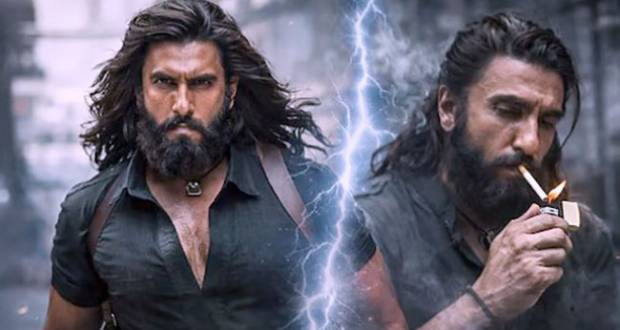
There was a time when popular Hindi cinema, even at its most commercial, retained a certain narrative dignity (see movies of Shyam Benegal, Satyajit Ray or even Anurag Kashyap), there was a willingness to entertain without entirely surrendering intelligence. That balance now feels increasingly fragile. Films like Dhurandhar 1 & 2 exemplify a shift where spectacle overwhelms storytelling, and ideology begins to substitute for imagination.
A useful contrast lies in the work of Paolo Sorrentino and his European contemporaries. Their films are visually rich, emotionally layered, and intellectually engaging. Violence, when present, rarely announces itself; it simmers beneath the surface, serving character and theme. Entertainment, in such cinema, does not come at the expense of thought. In Dhurandhar, however, violence is not an undertone – it is the grammar. The films are built around hyper-masculine tropes: invincible heroes, relentless action, and an almost ritualistic celebration of aggression. What emerges is not tension but noise – cinema that mistakes volume for impact.
More troubling is the flattening of moral and political complexity. The narrative world of these films is starkly binary: heroes and villains divided along predictable national and religious lines. Pakistani and Muslim identities are repeatedly cast as antagonistic, while the protagonists embody a narrowly defined nationalism. Such portrayals may deliver immediate emotional gratification, but they do so at the cost of nuance, reducing geopolitics to caricature.
This cinematic trend does not exist in isolation. It unfolds against a backdrop of real-world anxieties – environmental crises in cities like Delhi, widening economic disparities, and an increasingly polarized public discourse. In such a moment, cinema could serve as a space for reflection or critique. Instead, films like Dhurandhar appear to channel attention toward spectacle and sentiment, reinforcing familiar narratives rather than questioning them.
Even on its own terms, the filmmaking falters. Narrative coherence is frequently sacrificed for convenience. In one climactic moment, armed pursuers inexplicably fail to act, allowing the protagonist an implausible escape. Such lapses are not minor oversights; they reveal a deeper indifference to craft, where plot becomes secondary to delivering preordained heroic beats. To be clear, popular cinema need not be austere or overtly political to be meaningful. But it does demand a baseline of internal logic, emotional credibility, and artistic sincerity. When films abandon these in favour of formulaic nationalism and exaggerated machismo, they risk becoming hollow – loud in expression, but thin in substance.
Dhurandhar 1 & 2 are not merely flawed films; they are symptomatic. They point to an industry increasingly comfortable with trading depth for immediacy, and complexity for certainty. If cinema continues down this path, it will not merely lose its artistic soul – it will lose its audience’s capacity to feel, to question, and ultimately, to think. And when that happens, what remains is not cinema, but spectacle in the service of forgetting.
Publicité
Publicité
Les plus récents