Publicité
Climate change: Mauritius in the battle of giants
Par

Partager cet article
Climate change: Mauritius in the battle of giants
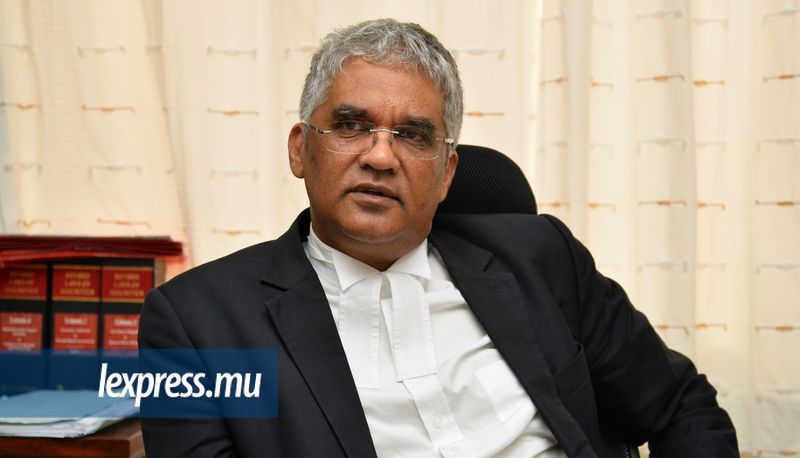
<B>By Subash CHACOWRY, </B> President, Association pour le Développement Durable,</I> [email protected]
The climate change conference in Bali, Indonesia last December concluded with some hope for humanity in an otherwise bleak scenario. Negotiations extended well beyond the deadline and reached breaking point on several occasions.
● <B>Bali conclusions</B>
A significant breakthrough was the ?Bali Roadmap? that sets the ground rules for reaching by 2009 a comprehensive agreement that would require developed countries to reduce greenhouse gas emission, the main culprit of global warming. Developing countries have agreed voluntarily to reduce their emissions.
The 2009 agreement is expected to replace the current Kyoto Protocol which will lapse by 2012. The Protocol is legally binding and is an offshoot of the convention on climate change. It requires developed countries to reduce gases causing warming to their 1990 value by the year 2012. Most likely, this target will not be reached. More stringent limits for developed countries will have to be negotiated.
Developing countries will be requested to play a more proactive role. These nations will need some kind of real, measurable and verifiable additional flow of resources if they are to implement the terms of the new agreement. The additional resources would encourage them to diversify their economies away from fossil fuels towards cleaner energies. Technology transfer would be essential to effect the transformation.
In preparation for the negotiations, the European Union is expected to adopt guidelines for cutting greenhouse gas emissions by 20 percent below 1990 levels by 2020, raising use of renewable energy in power production to 20 percent and using 10 percent of biofuels in transport by 2020. The United Nations has espoused climate change as one of its main priorities. Every summit or major conference on food security, poverty alleviation, transport or water resources calls for action to mitigate or adapt to climate change.
● The challenges for Mauritius</B>
The first of the preparatory meetings leading to the concluding Copenhagen, Denmark conference in 2009 was held in Bangkok in early April. As a signatory to the Kyoto Protocol and chair of the UN Small Island Developing States (SIDS) since 2005, Mauritius has a key role to play in the negotiation phases. It has to show leadership and ensure that favourable terms are negotiated. The Republic should also provide inputs to some of the main areas of activities related to the climate convention and its Protocol.
The Intergovernmental Panel on Climate Change provides authoritative scientific statement on climate change. Information contained in its latest 2007 report can be used to gear and integrate it in national activities aimed at curbing greenhouse gas emissions and in sustainable development policies. IPCC should be invited to provide timely and more accurate information on climate change scenarios and ensure wider participation from SIDS in its work.
A number of financial mechanisms exists to implement activities related to the convention on climate change and its protocol. Mauritius should avail itself of these opportunities while involving the various local actors.
The Global Environment Facility, a UN funding mechanism, has been requested to improve access to its funds for those countries that are particularly vulnerable to climate change.
Mauritius can take advantage of the Adaptation Fund.
A member from SIDS will be on the Fund Board. There is an urgent need to monitor the activities of the Fund and to submit projects that will enable the formulation of adaptation measures to combat the adverse effects of climate change.
In the context of the Clean Development Mechanism (CDM) of the climate change protocol, a re-assessment of the mandate and terms of reference of the institutional arrangement in particular the Designated National Authority should be undertaken. It is noted that there has been a change in the limit for small scale afforestation and reforestation CDM project. Therefore, micro-projects can be submitted for funding under the CDM. In conformity with the Bali conclusions, Parties to the Convention have to submit an audit of their capacity building status. The assessment on capacity has been evaluated and should be pursued. The UN system has been tasked to contribute to this effort. In order to work towards deep cuts needed to achieve the ultimate aim of the Convention, long-term cooperative actions would be required. The Republic could play an active role in bringing forward the SIDS?s viewpoint and experience on enhanced national/international action on mitigation and adaptation, technology development and transfer, and the provision of financial resources and investment.
The Southern African Development Community (SADC) international conference on poverty hosted by the Republic Mauritius in April has come up with several recommendations that relate to climate change and sustainable development. Mauritius could take the lead in ensuring that these are included in the portfolio of climate change negotiations.
The Bali roadmap and other successive decisions appear like an ever-growing complex puzzle that makes up the climate change process. For small delegations from SIDS, it is often difficult to follow all the negotiations simultaneously. SIDS has to work collectively with the support of civil society. Mauritius can and should provide the leadership in the difficult and uncertain years ahead.
It has the necessary arsenal for the battle ahead.
Publicité
Publicité
Les plus récents