Publicité

Does the state overspend?

According to the minister of Finance, public funds need to be used judiciously and discriminatingly by each and every ministry. Minister Sithanen is said to believe in this to such an extent that he was the first minister to set up an audit committee to act as internal auditor in his own ministry and to ensure that recommendations of the audit report are implemented. According to the PM, one of the ways to cut on the state?s bad habit of overspending is to spend more efficiently and judiciously.
Despite those good intentions and poli-tically correct statements, Parliament had to vote an additional Rs 1 billion on Tuesday to supplement the Rs 56 billion national budget that government had estimated the country would need in the year 2006-2007.
Of course, voting a supplementary budget is nothing extraordinary in itself ? after all estimates are estimates ? and supplementary budgets are voted yearly in almost every country. What begs the question of whether the additional spending was justified or not are in the nature of some of the explanations given by the minister of Finance in his attempt to justify the additional expenses; they betrayed a certain recklessness on the part of those meant to administer those public funds.
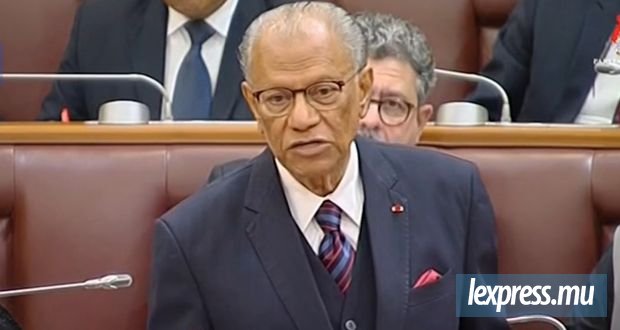
Rama Sithanen, minister of Finance said, in reply to an exasperated Suren Dayal (MP) who had a go at those who he reckons abuse public funds, that while one had to be judicious and discriminating when using public funds, it is a fact that money has to be spent in various ways and it is up to government to decide how to use that money.
While government decides, the National Audit Office, which is the external auditor of central government, supervises the spen-ding. What it finds while exercising that constitutional role is often a testament to how public officers perceive their role as trustees of ?public assets.?
Some ? not all obviously ? of the expenses Parliament voted for on Tuesday are proof of this. Prison authorities somehow ?forgot? to pay their water bills. Adjustments in money paid out to bus operators are made as well as endless other adjustments all resulting in more money being dished out to those who claim they need it. The list is indeed very long and totals around Rs 1 billion.
The national audit office sends a wake-up reminder every year as it publishes its report. Every year, the audit office points its accu-sing finger at the carelessness of some public officers in the exercise of their duties ? mainly delays ?, abuse of certain facilities like overtime and transport by others, all which end up costing the State, hence the people of Mauritius, money.
?Adjustments in money paid out to bus operators are made as well as endless other adjustments all resulting in more money being dished out to those who claim they need it.?
The mandate of the Director of Audit is very clear; he has to ensure that ?all reasonable precautions have been and are taken to ensure the collection of public money?, that all laws, directions and instructions ?relating to public money have been and are duly observed?, that all money ?appropriated or otherwise disbursed is applied for which Parliament intended to provide? and that ?adequate directions or instructions exist for the guidance of public officers entrusted with duties and functions connected with finance or storekeeping and that such instructions have been and are duly observed.?
All the director of the audit and his office can do, however, is make an audit, report and comment on it. The tone of the commentaries contained in the audit report is never neutral and often high-handed. Even this, it seems makes little difference in the management of public funds by those entrusted to do it.
The persistent offender is the ministry of Foreign affairs; the last audit report that has been published talks of the laxity and the abuses of the ministry?s high officials who besides the fact that they act with appalling carelessness with public funds, also show inexplicable reluctant ness in justifying their attitude.
This has not changed, as seen with the last budgetary exercise in Parliament two days ago. Although Finance minister Sithanen explains the over expenditure at diplomatic missions over the world mainly by ?fluctuations in the rate of foreign exchange? and ?an increase in chancery activities?, the fact that Rs 900,000 has to be supplemented to an initial budget of about Rs 800,000 is suspicious in itself. Additional funds required for the ambassador at UNESCO ? a previously part-time posting ? go unexplained.
Yet, despite it all, Mauritius ? officially at least ? adheres to the rules of good governance and has issued good governance codes.
Publicité
Publicité
Les plus récents