Publicité

Continued controversy over compensation

The battle for financial compensation for descendants of slaves is still on. Although it is far from becoming reality at the local level, Jean-Claude Armance, at least, has the feeling he has made his point at the National Assembly. Through a unanimous vote, the National Assembly committed itself to follow any action that would be brought up at an international level for financial compensation to slaves’ and indentured workers’ descendants.
With this commitment taken by the National Assembly, Mauritius now clearly recognizes that slave trade is a crime against humanity. Jean-Claude Armance and his acolytes, the Verts, are sure that the next step will now be financial reparation. “As soon as a crime is recognized, there should be reparation,” MP Armance claims.
The Prime Minister, Paul Bérenger, had always made it clear that his government is ready to follow an international movement for slaves and indentured workers’ descendants compensation. This unanimous vote at the National Assembly may indeed be considered as a victory for the Verts as it took two years to be adopted. However, this is not really surprising and does not mean that Mauritius will make the decision to pay compensation to its slaves’ and indentured workers’ descendants. The Prime Minister is adamant, “The government has never mentioned such a compensation in its electoral manifesto.”
<B>Practical considerations</B>
In any case, even if compensation were a topical item, there would be many problems to solve. Who can be considered as a slave’s descendant ? Who would pay them? The government or the proslavery descendants ? How to justify that persons, who have nothing to do with a crime, pay for what their ancestors did ?
Jean-Yves Violette, president of the Nelson Mandela center for African culture, admits that it is really hard to know the genealogy of a slave descendant today. Of course, there are projects such as “Origin” at the Nelson Mandela center, which make it possible for some families but not for all of them, or the civil status archives. But research remains really tough.
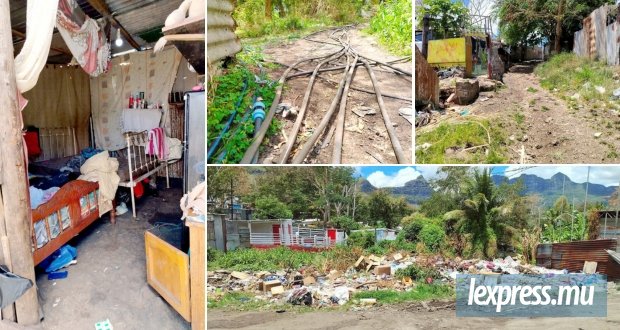
According to Jean-Yves Violette, asking proslavery descendants to pay for their ancestors’ crimes is “perfectly moral.” He is of the opinion that these people have a “duty” to the slaves’ descendants and have to do something for them, as they are the poorest of society today because of the historical heritage.
At the National Assembly, there seems to be a long way to go before reaching a consensus on the way financial compensation should be dealt with. The Verts and the opposition members seem to have opposite points of view on the issue. Madun Dulloo explains that “no government can be held responsible for this matter since independence” while Sylvio Michel takes the example of South Africa to justify compensation. In a nutshell, everyone sees the issue in his own way and it may be quite difficult to find a solution…
Publicité
Publicité
Les plus récents