Publicité

Constructive criticism

The economic crisis which Mauritius is facing may be the source of the prime minister’s bad mood. Unless it has to do with the uncertainties around the cause of the Grand-Bay blast…
Of course, the PM has good reason to be anxious. All the problems may come from abroad but we have to face them within the country. The three main pillars of our economy are indeed endangered.
External threats are plaguing our economy. Were they foreseeable? This is another question and this is not the time to dwell on “what we could have done”. We must rather ask what we can do now. And this is just the problem with our prime minister.
As usual, instead of tackling the root causes of the problems, which might invite criticism, he prefers to take it out on editorialists and “pseudo-newspapers.” He got on his high horse, when he referred to the Grand-Bay incident, warning journalists to check information before publishing it. He asked editorialists to make sure of the facts before over-reacting. Yet, we were the first to publish articles asking the population to “keep cool” several times. L’express had at all times made it clear that nothing could link this incident to a terrorist attack. We therefore assume that this particular criticism was not intended for “l’express”.
The conflict actually arose from the news in a weekly that the Federal Bureau of Investigation (FBI) was trying to find the names of all arrivals in Mauritius for the last three months. The prime minister said he had checked the information with the police and that there was nothing to that effect. This is probably true. We had the information that the FBI was trying to get a list but the police never confirmed this despite several attempts on our part.
But does the prime minister find it normal to leave the population for three weeks without any firm conclusion on such an important matter? For a journalist, whose duty is to inform, this is not normal. He cannot bear a grudge against us for trying to understand and report what really happened.
The prime minister almost lost his temper when a journalist asked him how he felt about the fact that the FSL report made it impossible to rule out a criminal motive for the blast. He did not even answer the question; he only said, visibly annoyed, that there was absolutely no reason to believe that the blast could be criminal in origin even if traces of nitro-glycerine were found on the site.
“If, as a journalist, you want to act as an expert, it is your own business. I am not an expert and cannot say anything on the issue,” he simply said. With diverging reports from the FBI and the FSL on the cause of the blast, we can understand his anger but this cannot justify his attack against the press… once more.
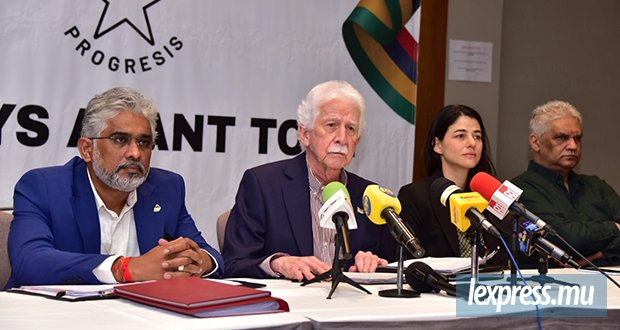
How can the prime minister give journalism lessons to journalists? Each of us has his own duty in society. Paul Bérenger should keep to his role of prime minister and not try to teach us how to do our jobs. We are not aiming at sensationalism. It is only a matter of telling the truth to the public.
The problem is that this is not the first time the prime minister is criticizing – let alone threatening - the press as he did last Saturday. We live in a democracy, which implies freedom of expression for everyone. This freedom does not give the right to the press to publish any information before checking the facts. We are conscious of our responsibility and have proved our goodwill so far. Our job is to account for anything that may jeopardize public interest. Sometimes this involves criticism or questioning of the authorities.
Publicité
Publicité
Les plus récents