Publicité

A feel for leather

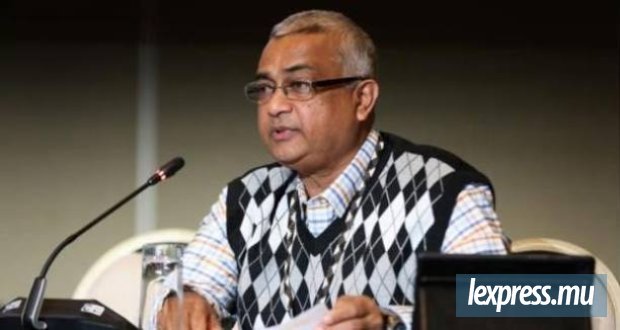
?Leather is in this year,? declares Duke, the young owner of Le Dakar Ltd, a small firm that makes shirts (mainly in silk and other natural fabrics) and jackets for local brands such as Billabong, Peace Angels, IV Play and Prototype as well as for export to Europe. ?We produce small quantities of high-class clothes that people want to wear because they know they won?t find them at half the price on the road-side.?
The textile crisis has not discouraged Duke, who has taken it as a challenge. After 10 years, he is now diversifying into leather products for the tourist sector. Orders from hotels for leather furnishings are pouring in. In his workshop in Terre-Rouge, he and his team of 40 to 50 people are hard at work.
The room is divided into various sections. In one of them, a worker is cutting out layers and layers of checked cloth on a long table. ?We import all our raw materials from Europe, mainly France,? explains Salim, Duke?s associate. The checked cloth is for the inner lining of jackets. The appropriate shapes are cut out and then dispatched to another post to be assembled. Next to the table, another worker is cutting out leather. ?We tend to use lamb-skin as it is of much better quality.? The skins, frilly pieces of unevenly shaped leather, are very soft and have a slight animal smell. The worker places the stencil on the leather and, with a sharp little cutter, he quickly but neatly cuts round the stencil. ?To make one jacket, we use 5 to 6 skins,? Duke points out. There is a lot of wastage, which explains the high cost of leather garments.
Once the different pieces of the jacket are ready, they are sewn together. One section of the room has two parallel rows of sewing machines where each person has a specific job. ?Our employees are mobile though and they move from one post to another to look after different stages of production,? says Duke. But he deplores the lack of motivation of Mauritian workers. ?The minister and unions are reticent to employ foreign workers and are telling us to encourage Mauritians to work in the textile factories but I have endless trouble trying to recruit local staff.? Duke employs many Indian workers and he trains them on the job so that they are mobile. ?Since we are nearly always producing different items at the same time, we need to be very organized and someone who works on one post must be able to move to another at some point.? He finds that there are fewer Mauritians willing to work in his sector. ?I could employ twice as many people as I do now,? he adds looking around him with a frown.
He has however realised how important it is to diversify. ?We want to introduce a totally new concept in Mauritius: floors made of leather,? Duke explains with enthusiasm. After receiving orders for items like leather mats and sofas, he thinks his concept could attract buyers.
Next to him, a worker is sewing the last details such as labels to a Peace Angels jacket. Behind him, a series of striped shirts are being ironed and folded into neat stacks. A group of women sitting around a table are packing the shirts into plastic covers and gently tossing them into boxes, ready to be delivered.
The business seems to be doing very well and, with his own brand Duke and a range of products under that name, Duke firmly intends to make the brand bearing his nickname famous. He and Salim are the designers for his product range. With sale outlets at Grand Bay, Curepipe and Port-Louis and one soon opening in Black River, his project seems to be turning into a success story.
Publicité
Publicité
Les plus récents