Publicité
Interview of…
Rom Atapattu : “We are investing in local talent, building a domestic franchise, and committing infrastructure’’
Par

Partager cet article
Interview of…
Rom Atapattu : “We are investing in local talent, building a domestic franchise, and committing infrastructure’’
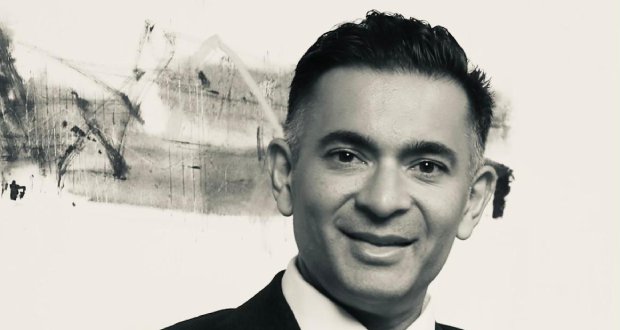
Along with Nikhilesh Pawar, Group Managing Director and Founding Partner also, Rom Atapattu is building what he describes as the private bank this jurisdiction has long been capable of hosting. Less than two years in, the institution already holds USD 750 million in assets under custody., and its ambitions for Mauritius are only just beginning.
Banque Patronus has been operating in Mauritius for less than two years. For readers who may not know the bank, how would you describe what you are building here and who it is for?
We are building the private bank that this jurisdiction has long been capable of hosting but has not yet had. The clients we serve, whether multigenerational business families, institutional investors, or family offices operating across multiple jurisdictions, do not need just another transactional bank. They need a strategic financial partner: one that understands the complexity of their structures, the sensitivity of their mandates, and the premium they place on continuity of relationship. Banque Patronus is being built specifically for that client. Our model is boutique by design. We carry minimal loan exposure. Client assets are held through Grade A global custodians. And the relationships underpinning this institution were cultivated over two to three decades at the private banking divisions of Deutsche Bank, Citibank, Fortis Bank, and Mirabaud. That is the foundation we are building on.
You have moved away from conventional retail banking toward private banking and wealth management. In a market where other banks dominate the conversation, is that not a risk? Building a bank that most Mauritians will never use?
The framing of that question reflects a conventional view of what banking is for. MCB and SBM are excellent institutions, for instance. They are not our competitors. We are not competing for the same clients, the same mandates, or the same share of wallet. The clients this jurisdiction competes for internationally, whether African family offices, South Asian institutional investors, or European high-net-worth individuals seeking a well-regulated, strategically located platform, require something entirely different. They require discretion, international infrastructure, and a depth of private banking expertise that a mass-market retail model cannot deliver. The risk, in our view, would have been to build another version of what already exists rather than what the market genuinely needs.
You mention USD 750 million in assets under custody since commencing operations. That is a significant figure for a young institution. Who are these clients, and what does it tell you that they trust Banque Patronus at this stage?
It tells us that relationships built over decades are more durable than age. These are institutional clients and sophisticated private clients who conduct rigorous due diligence before entrusting assets to any custodian. They reviewed our licence, our shareholders, our custodian relationships with BNY Mellon and Euroclear, our governance, and our senior team. They did not trust a balance sheet or a marketing brochure. They trusted people they have known and worked with for twenty and thirty years. That is, in the end, what private banking is. The USD 750 million figure is an expression of that continuity of confidence, transferred to a new vehicle that those same clients had a hand in shaping.
The bank’s licence process took two and a half years. Some observers have questioned why a new entrant needed that long. What does that timeline reflect about how the Bank of Mauritius assessed your application?
It reflects the seriousness with which the Bank of Mauritius approached its supervisory responsibility. A banking licence in this jurisdiction is not a formality. The regulator assessed the financial standing, professional competence, and integrity of every shareholder and every member of senior management, across multiple jurisdictions. For an institution with the international footprint of the Patronus group, with shareholders, custodian relationships, and client origination spanning Dubai, Geneva, London, Colombo, and Mauritius, that process is necessarily thorough. We welcomed that scrutiny. An institution that has passed through two and a half years of regulatory examination has a credibility that a more expedient process would not have conferred. Every licence condition was met in full, and we operate today under the continuous supervision of the Bank of Mauritius.
Banque Patronus is anchored by shareholders that include LOLC Financial Sector Holdings, part of the LOLC Group. What does a group with roots in microfinance and agribusiness bring to a boutique private bank in Mauritius?
LOLC Financial Sector Holdings is a shareholder of the Patronus group, and we value that relationship significantly. The LOLC Group is a publicly listed Sri Lankan conglomerate operating across 27 countries with a group value exceeding USD 4.5 billion. Their track record in financial services, which includes building PRASAC into Cambodia’s largest microfinance institution before its sale to KB Kookmin Bank of South Korea for USD 603 million, speaks to a disciplined, long-term approach to institution building that is entirely consonant with our own. What LOLC brings is not a product or a distribution channel. It is the credibility, the governance standards, and the long-term capital commitment of a serious institutional shareholder. For a bank in its formative years, that backing is both a strategic asset and a statement of intent.
 Nikhilesh Pawar, Group Managing Director and Founding Partner.
You describe the bank as currently in its investment phase, not yet at break-even. For depositors and clients reading this, what assurances can you give about the safety of their funds?
The assurances are structural, not rhetorical. Every deposit held with Banque Patronus is safe and fully honoured. Our balance sheet is conservative by design. We carry minimal loan exposure, which means we are not subject to the credit risk that characterises conventional banking. Client assets are held with BNY Mellon and Euroclear, custodians of unquestioned standing. Deposits are deployed with Mauritian banks on a fiduciary basis. The investment phase we describe is the cost of repositioning and building. It is not a reflection of any impairment to our capital adequacy or our ability to honour our obligations. The bank’s shareholders are committed to this institution for the long term, and that commitment is evidenced not by statements but by the capital already deployed.
The bank is headquartered at the Dubai International Financial Centre, with teams in Geneva, London, Dubai and Mauritius. How does Mauritius fit into that geography? Is this a base of operations or a market in its own right?
Mauritius is both, and that dual character is precisely what makes it compelling. As a regulated banking jurisdiction with a sophisticated legal framework, treaty network, and proximity to both the African continent and South and Southeast Asia, it functions as an irreplaceable operational platform. But it is also a genuine market. The Mauritian private client segment, the domestic family office community, and the international businesses that use this jurisdiction as their African gateway represent a client base that we intend to serve directly and seriously. We are not here as a conduit. We are investing in local talent, building a domestic franchise, and committing infrastructure to this jurisdiction for the long term. When we speak of Mauritius as a serious international financial centre, we mean it, and we intend to be part of making it one.
You speak of bringing a Swiss-style wealth management philosophy to Mauritius. But Switzerland and Mauritius are very different jurisdictions in terms of regulatory depth, talent pool, and market size. How realistic is that ambition here?
The comparison with Switzerland is one of philosophy, not of scale. What Swiss private banking has long represented is a standard of service, not a geographic designation: discretion, relationship continuity, multi-generational client stewardship, conservative asset management, and the primacy of the client’s long-term interest over the institution’s short-term revenue. Mauritius has a credible regulatory framework, a deepening talent pool, and a geographic and treaty position that no other jurisdiction on the African continent can replicate. The ambition is not to recreate Geneva in Port-Louis. It is to demonstrate that the standard of private banking those clients expect, and currently travel to Switzerland or Singapore to access, can be delivered here, with the added advantage of proximity, cultural fluency, and a jurisdiction that understands their structures. That is realistic. We are already doing it.
The clients you are targeting already have relationships with established private banks. What does Banque Patronus offer that those institutions do not?
Continuity of relationship, primarily. The clients we serve came to us not because they discovered us, but because they have known the principals of this institution for twenty or thirty years. The relationships that built this bank were formed at Deutsche Bank, Citibank, Fortis Bank, and Mirabaud, at the level of private banking mandates that span legal structures, succession planning, investment strategy, and custody across multiple jurisdictions. What the large institutions offer is infrastructure and brand. What they cannot always offer is the senior-level continuity that those clients require: the certainty that the person who understood their structure ten years ago is still the person responsible for their mandate today. That is what we offer. At Banque Patronus, the principals are the bankers. That distinction matters enormously to the clients we serve.
Where do you want Banque Patronus to be in five years, in terms of assets, presence, and what it represents for the Mauritius International Financial Centre?
In five years, we intend to have passed through our investment phase and reached a sustainable operating model, with assets under custody that reflect our position as one of the leading private banking institutions in this jurisdiction. We are targeting an enterprise value consistent with a bank that has built genuine franchise value: not a balance sheet exercise, but an institution with a client base, a brand, and a track record that the market recognises. In terms of presence, we expect to be fully staffed across our four locations, with a meaningful domestic talent development programme in Mauritius and a physical footprint that reflects our long-term commitment to this market. And in terms of what we represent for the Mauritius IFC, we hope to have made the case, by example, that this jurisdiction can host institutions of genuine private banking calibre. That is a contribution we take seriously. Mauritius competes internationally. We intend to give it something worth competing with.
Publicité
Publicité
Les plus récents