Publicité
Slavery and Representation
Mauritian History, but not Mauritian Screens
Par

Partager cet article
Slavery and Representation
Mauritian History, but not Mauritian Screens
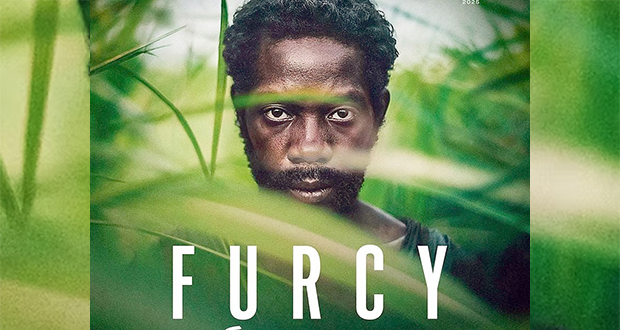
Furcy, né libre (2025) by Abd Al Malik is a recent movie on Indian Ocean slavery at the turn of the 19th century. Cinematically astounding and committed to illuminating oft-overlooked aspects of chattel slavery in the Indian Ocean, Furcy, né libre has played in cinemas in France and Belgium, as well as the French overseas departments of Réunion and Martinique. However, despite Mauritius being central to its storyline, it has not been released in local cinemas. Ironically, then, this creative work which is in large part about Mauritius is not available to Mauritians themselves: it leaves Mauritians on the sidelines when it comes to engaging with their own country’s history.
Furcy, né libre is inspired by the true story of Joseph Madeleine Furcy, an enslaved young man born on Ile Bourbon (present-day Réunion) at the end of the 18th century. Upon his mother’s death, he finds her papiers d’affranchissement. Thus convinced that he was né libre, Furcy begins a tortuous legal battle for his freedom that will lead him from the streets of Ile Bourbon to the sugarcane fields of Ile de France (present-day Mauritius) and the courtrooms of Paris.
Furcy, né libre was released around a year after Simon Moutaïrou’s Ni chaînes ni maîtres (2024), which Mauritian audiences will be familiar with, given the powerful impact it made upon its release in local cinemas in September 2024 (quite uniquely, on the very same day it was released in France). Both Furcy, né libre and Ni chaînes ni maîtres are committed to illuminating Indian Ocean histories from enslaved perspectives. However, they take very different approaches to this project, such that they both become strikingly distinctive contributions to a broader creative mosaic. To cite two key examples: While the protagonists in Ni chaînes ni maîtres completely reject the colonial system by joining the maroon community of Le Morne, the protagonist of Furcy, né libre fights for his freedom within the confines of that system, bringing his legal battle all the way to the sombre courtrooms of Paris. And while the protagonists of Ni chaînes ni maîtres proudly celebrate their Wolof roots, that of Furcy, né libre struggles to piece together his own origins, anchored in his mother’s natal place in India.
Watching the movie in Paris’s Châtelet last month, my mouth literally fell open when I heard, during one of the courtroom trial scenes, that Furcy’s mother was born in Chandranagore – Chandannagar, in West Bengal. She was bought for a pittance by a French woman and made into a domestic worker. Later, this same woman brought her to France, and then donated her to a couple who was making its way to Ile de France. The details regarding his mother’s origins are not circumstantial: they become a key point in Furcy’s legal battle for freedom, and thus become an entryway into an important discussion on how the buying and selling of enslaved bodies was by no means restricted to Africa. Indeed, the slave trade spread its tentacles deep into the Indian subcontinent, and the resulting trafficking of human bodies became an important thread – alongside those of indentured labour and free migration – connecting Mauritius and Réunion to the Indian subcontinent.
While Furcy, né libre is by no means a perfect movie, it is a must-watch for various audiences, for distinct reasons. In Mauritius, the fact that enslaved people came to the Indian Ocean from India remains little known, or perhaps more so conveniently silenced: the general consensus continues to be that slavery is a historical phenomenon relevant only to those of African descent. In such a context, Furcy, né libre would have the crucial function of holding up a mirror to a society that might not be ready to look at its history frontally.
In other contexts, such as in the United States and Canada, where I have the most experience teaching these subjects, and where conversations around slavery continue to revolve around the Americas and the Caribbean, the idea of slaves coming from the Indian continent is virtually unknown. In such a context, Furcy, né libre is less of a mirror and rather a gateway into a completely new world, opening up novel avenues of inquiry.
The experience of watching Furcy, né libre in Paris was bittersweet. As a Mauritian, it meant something important to see our history and region brought to life on a global silver screen, after it has been invisibilised – even to our own eyes – for so long. After all, my mouth did not fall open in the cinema hall because I was previously unaware that enslaved people had come to Mauritius and Reunion from India. It fell open because I had never expected this very specific (and yet important) part of our Indian Ocean history was represented on the silver screen in (what we have come to understand as) one of the “cultural capitals” of the world. Representation is powerful, and it is indeed high time our (hi)stories were represented, including on global stages.
At the same time, a feeling of frustration continues to persist: What does it mean that Mauritians must live in or travel to Paris in order to access this movie about their own history? I do not mean this as criticism targeting this specific movie in particular: rather than an anomaly, its trajectory is consistent with an extractive creative economy that continues to see us – islands, the Indian Ocean, Africa, the Global South – as creative fodder, but does not necessarily see us as audience members worthy of consuming those stories. But this pattern is not a fatality. Intentional departures from it, such as that of Ni chaînes ni maîtres, alluded to earlier, – the fruit of the director’s commitment to putting both France and Mauritius “à pied d’égalité quant à la sortie du film,” to borrow his own words – show us that change is possible.
As movies like Ni chaînes ni maîtres and Furcy, né libre remind us: Stories are political. Let us not forget that their patterns of distribution and circulation are political, too.
Publicité
Publicité
Les plus récents