Publicité
Analysis
Global Gen Z Resistance
Par

Partager cet article
Analysis
Global Gen Z Resistance
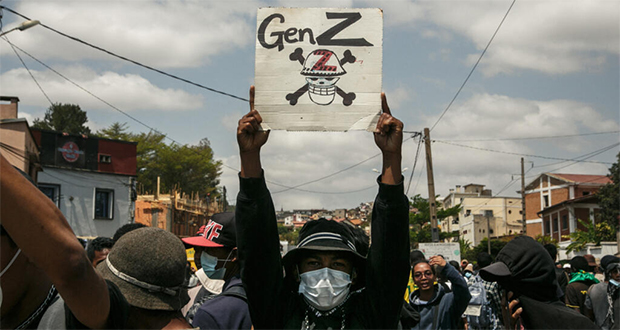
Bangladesh. Indonesia. Kenya. Madagascar. Morocco. Nepal. Paraguay. Peru. Philippines. Serbia. Sri Lanka. Timor-Leste.
Two months ago, the connection between these different countries of the Global South would have been unclear. Today, anybody following the news would be able to identify them as epicentres of rippling global waves of “Gen Z protests”: Around the world, young people between the ages of 13 and 28 are rising up against socioeconomic inequalities and corruption. Their demand? A future in which the odds are not stacked against them.
In many ways, these protests bring fresh hope. First of all, they show that accusations of this newer generation of being “apolitical” or “apathetic” are misguided: Gen-Z simply engages in politics differently from previous generations. Secondly, these uprisings show that rapid and significant change is possible – after all, it only took a few days for the Nepali government to be toppled. And thirdly, these uprisings show that old paradigms need not be the norm: For example, rather than rallying behind a single glorified leader, these protests have been characterized by a lack of individualized leadership. Instead, their collective and decentralized nature, which has relied on communication via social media, highlights what has always been true and yet obscured by tendencies of deification: the success of social movements can never be attributed to a single person, no matter how charismatic or visionary. Rather, such movements rely on the people who nourish them to succeed.
Horrific violence
These powerful markers of hope, however, come to us tempered by caution. In many places, Gen-Z protests have degenerated into horrific violence: in Nepal in September, for example, what began as peaceful protests eventually led to pillage and arson. Nepali burn victims could be found across the spectrum, including young protesters as well as the wife of the then Prime Minister, who sustained serious burn injuries after her house was set afire. Such violence shows how movements for social reform may spin out of control, discrediting and sullying legitimate demands for change.
Additionally, these movements themselves emerge from the ashes of previous revolts for change – cautioning us that the rhetoric of “radical change” can simply mask a change of appearances. For example, in Madagascar, the very same place de la Démocratie where protesters are today demonstrating against President Andry Rajoelina, is the site where Rajoelina’s supporters themselves gathered many years ago in order to protest the then-government. At the time, many considered Rajoelina an alternative to dictatorship. Over time, however, his Presidency would come to symbolize yet another chapter in a long story of postcolonial disappointment. The shift in power that was expected to herald change ended up being continuity under a different garb.
«L’injustice criante»
As an incisive editorial published earlier this week in l’express underlines, there are key “lessons” that Mauritius could learn from the uprisings in Madagascar. Some are specific to the supply of basic necessities: «Les autorités mauriciennes ont encore le temps d’apprendre : l’électricité et l’eau sont nos lignes rouges sociales. Les franchir, c’est ouvrir la porte à une colère qui, comme à Antananarivo, ne connaît plus de chef ni de canal.» The most important takeaway, perhaps, is a universal principle that echoes across time and space, and yet remains too often unheard: «Un peuple peut supporter longtemps la pauvreté silencieuse mais pas l’injustice criante.»
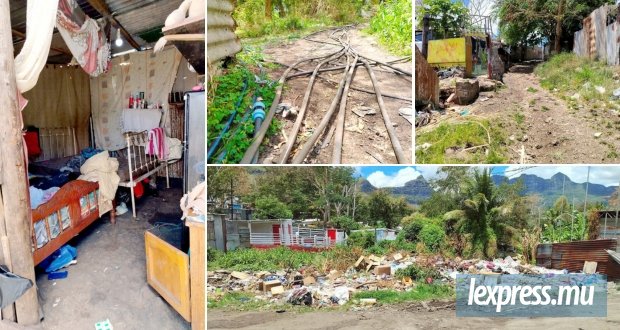
Other resonances exist between Mauritian realities and those denounced by Gen-Z protests. In Morocco, for example, GenZ 212 has been decrying the government’s policy of massively funding football stadiums in view of the 2030 FIFA World Cup, while public infrastructure such as hospitals remain in shambles. There can, of course, be no straightforward equivalence with Mauritius, where significant resources have been poured into the public healthcare system by successive governments. But the principle of carefully curating a glittering façade for the foreign gaze, while local realities remain shrouded in darkness, has long been relevant on our island. Billboards continue advertising luxury villas as paradisiacal living, while Mauritian houses get flooded during heavy rains and local access to beaches get increasingly restricted.
Gen-Z protests did not happen on Mauritian streets in September 2025. But they may well be longsimmering under the surface of a tropical paradise. They often erupt in fictional works from our island, be it Ananda Devi’s award-winning Ève de ses décombres (2006) or her more recent Le Jour des caméléons (2024). Fiction does not need to be true for it to be real. Sometimes, it crystallizes the truths hiding in plain sight. Sometimes, it gives shape to the realities that we are too mired in to notice. In Tropique de la violence (2016), Nathacha Appanah formulates the following phrase in order to refer to yet another one of our neighboring Indian Ocean islands, Mayotte: «Ce pays ressemble à une poussière incandescente et je sais qu’il suffira d’un rien pour qu’il s’embrase.»
Do these words hold true of Mauritius, too?
Publicité
Publicité
Les plus récents