Publicité
Insight
Ecocide, the first step towards a fully integrated eco-centric legal framework?
Par

Partager cet article
Insight
Ecocide, the first step towards a fully integrated eco-centric legal framework?
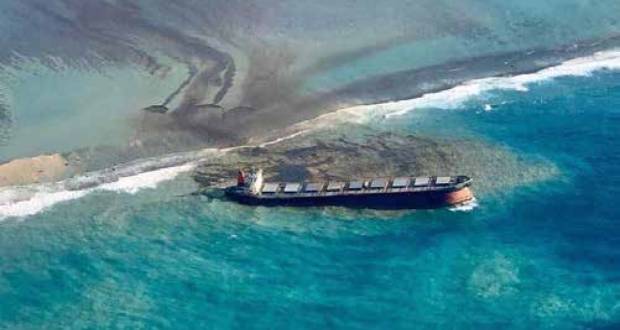
The “MV Wakashio” oil spill illustrates the kind of severe environmental damage that could now fall under the crime of ecocide in Mauritius.
Through an amendment to the Environment Act, the Bill voted by the National Assembly on Tuesday 14th April 2026 to improve the country’s anti-money laundering strategy, gives recognition to the crime of ecocide, announcing Mauritius’ support to the worldwide effort to stop wanton destruction of the environment.
The introduction of ecocide as a crime went nearly unnoticed during parliamentary debates, though it marks a turning point in environmental law and corporate accountability. This policy measure is in line with a global movement to incorporate offences related to ecocide within international and domestic legal frameworks, the aim being to prevent, deter and prosecute the most severe harm to the environment.
The legal definition of ecocide covers unlawful or wanton acts that are committed with knowledge of, or reckless disregard to, the consequential likelihood of severe and either widespread or long-term environmental damage. This definition reflects the 2021 definition drafted by the Independent Expert Panel, which has become the global benchmark definition for ecocide. It has shaped the European Union’s directive on environmental crime (Directive 2024/1203) and is intended to be incorporated into the Rome Statute of the International Criminal Court as a fifth international crime alongside genocide, war crimes, crimes against humanity and crimes of aggression.
The definition adopted by the Environment Act establishes a high threshold for environmental harm and is designed to tackle the most severe environmental destruction, deliberately distinguishing it from smaller scale industrial pollution or environmental damage. It is therefore not intended as a law which criminalizes all economic activities with environmental impacts. As such, the extent of ecological devastation that the legislation aims to cover would include acts of massive deforestation and widespread industrial pollution of soil, air or water.
Whilst speculative, to put it in context, ecocide would likely cover acts similar to industrial fishing practices bringing a species to the brink of ecological collapse or leading to the mass destruction of coral reefs, extraction and distribution of fossil fuel contributing to climate change through vast emissions of carbon dioxide, or a major oil spill such as the MV Wakashio oil spill.
Prior to the present amendment, the Environment Act was one which provided a system that was predominantly regulatory, largely focusing on compliance, setting standards and guidelines, and creating an administrative framework for policing and development. Breaches of the Environment Act were often met with fines and compliance notices, liability being predominantly attached to the corporation.
One of the significant changes being brought by criminalizing ecocide is this shift from corporate impunity to personal criminal liability of high-level decision makers, including corporate executives, investors and public officials. They face, on conviction for the crime of ecocide, up to ten years of penal servitude as well as the imposition of fines which are calculated on the basis of the gravity of the crime, the severity of the environmental damage, the financial capacity of the responsible party and the financial gain derived from the illegal action, likely leading to hefty and uncapped monetary penalties.
The legal ramifications extend beyond these penalties as the Act also provides for accessory non-criminal penalties including an obligation to restore the environment if the damage is reversible or one to pay compensation if the damage is irreversible, the exclusion from access to public funding, the withdrawal of permits/authorisations to pursue activities that resulted in the offence as well as the liability to pay expenses borne by the Director of the Environment as a result of the ecocide.
Whilst the global trend is to render governments and high ranking public officials liable for the crime of ecocide, there has been no proposed amendment of section 144 of the Environment Act which limits the criminal liability of certain public officials including the Minister of Environment, Solid Waste Management and Climate Change, the Director of the Environment, officers of the Ministry of the Environment, Solid Waste Management and Climate Change and of other related public departments.
Accordingly, proof of bad faith on the part of the public officers remains a sine qua non condition to a successful prosecution in matters of ecocide under our domestic laws. Whilst bad faith may, in appropriate circumstances, be inferred from the “wanton acts”, a wanton act may not always be driven by a dishonest motive, thus adding a significant burden in prosecuting public officers. This being said, whilst the liability of the government and high-ranking public officials may be excluded under our domestic laws, their immunity is not absolute, and they could still remain liable for violations under international criminal law.
Systemic inadequacies
Of note, in the case of the MV Wakashio oil spill, the only parties arrested and criminally prosecuted under Mauritian laws were the captain of the vessel and its first officer. They were both prosecuted under maritime laws, not under the now repealed Environment Protection Act 2002. This ecological catastrophe exposed systemic inadequacies in our environmental justice as well as the inability of our institutions to handle a disaster of such a scale.
Nearly six years after the oil spill, lingering questions regarding the adequacy of compensation, restoration and accountability persist. At least, the country’s worst ecological disaster forced our executive and legislature to re-evaluate and strengthen our legal framework. The introduction of ecocide within our laws will, to a certain extent, palliate some of the significant lacunas within our current environmental laws and will raise the benchmark for the measures required in the protection of our environment.
One of the key strengths of the introduction of the crime of ecocide is its potential to act as a preventive deterrent and hopefully, force a shift towards sustainable practices and developments. Decision makers, promoters, executive members of corporations and polluters are now bound to ask themselves, “Is this going to create severe harm to the environment?,” not because they have suddenly developed an ecological conscience but because they could be held personally and criminally liable. This is a powerful deterrent.
Whilst the introduction of the crime of ecocide is a significant step in the right direction and marks a much-needed shift towards greater environmental justice, it is crucial to bear in mind that voting and adopting a law is probably the easiest part of realising change – especially when its motivation does not take its root from the grassroots but as an indirect – and presumably unintended – upshot from the fight against money laundering. If effectiveness is the mantra, then the financial services industry, and in particular the global business sector, is called to revise and enhance its sustainable finance strategy.
Implementing the proper enforcement mechanism is likely to be the biggest challenge in bringing ecocide to life under our domestic laws. It will require considerable policy strategy, standard-setting, funding, training, staffing, technological investment, political will and institutional capacity to establish a legal framework for ecocide. Enforcement not only requires prevention and detection; it also requires successful prosecution. There are many hurdles in matters of environmental prosecution.
Since damage is gradual and requires long-term analysis, it is extremely complex and costly to properly assess causation and degree of harm leading to compensation and monetary penalisation. Further, the proposed legal definition of ecocide is such that to establish “wanton act” or “severe damage”, clear and compelling scientific evidence will have to be garnered at the stage of the investigation to prove that the damage was massive, foreseeable and excessive. Scientific certainty teeters in matters where damage is progressive and causation links less evident.
Conviction can be hard, complex and costly to secure. It remains to be tested what would in fact be considered by our courts as severe and widespread or long-term damage, and which forms of serious environmental damage will this high threshold exclude from the scope of the crime of ecocide. In a small island state such as ours, where geographical, environmental and socio-economic characteristics often blur the lines between small-scale and systemic, determining what would constitute widespread damage rather than localised damage may add an extra hurdle in prosecuting cases under the ecocide legislation.
The introduction of the crime of ecocide is hopefully the first step towards a fully integrated eco-centric legal framework where nature and all living beings are considered as having intrinsic value and legal standing. As at date, whilst the integration of the crime of ecocide within our laws is commendable, our legal framework is still predominantly anthropocentric, categorizing nature as property and resources, with its right to protection being essentially measured and determined by its utility to the human race.
Such human-centric approach is widely and repeatedly cited as a root cause and driver of climate change, environmental destruction and degradation. In championing sustainability – true sustainability in the sense of safeguarding the right of future generations –, Mauritius can no longer view and treat nature solely as resources to be exploited for the benefits of humankind.
Publicité
Publicité
Les plus récents