Publicité
Analyse
«Ce terrorisme intime»
Par

Partager cet article
Analyse
«Ce terrorisme intime»

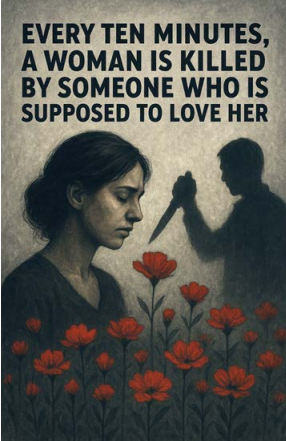
Every ten minutes, a woman is killed by someone who is supposed to love her.
And even this shocking figure, drawn from a 2024 UN report on global femicide, does not encapsulate the full extent of the issue, due to regional specificities and stigmas associated with tracking down and recording such crimes.
In Mauritius, as in many other parts of the world, femicides are woven into our reality. The most recent example, the murder of a woman by her husband struggling with substance abuse, occurred barely two months ago. And yet, such violence against women is rarely discussed in a sustained manner that goes beyond immediate headlines. The deeper questions remain unaddressed: What makes men enact violence upon those they (profess to) love? Why do women stay even when they know they could be in danger? How does shame possibly become so powerful that it leads one to choose silence, even when that silence is synonymous with death?
It is within this complex terrain that Nathacha Appanah anchors her latest literary work. La Nuit Au Coeur(2025), published last month and longlisted this week for both the Prix Goncourt and the Prix Renaudot, follows three narratives of what the author calls “ce terrorisme intime qu’est la violence conjugale.” The first narrative is borne out of the author’s own experience: Appanah tells the story of her encounter, at the age of 17, with a man thirty years her senior, who will later entrap her in a spiral of both physical and emotional violence. The second narrative is that of her cousin, Emma, whose husband runs her over with a car and then justifies his actions to the press: “Li pe tromp mwa. Mo finn desid pou fini avek li… Mo latet fatige… Mo bien sagrin sa ki finn arive.” Contrasting with the first two accounts set in Mauritius, the third is set in France, and follows the tragic story of a young Algerian woman who is burned alive by her husband driven to the brink by jealousy and resentment.
There is much about femicide that is clear and unequivocal: It is a human rights violation. It is legally and morally reprehensible. It can never be justified, no matter what the circumstances. On the other hand, there is also much about it that remains ungraspable, as indicated by the interrogations evoked above. One of the biggest strengths of Appanah’s text is the careful equilibrium it strikes between these two facets.
Indeed: even as La Nuit Au Coeur emphasizes the horror of crimes against women, it never flattens them to a binaristic goodversus-evil narrative. Instead, it acknowledges that men capable of the worst violence are also capable of deep tenderness – a contradiction that makes them even more dangerous. It describes the pain of parents who realize, only after losing their daughters, that for a woman, the price of marrying the wrong man can be a gruesome death. It engages with the shame that structures a society where women are taught, from very early on, to “fer bonn fiy” – a gendered Mauritian ideal that the author skilfuly dissects. Reflecting upon her cousin Emma’s memory, Appanah shares: “Ce n’est pas seulement triste d’être tuée comme ça, c’est aussi honteux, ça fait scandale, ça fait parler les autres, ça jette l’opprobre. J’entendais, en soustexte: ‘Qu’est-ce qu’elle a fait pour le pousser à bout? Est-ce vraiment uniquement sa faute à lui?’” This meditation highlights how stigma leads to a kind of double death: after the first, literal loss of life, there is a loss of identity through erasure, as even those close to the deceased women are uncomfortable speaking about her. In this way, the victim’s memory becomes forever tarnished by a suspicion of looseness that – somehow –remains more condemnable than solid proof of the crime committed against her.
Within this context of shame that follows victims more than perpetrators, La Nuit Au Coeur is an extremely courageous literary work, all the more so because of its strong autobiographical element. It is also an extremely elegant text, which decries what is wrong without falling into either high-pitched outrage or repetitive blame. Instead, it adopts a tone of honest vulnerability as it engages with the misplaced guilt that victims often experience – “Ai-je été une victim idéale?” – as well as the contradictory notion that one may miss one’s old life, even if that existence contained elements of abuse. By sharing her experiences, Appanah re-fashions shame from a feeling that imprisons to one that may be exorcised through articulation: “Il faut dire ces choses qui nous font honte.”
La Nuit Au Coeur, then, is the kind of text that one could say all young boys and girls on the island should read. It is the kind of text that fosters the kind of critical thinking we need for a better society: one that shows, rather than tells, why “mo latet fatige” is never a valid excuse to raise one’s hand on a woman.
Publicité
Publicité
Les plus récents