Publicité
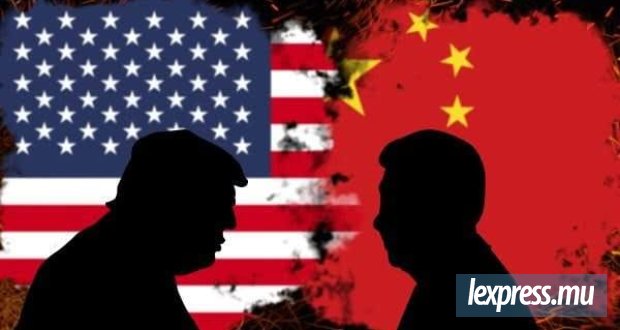
Putin says US want to dominate the world
Par

Partager cet article
Putin says US want to dominate the world

Russian President Vladimir Putin, in one of his harshest attacks on the United States in seven years in power, accused Washington on Saturday of attempting to force its will on the world. The White House said it was ?surprised and disappointed? by Putin?s accusations but added Washington will continue to work with Moscow in areas such as counter-terrorism and reducing the spread and threat of weapons of mass destruction. Europeans saw his speech as a wake-up call from a tougher Russia.
In a speech in Germany, which one US senator said smacked of Cold War rhetoric, Putin accused the United States of making the world a more dangerous place by pursuing policies aimed at making it ?one single master?. Attacking the concept of a ?unipolar? world in which the United States was the sole superpower, he said: ?What is a unipolar world? No matter how we beautify this term it means one single centre of power, one single centre of force and one single master.? ?People are always teaching us democracy but the people who teach us democracy don't want to learn it themselves?, he added.
Increasing tensions
Gordon Johndroe, press secretary for the White House National Security Council, rejected Putin's comments : ?We are surprised and disappointed with President Putin's comments. His accusations are wrong.?
The Kremlin has for several weeks been dropping hints that Putin, who steps down next year after two terms in power, was preparing a major foreign policy speech that would point the way for his successor. Its delivery at the prestigious annual Munich meeting on security was clearly aimed at attracting maximum attention. ?The message I got from his speech was that Putin wants Russia to have the same position in the world as the former Soviet Union,? a senior European official told Reuters.
Putin spoke against a background of increasing Russian agitation over US policy on Iraq, and on the Iran and North Korea nuclear issues, as well as growing self-confidence as an emerging energy superpower. US plans to deploy parts of an anti-missile defense system in Poland and the Czech Republic have become a fresh irritant in US-Russian relations. Washington says the system is needed for defense against rockets launched by Iran and North Korea -- an argument rejected by Moscow.
Putin said the United States had repeatedly overstepped its national borders in questions of international security, a policy that he said had made the world less, not more, safe. ?Unilateral actions have not resolved conflicts but have made them worse,? Putin said, adding that force should only be used when backed by the UN Security Council. ?This is very dangerous. Nobody feels secure any more because nobody can hide behind international law,? he said.
Putin also said the increased use of force was ?causing an arms race with the desire of countries to get nuclear weapons?. He did not name the countries. He mentioned no specific conflicts but he has been very critical of the US-led invasion of Iraq in 2003, where US soldiers are still struggling to crush an insurgency.
New Defense Secretary Robert Gates, the top American official, dismissed the attack on US foreign policy as the blunt talk of an old spy. He added that the speech had not stopped him accepting an invitation from former KGB agent Putin to visit Russia. ?One Cold War was quite enough,? Gates told the meeting.
US Senator Joseph Lieberman said the speech was provocative and marked by ?rhetoric that sounded more like the Cold War?. NATO Secretary-General Jaap de Hoop Scheffer said he was disappointed by Putin's statement that alliance enlargement was ?a serious factor provoking reduced mutual trust?. ?I see a disconnection between NATO's partnership with Russia as it has developed and Putin's speech.?
?An invitation to think?
Kremlin spokesman Dmitry Peskov, however, denied the Russian president was trying to provoke Washington. ?This is not about confrontation. It's an invitation to think,? he told reporters.
?We should take him at his word. This was the real Russia of now, and possibly in four or five years time it could go further in this direction,? Swedish Foreign Minister Carl Bildt told Reuters on the margins of the annual Munich gathering.
Russian-West relations are at a crucial point, with the United States and its allies appealing for Moscow's support to resolve the dispute over Iran's nuclear ambitions and in securing the future of the breakaway Serb province of Kosovo. The European Union wants to negotiate a new partnership pact with Moscow, knowing all the time that its hand is weakened by its dependence on Russian energy supplies. ?I do not see how we can negotiate a new partnership pact on this basis,? said German Green Angelika Beer, a member of the European Parliament.
?We need Russia for energy and Kosovo. He knows that -- but perhaps he is going over the top,? she said, noting that the short shrift Putin gave to questions about human rights concerns at the meeting had alienated many potential sympathisers.
US allies jumped on Putin's speech to declare that it showed why the West should show a united front to Moscow. Czech Foreign Minister Karel Schwarzenberg ironically thanked him, saying he had vindicated NATO's decision to taken in members from the former Soviet east over the past decade.
?This Munich conference is normally about the Americans and Europeans bitching at each other,? said Ron Asmus, executive director of the Transatlantic Center thinktank in Brussels. ?It will be interesting to see whether Putin actually managed to bring us together.?
Publicité
Publicité
Les plus récents