Publicité

PM moves for more efficient ICAC

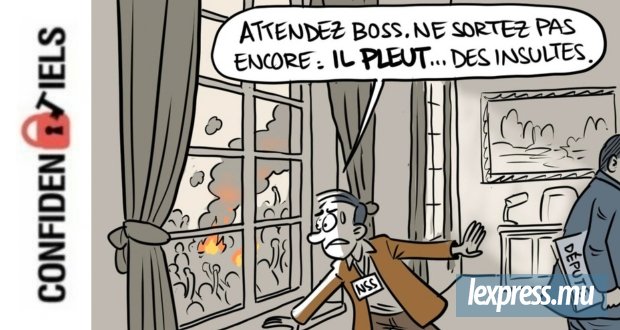
Member of Parliament Françoise Labelle’s resignation from the parliamentary committee on the Independent Commission against Corruption (ICAC) is yet another indication that things are rotten in the kingdom of anticorruption. The prime minister, Paul Bérenger, who was himself rebuffed by ICAC, seems to have decided that it is high time amendments were made to the Prevention of Corruption Act (POCA) so as to put things in order and make ICAC toe the line.
“After taking several factors into account, I have decided to resign,” MP Labelle declared. She explained that she could not function in a committee that is working at half steam.
When the committee was created, ten members – five from the government and five from the opposition – were appointed to monitor ICAC’s operations and report to the House. The opposition members were soon discontented with the way the committee was managed, and particularly with the president, Rasheed Daureeawoo. After submitting a motion of no confidence, they have stopped attending committee meetings. As a result, says MP Labelle, the committee is paralysed: “I find it unfair that only three or four members are active on this committee while ten people were appointed by the legislation.”
James Burty David, the opposition spokesperson and member of the parliamentary committee, has already commented the situation. “MP Labelle’s resigning confirms the criticisms of the opposition concerning the standstill and indulgence within this committee.” He adds: “This new resignation should make Rachid Daureeawoo understand that he has to go. The majority has already left. What is he waiting for to resign in an honourable manner?”
<B>The law or the spirit of the law</B>
Though Françoise Labelle does not say so, her resignation is most probably linked to the way Rasheed Daureeawoo has been dealing with the ICAC affairs. The prime minister, has voiced out his anger against the ICAC and its parliamentary committee time and time again. But he has never been able to follow through.
As a member of the Militant Socialist Movement (MSM), Rasheed Daureawoo is protected by members of his party. It is worth remembering the reluctance of the President of the Republic, Sir Anerood Jugnauth, to convene the Appointments’ Committee and discuss the matter with the other members, prime minister Paul Bérenger and opposition leader Navin Ramgoolam. Arvin Boolell might not be totally wrong when he says that “the ICAC cannot work properly because of a conflict between Réduit and the Treasury building.”
Paul Bérenger’s patience seems to have been over-stretched when he asked ICAC for information on the number of charges and provisional charges the ICAC had lodged so far. The ICAC simply refused to give the information. “It is true that some information can be given to the parliamentary committee only but those details that the PM required could well have been given. There is the law and the spirit of the law,” a senior civil servant comments.
The committee chaired by the prime minister set up to review the POCA met for the first time last week. It is composed of ministers Pravind Jugnauth, Emmanuel Leung Shing, Anil Gayan, Sushil Kushiram as well as MP Ivan Collendavelloo, the cabinet secretary, the domestic affairs secretary and the solicitor general. One of the main amendments would go towards making the ICAC accountable to parliament.
<B>Need for a renewal of confidence</B>
With all the criticism the ICAC has faced over the past months, the committee has a lot on its plate; Jack Bizlall alleged that commissioner Navin Beekarry obtained advantages from a car company when he bought his new car. Although the inquiry is not complete yet, the committee will have to see exactly what “gratification” means under the POCA.
Likewise, the government has decided to review the legislation to facilitate ways for the ICAC to obtain bank information. The recent conflict with the State Bank of Mauritius – ICAC wanted to have access to accounts of some SBM clients – has stressed the need to clarify the procedures to obtain bank information on suspicious customers.
As corruption does not seem to dwindle in Mauritius despite the setting up of ICAC, the prime minister seems determined to act. Although he asserts that Navin Beekarry is not sole responsible for all the problems of the ICAC, the PM fearlessly voices out his dissatisfaction with the commissioner. “Beekarry is reponsible to a great extent for the failure of the ICAC.”
What he adds may renew people’s confidence in the institution, “We are all unanimous. Even the president of the Republic agrees that amendments should be brought in… and the parliamentary committee may not exist anymore.” This sounds like a promise for more efficiency in the future.
Publicité
Publicité
Les plus récents