Publicité
Lack of follow-up leads to more waste
Par

Partager cet article
Lack of follow-up leads to more waste

Hospitals are once more at the core of the audit report for 2004-2005. As in previous years, the report pinpoints a lack of hygiene and the lack of organisation by the staff which has led to waste of money. “The distribution networks are old and defective resulting in heavy leakages and considerable water losses. These problems are acute at Victoria Hospital. Temporary measures are continuously being taken by hospitals to palliate the situation. Yet, these problems are still prevailing and are hampering the proper management of hospital services,” reports the audit.
Last year, the audit identified other problems linked to the unhygienic conditions in which food was prepared in hospitals with rats running around the kitchen. Although this problem is not mentioned this year – which can lead us to believe this has been successfully dealt with – hospitals remain one of the main problems in the report. After the Central Water Authority (CWA) conducted a survey at Victoria hospital and the chief sanitary engineer took water samples in 2000, it was revealed that there was “contamination of water supply”. Since that period, it seems no long-term strategy has been set up to change this situation.
If the problem is more visible at Victoria Hospital, it nevertheless exists at Brown Sequard, Flacq Hospital and Sir Seewoosagur Ramgoolam National Hospital as well. “On 9 May 2003, the MPI appointed a private consultant for the provision of mechanical services for the project (…). However, as of September 2005, the preliminary design was not yet approved by the MPI. The project has therefore considerably lagged behind,” reveals the audit report.
As in the two previous reports, the purchase of machines by hospitals is once again severely criticised. While the 2003-2004 report recommended, “Documents forwarded to hospitals for the receipt of equipment should be explicit and contain a complete list of items/ components/accessories that have actually been awarded”, the problem has not really changed according to this year’s report. The country of origin of a Digital Mobile C-Arm Machine was supposed to be Germany but finally it came from the Netherlands. Moreover, the hospitals did not even mention the problem to the ministry.
<B>Pool, tennis courts and Jacuzzi</B>
The report also points out that the “lack of proper planning regarding infrastructure/pre-installation works has hampered the timely commissioning of equipment.” This leads to additional expenses for the ministry.
This lack of planning has caused a waste of money in other fields as well. The renovations of the State House and Clarisse House have cost much more money than initially forecast. In the case of the State House, Rs 103 million more compared to the initial amount was needed. Work done at Clarisse House demanded three times more than initially thought. According to the prime minister’s office, this was due to a “change in the scope of works, change in qualities and reduction of contract period from five months to six weeks.” The same old planning problem…
The house of the Mauritian ambassador in Washington is also subject to criticisms by the director of Audit. The huge residence including a pool, tennis courts and jacuzzis has not really been useful as the ambassador has been the only one living there. The house was meant to accommodate about 200 guests but only one or two receptions were organised there. The audit director asserts that this house also costs too much to maintain. So much money that the director says the house looked neglected the last time he visited it. This is why he recommends that the residence be sold since it was not a good investment but the ministry has firmly refused so far. “How can we hope to stop wasting money if the ministries continue to turn a deaf ear?”
 |
<B>The cars of contention</B>
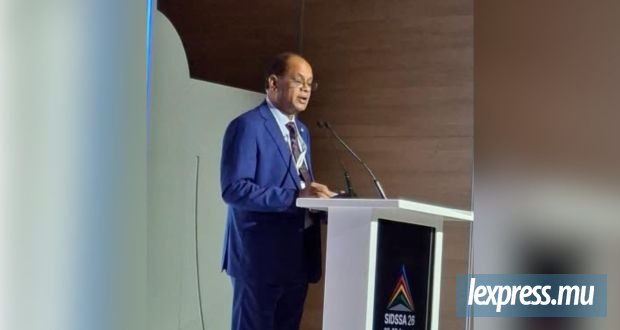
The cars bought by the government in view of the organisation of the Small Islands Developing States (SIDS) conference constitutes one of the biggest criticisms made by the director of Audit. When the conference was being organised, the state had an arrangement with car dealers that would allow the latter to import 258 vehicles at preferential rates. The state would then keep a certain number of them while car dealers would be able to sell them after the conference as second-hand vehicles. This cost Rs 402 million to the State. But as the conference was postponed, the car dealers were allowed to sell some 106 luxury models at the price of new cars. “The award of the contract must be concluded with an agreement duly signed by both parties to prevent suppliers perpetually negotiating new terms as was done in the case of the SIDS conference. The agreement must also make provision for any contingency, for instance the postponement of meetings,” states the report.
Publicité
Publicité
Les plus récents