Publicité

Authentic power

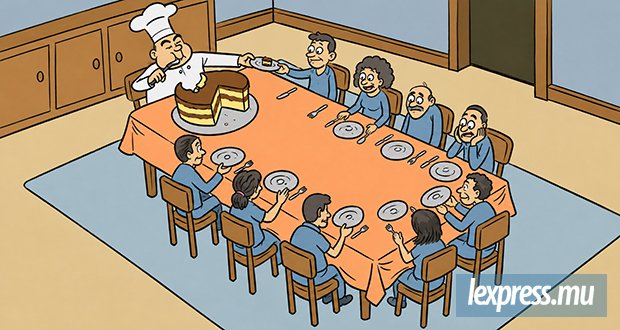
We hear a lot about empowerment, flattened organisations and other avant-garde terms in various companies. However, in our work with them, we still see the old model of command and control amongst managers and leaders. As a result, frustrated managers spend most of their working time trying to achieve control. Their big mistake is confusing influence with control.
Influence means the ability to motivate people through example and words. It involves putting more faith in people than in systems. No system can succeed without the commitment of people throughout an organisation.
We live in a changing world with changing people. At any time in any organisation, some people are depressed, sick, having a day off or going through a divorce. As a leader, you must recognise these changes and respond as efficiently as you can.
We have been conditioned to think of a leader as charismatic and commanding. But you can’t lead people unless they wish to follow. Charisma helps but people must be inspired, feel trusted and worthy. The wise leader really knows his/her people and actively helps bring out their creativity. The leader must be “back among” the people, seeing the workplace as his/her employees see it. The real leader does not confuse this with superficial gimmicks like walking about asking, “How are things today?”
In the name of empowerment, senior management advise their employees to ‘use their creativity, take risks’. However, the minute something goes wrong, they look for a scapegoat. They write memos to protect themselves or fire people to appear as if they are handling the problem. Employees thus do not believe that empowerment is real. The fear of failure is a real threat because of blame. Executives point fingers at middle management, who point at supervisors, who point at employees who in turn point at management and so on... It is then difficult to recognise that mistakes are part of growth and creativity.
The wise leader corrects his mistakes and assumes responsibility for them. He is aware there is no growth without mistakes. When a mistake has occurred and you are angry, the best attitude is through open communication.
For example, “Sally, this mistake makes me angry” and then explain the consequence of the mistake. And not “You stupid. How could you do such a dreadful thing?” Shouting and verbal abuse are wrong approaches. Try to help the employee grow by helping solve the problem he/she created. This approach can show your employees how genuinely the problem was handled. This is real empowerment.
Leaders should guard against building up their image at all costs. Some managers even encourage gossip among employees to get information. If you sense someone is doing the wrong thing, it’s your responsibility to address that person. Asking people to talk behind someone’s back is unethical and unwise. It is a sure way for a climate of distrust to infiltrate the organisation.
In trying to become leaders, managers assume they must be everywhere and never waste a minute. They are proud to show they are always busy – on the phone, even when driving; on line with e-mails, even on holiday they keep in touch with the office. When times get tough or things go wrong, they get busier.
Today business people have become obsessed with doing things and are uncomfortable if they are not busy. Some people believe that being busy means being competent. Wise leaders know that ‘not-doing’ is not idleness but that it nurtures creative thinking. They know how to delegate, how to take time to think. Only then, can they emerge as resourceful for their people. They serve, support and nurture their people.
Are you an authentic leader?
This article was inspired by the book Real Power, by J.A.Autry and S. Mitchell Hugh and Sylvie Stanley run Quantum Vision Ltd, a training company that specialises in stress management, change management, personal development and visionary leadership. They can be contacted on 759 5705 or 791 0102 or email:[email protected]
Publicité
Publicité
Les plus récents