Publicité
Parliament’s recent shenanigans: Has the speaker crossed the Rubicon?
Par

Partager cet article
Parliament’s recent shenanigans: Has the speaker crossed the Rubicon?
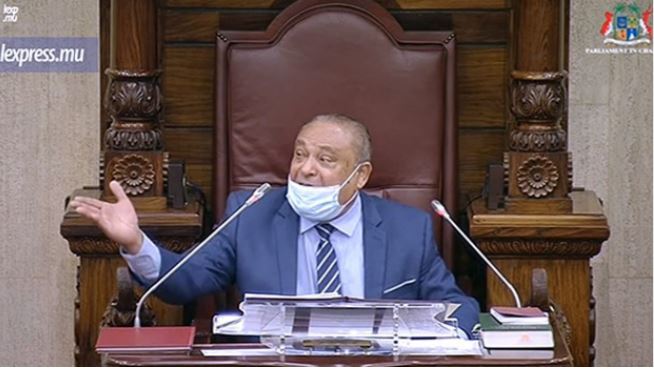
Therecent remark – ‘look at your face’ – made by the speaker of the House during a debate session to a member of the opposition party is yet another example of how low proceedings have stooped. So much so, that the speaker had a dig at the honourable member’s physical de- meanour. The member to whom this comment was aimed suffers from a skin condition – vitiligo.
The speaker’s behaviour has stunned many, including some members of the government who have, in private, condemned his actions. The national tabloids have denounced his uncouth and provocative remarks as cheap and unwarranted. The reaction on social media has been swift in condemning his conduct as shameful. Some politicians and organisations are even asking for his resignation. Has he crossed the Rubicon?
It is worth reminding ourselves that the speaker’s role in the House is a crucial and pivotal one. They support and assist in shaping how our Parliament debates matters and passes legislation. As leader of the House, they command a certain level of respect from all members of the House, but it should be reciprocal and not one-sided.
The role of the speaker is multifaceted; as an arbiter and disciplinarian, they ensure that the business of the House runs smoothly. Some of their responsibilities include:
- Determining which members may speak and which issues are selected for consideration. Members do not have an automatic right to speak during debates. It is the role of the speaker to balance MPs’ participation against the smooth running of parliamentary business;
- Maintaining focus and discipline when members deviate from matters being debated;
- Maintaining order during debates, and chastising members who break the rules of the House;
- Lengthening or curtailing debates before the point of ‘closure’, when a motion or bill goes to a vote.
Above all, they should demonstrate that they are impartial and remain strictly non-partisan. In other words, a modern speaker should be politically neutral and is expected to avoid taking a political stance or favouring particular interests over others. The speaker has the power to decide whether, and which amendments to bills or motions can be debated and voted on. This is a sensitive and contentious part of their speakership. It risks putting the speaker in a highly political position, as it requires them to make a judgement on which amendments are worthy of debate. During proceedings on August 3, 2021, the speaker of the House has shown a dearth of the above characteristics. He has fallen short of the reputation he is meant to uphold. Instead, his latest remarks have alienated him, not only from parliamentarians (on both sides of the House), but also from some organisations and the public.
As reported on social media, the speaker has been in the limelight in the past, for all the wrong reasons. The latest incident in the House is no different, but perhaps the most deplorable to date, and for which the speaker has yet to apologise. He later came out to inform the media that the remarks he made were meant as ‘a joke’. However, to many, the incident did not come across as such, but rather portrayed a man whose chosen remarks were intended to denigrate and humiliate the honourable member. “People know me”, he later commented. “God knows that I don’t denigrate people. I did not at any time mean to belittle Rajesh Bhagwan.” If that were the truth, would he have said it 11 times? Had he offered his excuses for using such demeaning language immediately, a line would have been drawn under the incident and the matter closed. Yet, here is a fractious speaker; a bully perhaps, flexing his authority in a pathetic way. Who is he trying to impress?
A leader of the House can be assertive, tough, and firm without being condescending and rude. Such a speaker would be more effective in the role and well respected by members. They would get issues resolved more quickly and amicably by being seen to be fair to both sides of the House during debates. By cutting and blocking all forms of fair, open, and healthy debate, which are paramount for a flourishing democracy, they risk bringing the House into disrepute and causing delays to proceedings.
Strategic move
On August 8, 2021, it was reported by one of the tabloid papers that because of the speaker’s active participation and contribution to the election campaign in November 2019, he was nominated and then rewarded with the speakership post. A strategic move, in what would later become key in how proceedings and business are arranged and conducted in the House in order to suit the current Administration. Other examples include not allowing enough time for debates and expelling members of the opposition so that they do not get the time and opportunity to raise awkward and difficult questions regarding important matters of national interest, such as the spending on infrastructure projects and the awarding of contracts during the height of the pandemic. It was also reported that others were given key posts in public bodies in order to strengthen and consolidate absolute power and control.
It is said that our parliamentary system is based on the Westminster style of democracy. True, but do we really follow the spirit and framework? Unlike the questionable and dubious methods alluded to above, Westminster elects the speaker from a list of MPs nominated by their peers. They can be someone from any of the main political parties. The person elected is the one who has gained the greatest number of votes. They are not nominated or put forward by the PM.
Covid-19 and the ensuing lockdown has disrupted Parliament for far too long and it can ill afford these kinds of shenanigans. PMQs have become like an entertaining ‘soap opera’, and Parliament the stage. The public has become disillusioned with politics and parliamentarians are often ridiculed and labelled as opportunists, looking for their tibout. The recent article on August 10, 2021, Pandemic, political mediocrity, and pettiness, by Saffiyah Edoo in one of the tabloid newspapers sums it all up rather well.
Parliamentarians are in a position of trust and have the power to do good and elevate the status of the nation both nationally and internationally. Yet, who will be the change that the country so badly needs? The latest episode in the House has tarnished our image and standing as reported by BBC Africa. These acts should be called out and dealt with quickly. They have no place in a civilised society. ‘Vengeance politics’, as we are witnessing, is dangerous and shortsighted. It slows down progress in all senses of the word. Parliamentarians are public servants and should serve the nation with humility.
Senior members of the Opposition parties are putting pressure and calling for the PM and the president to intervene. Will they condemn the ugly exchange (which incidentally has gone viral) and order for disciplinary actions to be taken against the speaker? Only time will tell.
Politics must move with the times. The old ways are not necessarily right or fair. For far too long we have had much of the same thrust upon us. The moment has come for new faces with fresh ideas to come on the scene; individuals who are willing to embrace change and work together irrespective of class, colour, creed, and religion. And with them, let us hope a new dawn of politics can begin…
Publicité
Publicité
Les plus récents