Publicité
The August 1979 strike: When the subalterns rose
Par

Partager cet article
The August 1979 strike: When the subalterns rose
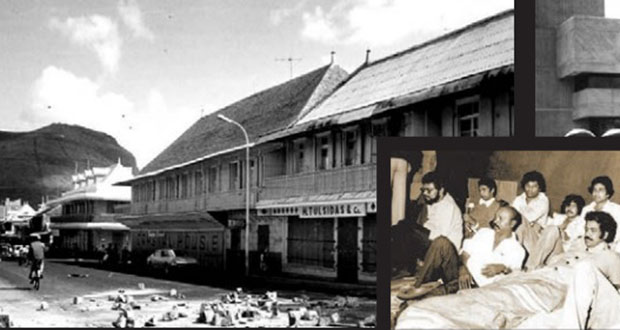
It was one of the most dramatic and important turning points in the history of Mauritius after 1968. The strike of August 1979 was by far the largest strike in Mauritian history and paved the way for the end of the dominance of the Labour Party. But precious little has been written about it, and much less analysed to any great length. That is, until now.
Ram Seegobin’s ‘August 79 strike: principles that govern strikes as they unfurl’ comes at an opportune moment, with hunger strikes seeming to take place on a daily basis and for a variety of causes. What they all have in common is the attempt to revisit the drama of the August 1979 strike, which remains unparalleled in Mauritian history and is one of its key turning points as it changed the trajectory of Mauritian history.
To begin with, Seegobin points out a number of principles that govern any such strike: That the demands must be clear and precise, how to organise people in a single direction and maintain unity of purpose, knowing when to continue or stop a strike, preparing for the inevitable fallout like threats and sackings and how to get everyone to participate in decision making during the strike. All of these elements were present in August 1979, and that is what made that movement so potent. But first, what gave rise to the strike?
Mauritius in 1979 was in the midst of a perfect storm of unrest across different sectors. The largest by far was the sugar industry, scattered across 21 sugar estates and 21 mills with nearly 60,000 field labourers and 12,000 mill workers in a state of unrest. The draconian Industrial Relations Act was being used to deny recognition of the two largest unions in the sector, the Sugar Industry Labourers’ Union (SILU) and the Union of Artisans of the Sugar Industry (UASI). Aside from the hostility of sugar companies, the Labour Party was not keen on recognising these unions either, in large part to protect their own tame unions such as the Mauritius Labour Congress and to prevent organisations not affiliated to the Labour Party from establishing bases of support in its rural vote bank. The SILU and UASI since 1969 tried to get recognition, but things reached a head in July 1979 when UASI’s application for recognition was rejected by an Industrial Relations Board presided over by a Labour Party candidate who failed to get elected in the 1976 elections. Taking the hint, SILU too withdrew its application for recognition, paving the way for a showdown with a government that claimed to be descended from the trade union movement, but which had parted ways with unionism long before.
“Twelve out of every 100 Mauritians lived in absolute poverty and the World Bank estimated that only 5 per cent of families controlled 31 per cent of national revenue. All this contributed to the explosion that was August 1979.”
Workers at the port too were seething over the planned introduction of automatic loading systems at the docks that was estimated to have led to the retrenchment of 1,200 workers (out of a total of 2,000 dockworkers). In the transport sector, the Labour Party government in the 1970s began giving out permits to individual bus operators as a form of patronage that was not only undercutting bus unions but which also led to the bankruptcy of larger bus companies such as the Moka-Flacq Transport and Savanne Bus Service. Another, the Vacoas Transport Company (later nationalised and reincarnated as the National Transport Corporation that we all know today) could not even make payroll and soon closed shop threatening to put 2,000 bus workers out of work. But aside from these specific issues, there was also a general feeling that the Labour Party’s economic plans after independence simply were not working; from 1974 to 1978, imports had doubled and exports plunged, with foreign exchange collapsing from US$183 million to a mere US$14 million. Twelve out of every 100 Mauritians lived in absolute poverty and the World Bank estimated that only 5 per cent of families controlled 31 percent of national revenue. All this contributed to the explosion that was August 1979.
The strike begins
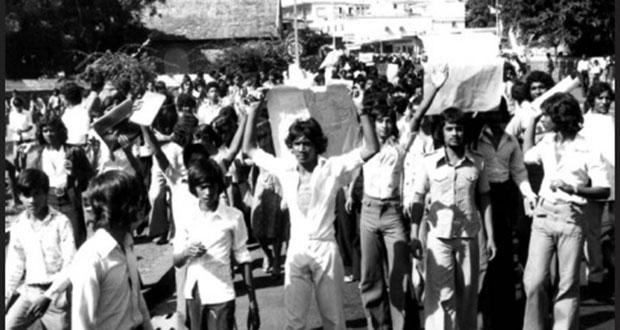
On 7 August 1979, the sugar sector ground to a halt with nearly 90 per cent of labourers going on strike. Their demands were that SILU and UASI should be recognised, a 40-hour work week, stopping mill closures and revisiting the Industrial Relations Act. On 12 August, the General Workers’ Federation, bringing in their train dock and transport workers, joined in and for 10 days nothing moved at the Port Louis dock and nearly 60 per cent of buses stopped running. On the 23rd, a hunger strike began as well to further pressurise the government. After nearly two weeks, the government gave in and signed an agreement with the unions: mill closures stopped, sacked workers would be rehired, a committee would look into a 40-hour work week and the odious Industrial Relations Act would be revisited. By September 1980, most of these demands had been met.
But the strike had an even more far-reaching effect: it led to the collapse of the Labour Party as the natural party of government in postindependence Mauritius. The strike brought into sharp focus the splits and divisions within the party that had ruled since 1968. In declassified cables released by Wikileaks, American diplomats writing home point at some of these divisions (that no establishment historian in Mauritian has yet even hinted at). The prime minister at the time, Sir Seewoosagur Ramgoolam, was in favour of a conciliatory line but he was opposed by his minister of labour, Yousuf Mohamed, and minister of agriculture, Satcam Boolell, who favoured a more hardline approach. Ramgoolam’s attempt to recall parliament to amend the Industrial Relations Act was bitterly contested by Labour parliamentarians led by Mohamed and Boolell. It was during the August 1979 strike that talk first began surfacing that Sir Seewoosagur Ramgoolam should be retired as the governor general and another should succeed him as prime minister. Just before the strike, more populist Labourites had left the party to found the Parti Socialiste Mauricien(PSM), leaving the conservative Boolell to emerge as the successor of Ramgoolam as leader of the Labour Party. The strike deepened the rift between Labour and the PSM, meaning that any competitors to Boolell, such as the finance minister, Veerasamy Ringadoo, found that there were few populists left to support him against Boolell. In establishment history, Boolell’s rise within the party is assumed to have taken place in 1983, but all this had actually begun in August 1979.
The strike also, according to Seegobin, helped in the decimation of the Labour Party in the 1982 polls, bringing to an ignominious end the post-1968 political dominance that it enjoyed. No longer would the Labour Party be the natural party of government, but would have to scrap it out with other parties such as the Mouvement Militant Mauricien (MMM) and Mouvement Socialiste Militant (MSM) that rode the wave of popularity following the strike. August 1979 was not just a labour dispute, but a harbinger of the end of an era. A key turning point whose importance has been ignored for far too long.
Publicité
Publicité
Les plus récents