Publicité
Interview with…
Maxwell Johnston: “A combination of talent, stability and strong regulation makes Mauritius an excellent platform”
Par

Partager cet article
Interview with…
Maxwell Johnston: “A combination of talent, stability and strong regulation makes Mauritius an excellent platform”
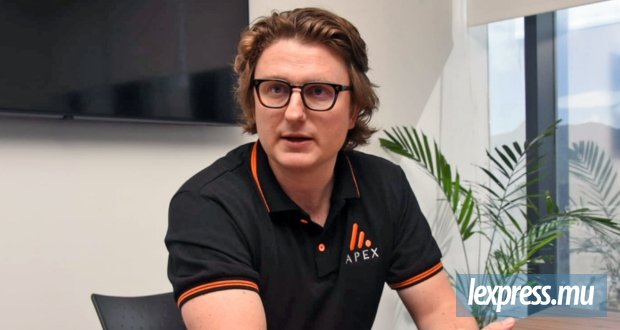
Maxwell Johnston, Apex Group’s Chief Business Officer. © Rishi Etwaroo
Twenty years after establishing its local footprint, Apex Group is doubling down on Mauritius as a premier center of global expertise. During a recent 36-hour visit to the island last week, Chief Business Officer Maxwell Johnston sat down with «l’express» to discuss how the jurisdiction has transitioned from a local operation to a vital strategic hub. From navigating geopolitical fragmentation to positioning the island as a trusted gateway for capital flows across Africa, India, and the Middle East, Maxwell Johnston outlines why world-class talent knows no geography—and why Apex Group is committed to driving the next decade of financial innovation from Mauritian shores.
What brings you to Mauritius at this important milestone for Apex Group, which has been present in the country for 20 years? What does Mauritius represent for the Group today?
Twenty years is certainly a milestone worth celebrating, but for me this visit is much more about the future than the past. Mauritius has grown alongside Apex Group. What began as a local operation has evolved into one of the most important parts of our global business. Today, Mauritius is home to highly skilled professionals supporting clients, funds and investment structures across multiple jurisdictions and time zones.
What Mauritius represents for Apex Group today is a combination of talent, resilience and opportunity. It has demonstrated that a relatively small country can build a globally relevant financial services sector by focusing on quality, expertise and trust. At a time when investors are looking for certainty in an increasingly complex world, those qualities matter more than ever. That is why we continue to invest here and why we see Mauritius playing an even greater role in our future.
Apex Group operates across major financial centres worldwide. What would surprise someone sitting in London, New York or Singapore about the role Mauritius plays within the Group, and why has it become strategically important to your operations?
What would probably surprise them most is the scale and sophistication of the work being performed from Mauritius. There is sometimes a tendency to assume that strategic decision-making and specialist expertise are concentrated in the world’s largest financial centres. The reality is very different. Many of our teams in Mauritius support complex fund structures, private capital strategies, regulatory requirements and client relationships spanning multiple regions.
Mauritius is not simply an operational location for Apex Group. It is a centre of expertise and leadership. Some of our most experienced professionals are based here, and many have gone on to take regional and global leadership responsibilities within the group.
The reason it has become strategically important is straightforward: the combination of talent, stability, strong regulation and international connectivity makes it an excellent platform from which to support clients globally.
Mauritius positions itself as a gateway between Africa, India and the Middle East. How important is this geographic positioning to Apex Group, particularly as investment and capital flows increasingly shift towards emerging markets?
It is extremely important because those three regions are among the most dynamic areas of the global economy. We are seeing significant growth in investment activity across Africa, the Middle East and India, particularly in areas such as infrastructure, technology, energy transition, private equity and private credit. Investors are increasingly seeking exposure to these opportunities, while also requiring trusted frameworks through which to access them.
Mauritius occupies a unique position because it combines geographic proximity with legal certainty, regulatory credibility and deep experience in facilitating cross-border investment.
In many ways, Mauritius serves as a bridge between pools of international capital and highgrowth opportunities across the region. As capital flows continue to diversify beyond traditional markets, that role becomes increasingly valuable.
Global capital markets are being reshaped by geopolitical fragmentation, digitalisation, alternative investments and changing supply chains. Where does Mauritius fit into this emerging global investment map, and what will determine whether it remains competitive as an international financial centre over the next decade?
The world is becoming more fragmented economically, but it is also becoming more interconnected financially. In that environment, investors need trusted jurisdictions that can operate across different markets, regulatory systems and investment structures. Mauritius is well positioned to fulfil that role because it combines stability, transparency and international reach. However, future competitiveness cannot be taken for granted. The next decade will be defined by a few critical factors: the ability to attract and retain talent, continued regulatory innovation, investment in technology, and maintaining internationally recognised standards of governance and compliance. Financial centres succeed when they evolve ahead of market needs rather than react to them. Mauritius has done that successfully in the past, and I believe it has the foundation to continue doing so.
Mauritius has ambitions to become a hub for digital assets and other new areas of finance. What needs to happen for these ambitions to translate into significant commercial activity, and what role can Apex Group and other international financial institutions play in that process?
The foundations are already being put in place. Mauritius has shown a willingness to engage with innovation while maintaining a strong regulatory framework, which is the right starting point. The next stage is creating a broader ecosystem that attracts businesses, investors, service providers and specialist talent. Regulation is essential, but commercial activity develops when market participants have confidence in the jurisdiction and can access the infrastructure they need to operate successfully. This includes areas such as custody, administration, governance, compliance, cybersecurity and professional services. International institutions can contribute by bringing expertise, sharing global best practices and helping clients navigate emerging opportunities responsibly. The most successful digital asset centres will not necessarily be those that move fastest. They will be those that build trust. In financial services, trust remains the most valuable asset of all.
After two decades in Mauritius, what impact of Apex Group are you personally most proud of, in terms of employment, skills development, investment and the wider financial-services ecosystem, and what lessons from Mauritius have subsequently been applied elsewhere in the Group?
Without question, I am most proud of the people. Over the past twenty years we have created meaningful career opportunities for talented Mauritians and helped develop expertise across fund administration, corporate services, compliance, technology and other specialist areas. Many individuals who started their careers with us have progressed into senior leadership positions both locally and internationally.
Beyond our own business, I believe Apex Group has contributed to strengthening the broader financialservices ecosystem by helping attract international investment and supporting the reputation of Mauritius as a credible international financial centre. One of the most important lessons we learned here is that world-class talent is not defined by geography. The success of Mauritius reinforced our belief that expertise can be developed anywhere when people are given the right opportunities, training and support. That lesson has influenced how we invest in people across our global network today.
Beyond business, Apex Group has developed initiatives such as Apex Angel and a broader corporate social responsibility programme. How important is your contribution to the communities in which you operate, and how does this fit into the Group’s long-term presence in Mauritius?
It is fundamental. A successful business should contribute more than economic value. It should also contribute to the communities in which it operates. We view our presence in Mauritius as a long-term commitment, and that commitment extends beyond our offices and client relationships.
Initiatives such as Apex Angel give our employees the opportunity to support causes that matter to them, whether through volunteering, education, environmental programmes or assistance to vulnerable communities. Importantly, these initiatives are driven by our people, which makes them authentic and meaningful. For us, corporate responsibility is not a separate activity. It is part of how we define success. The stronger the communities around us, the stronger and more sustainable our business becomes.
Looking ahead to 2040, what role could Mauritius realistically play in global finance that it does not play today? And when Apex Group celebrates 40 years in Mauritius, what would you like its contribution to the country to be remembered for?
By 2040, I believe Mauritius has the opportunity to evolve from being primarily recognised as a gateway jurisdiction to being recognised as a centre of innovation and expertise in its own right. The country has the potential to become a leading platform for private capital, digital assets, tokenisation, sustainable finance and cross-border investment solutions serving Africa, India and the Middle East. Its success will depend on continuing to invest in talent, embracing innovation and maintaining the trust that has underpinned its growth to date. As for Apex Group, I hope our legacy will not be measured solely by our commercial success. I hope people will say that we helped develop talent, created opportunities, supported communities and played a meaningful role in strengthening Mauritius as a globally respected financial centre. Ultimately, the most lasting contribution any company can make is not what it builds for itself, but what it helps build for future generations.
Bio express
Maxwell Johnston is Chief Business Officer and brings deep experience and understanding of commercial strategy to the Executive Committee. Previously serving as Interim Chief Financial Officer and Chief of Staff, he has played a pivotal role in driving KPMG’s M&A strategy and supporting its international growth. Johnston gained valuable experience at KPMG in London and Bermuda, where he qualified as a Chartered Accountant.
Publicité
Publicité
Les plus récents