Publicité
Interview with…
Maurice Lam: “Mauritius has lost its North Star”
Par
Partager cet article
Interview with…
Maurice Lam: “Mauritius has lost its North Star”
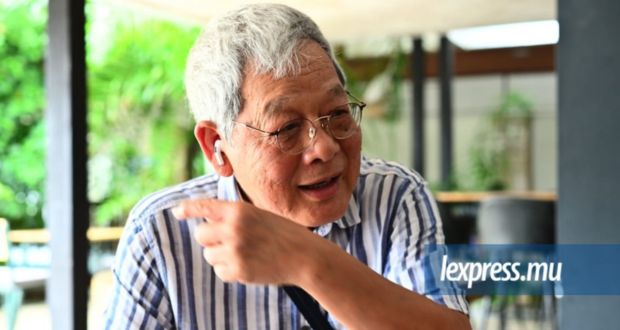
© Tony Fine
As «l’express» prepares to publish «A People and Their Choices – The Mauritius Story, 1638–2026», a six-part essay series examining the country’s trajectory through population, productivity and institutions, author Maurice Lam, founder of Stewardship Consulting Pte Ltd, specialised in family governance, based in Singapore, reflects on the motivations, research and implications behind his work. Written at what he describes as a critical inflection point, the series aims to spark a national conversation on Mauritius’ future amid ageing demographics, emigration and slowing economic momentum.
? Why this series, and why now?
I have been looking at the country’s challenges since I became chairman of the Board of Investment (BOI) in 2006. At that time, the approach was sector-based on the assumption that developing a sector would contribute to economic development. At one point, I asked BOI staff to study our population, and the findings were alarming. Our country will face a declining and ageing population by 2030. I spoke about it, but no one paid attention.
As of last year, I am an adviser to the prime minister, so I started to look again at our country. I was alarmed. Manufacturing for export was declining. Tourism was going for numbers rather than foreign currency earnings. Financial services were reaching their limits – all following a product life cycle pattern. At the same time, consumption was high, there was a growing drug problem, people were emigrating, and there was a mismatch between the education system and business needs. It felt like our country had lost its North Star.
So I made an assumption: population is the fundamental pillar of any country. Without population, there is no production, no innovation, no consumption. And for a population to sustain itself, it must be productive. I initially wrote these essays for my own benefit. Then I thought a national debate would be better, so people could express their views and help shape government policy. Why now? Because I have finished the essays.
? Who is your intended audience?
It is for any citizen interested in our country and its future. I hope it triggers debate among friends, families, in offices and even within the civil service. If it helps someone better understand the country’s challenges and opportunities, that is enough. If nothing happens, that is also fine. It was an intellectual endeavour, and I enjoyed doing it.
? Your three-lens framework – population, productivity, institutions – is central to the series. Why did you choose it?
As I mentioned, the framework came from my initial assumption about population and productivity. The institutional lens came later, after further reading.
? What was your methodology and research approach?
This is not a scientific paper. I did this out of curiosity to answer questions that had been on my mind. As an advisor to the prime minister, I asked myself: how can I advise on economic development if I do not understand the root causes of our problems? I used AI as a research assistant. I checked sources when necessary— articles, books, online material. I formulated hypotheses and used AI to test them. I also relied on my own experience. I lived through the early years of independence, starting my career in banking. I read the Meade Report in high school. I have followed Singapore’s development closely since 1982, when I began living there.
? On contested evidence and intellectual honesty, how did you deal with conflicting interpretations?
I used my judgment. For example, I know from experience that our civil service had high-calibre individuals when the Export Processing Zone was launched. The British left a strong administrative system. When offshore financial services were introduced, we had excellent professionals at the Bank of Mauritius and at the Financial Services Commission, including figures like Iqbal Rajahbalee and Anil Gujadhur, who was a highly regarded regulator. I have also known many professionals at the Monetary Authority of Singapore. These experiences shaped my understanding.
? The final essay outlines proposals for a “fifth wave” of development. Are these policy prescriptions?
These are not formal policy prescriptions. They are my own reflections. For example, the idea of a unified financial regulator comes from my experience with the Monetary Authority of Singapore (MAS). The importance of strong institutions also comes from observing MAS and institutions in other countries. I also draw from examples such as Ireland’s Industrial Development Agency, which I engaged with during my time at the BOI, and from exchanges with figures like Sir Alan Walters and Paul Romer, who showed interest in Mauritius.
? You write that “the choosing belongs to Mauritius”. What are the biggest obstacles to reform?
The greatest obstacle, in my view, is the population itself. Do people know what they want? What I hear most often is: “What is the government doing to soften price increases due to external shocks?” My question is: “What are you doing yourself?” For example, I reduce electricity consumption at home by asking my family to switch off lights. Small things add up. Are Mauritians willing to work hard and make sacrifices for a better future? Take pensions. There have been many reports showing the system is not sustainable. All political parties know it. Trade unions know it. Yet we saw the reaction to reform. Singapore has an advantage here: the population understands when difficult decisions must be made.
? What about political and institutional constraints?
Politics is also a constraint. Take the appointment of ambassadors – do we see that system changing? In a multipolar world, we need professional diplomats. Singapore is again a useful reference. On the blue economy, for instance, I developed the idea of treating fish resources like mining concessions. That came from discussions with people in the fishing industry. Seychelles and Pacific Island states offer examples. The question is: why did we not think this way earlier?
? Any final thoughts you have on the work itself?
These essays are my personal opinions. I wrote them independently, without prior screening. I shared them with a few people whose feedback helped refine the work. AI was very helpful as a research assistant, as were critics. And I am glad you asked these questions.
Publicité
Publicité
Les plus récents