Publicité
Interview of… Aarshin Karande
Beyond Data: Why Indian Classical Music Challenges Artificial Intelligence
Par
Partager cet article
Interview of… Aarshin Karande
Beyond Data: Why Indian Classical Music Challenges Artificial Intelligence
Can AI Understand a Raga? Aarshin Karande on Music, Machines and Meaning
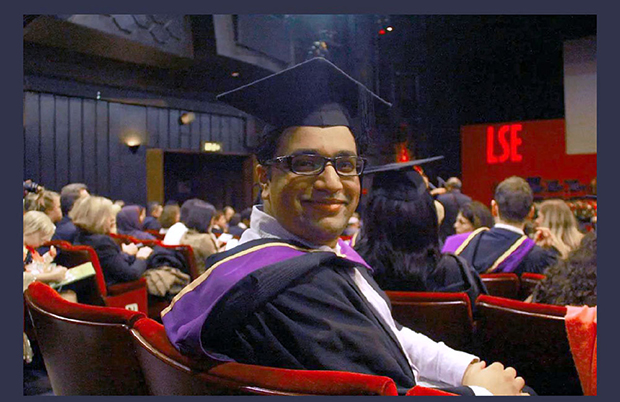
In an era where algorithms increasingly shape culture, Aarshin Karande stands at an unlikely crossroads – between the ancient discipline of Indian classical music and the fast-evolving field of artificial intelligence (AI) ethics. Trained in the guru-shishya tradition under disciples of maestros such as Pandit Jasraj and Ustad Zakir Hussain, Karande has spent a lifetime immersed in a musical form rooted in intuition, lineage and lived experience. Yet his academic and professional path has taken him deep into the structures of modern technology, from media governance studies at the London School of Economics to AI ethics research at the University of Cambridge, and now as Strategy Lead at EthicAI.
This dual lens – artist and technologist – has led Karande to interrogate a central tension of our time: how systems built on data and computation engage with traditions grounded in tacit knowledge, improvisation and spiritual depth. Through his nonprofit initiative, Surasik, he is working to bridge a widening gap, advocating for better representation of Indian classical music in digital and AI ecosystems while raising urgent questions about ownership, authenticity and cultural preservation.
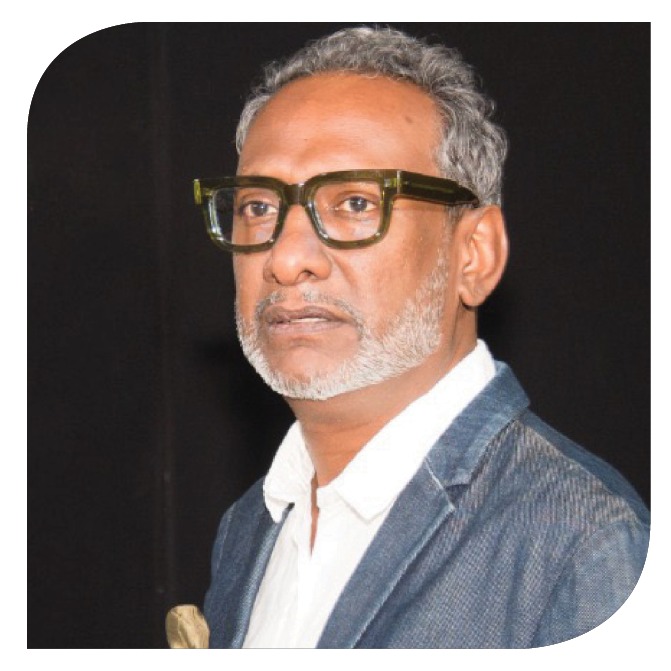
In this conversation with Nad Sivaramen, Karande reflects on the limits of machine “understanding” the risks of cultural misrepresentation in AI training data, and his vision for what he calls a “Tansen Test” – a benchmark for whether AI can meaningfully engage with one of the world’s most intricate artistic traditions.
Could you tell us about your personal journey – from Indian classical music training to your work in AI ethics? How did these two paths begin, and at what point did they start to intersect meaningfully?
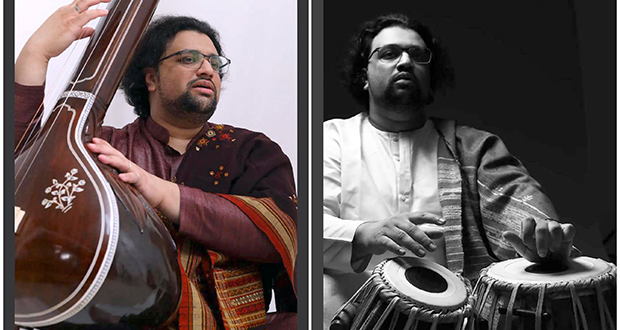
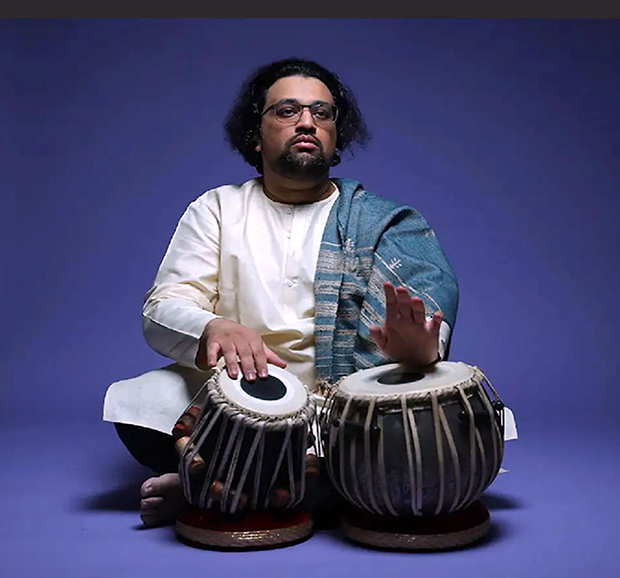
Though I was born in Los Angeles and raised in Seattle, I began a deep obsession with Indian Classical music (ICM) from a young age, around 4 or 5 years old. My parents, Adity and Sanjeev, adored all music; everything from Kishore Kumar to George Michael, The Beatles to Bhimsen Joshi, and Enya to Begum Akhtar. I was fortunate to have exposure to a breadth of musical genres from a young age because of them. Whilst I loved all these genres, the majesty, spirit, and depth of Indian Classical music sank deeply into me. Since then, devouring this music in every sense – live concerts, recordings, history, theory, learning, practice, and inquiry – has been the primary occupation of my mind, spirit, and life. I’ve been fortunate to learn with extraordinary masters of the Hindustani Classical music tradition; disciples of greats like Pandit Jasraj (vocalist), Ustad Rais Khan (sitarist), and Ustad Zakir Hussain (tablaist).
My intrigue about AI came much later after academic research surrounding mindfulness, games, and consciousness during my undergraduate years at the University of Washington Bothell. Working on my professors’ research helped me understand how the mind occupies media and, reciprocally, how media occupies the mind. I often describe this as “mind matters in media matters.” Soon after, I studied media governance and management at the London School of Economics and gained a reverence for academic rigor, analytical breadth, and global conscientiousness. A few years later, I spent a summer at the University of Oxford studying media policy where I presented research about the policy implications of media psychology. My focus on “media” during this time was very broad: everything from apps, games, and films to communication systems and cloud infrastructure. This broad focus soon included AI.
AI is merely an advanced extension of foundational ideas around communication technology. Where AI becomes mercurial and precarious is how we anthropomorphize it. We ascribe very misunderstood human concepts to AI. Phenomena like “intelligence,” “cognition,” “language,” etc. are terms commonly used to describe automated computing systems. In many ways, these inadequate analogies are extraordinary mirrors for our maps of humanity and spirituality. My interest in AI ethics comes from these broader questions of how our storying and organizing around the capabilities of AI implicate our humanness; whether that’s our ideas about ourselves, our sense of human power, and the technological encroachment upon individuated independent minds.
These paths began to intersect when I recognized that illiteracy around the opportunities and risks of AI implicated not just the general public but also Indian Classical musicians. The subculture of ICM emerges from historical customs and practices around tehzeeb and tameez (respect and manners) common to the temples, darbars, and masjids of the Subcontinent. That subculture is not effectively adaptive to or plastic with emerging cultural practices facilitated by tech innovation. Most Indian Classical musicians remain marginalized by the digital divide. Many will be stranded by the new frontiers of AI which will represent ICM, for better or worse, on behalf of these artists. And, the internet features a massive void of accurate, comprehensive, and evidence-based information around ICM.
AI ethics and Indian Classical music intersect for me because, at the present moment, they are irreconcilable in most respects and I am seeking to reconcile them meaningfully through my work as an artist and researcher.
Indian classical music is rooted in guru-shishya parampara (teacher-disciple tradition). How do you reconcile this deeply human, lineage-based transmission of knowledge with the rise of machine learning systems?
ICM is a uniquely human system that hallows tacit knowledge; ineffable knowledge acquired through experiencing, doing, and knowing. The guru-shishya parampara recognized that imparting “artistic being” rather than just “artistic information” is a more reliable methodology of material preservation and innovation across time. That methodology has proved triumphant because though ICM has mutated substantially over the centuries, its ancient roots remain very present and fertile. This is why many masters of this art share anecdotal accounts about musicians from medieval or ancient history as if they were actually present with them. Musicness has become their beingness in a deeply essential and intimate way.
Hence, while ICM is a system based on the transmission of knowing AI is a technology based on information transmission. The risk here is that most folks who are trained to view all knowledge as merely information will not observe the higher-ordered knowledge systems abundant in human culture, especially traditional systems like ICM. The virtues of AI are at the mercy of high-quality data and parameters that optimally appreciate said data. There are many types of data AI has yet to methodically engage, such as oral tradition data, and various qualitative- and mixed method-based data.
AI is far from being any guru of ICM. But, chatbots are presently a diplomat of ICM and not very good ones due to the aforementioned data quality issues. Through Surasik, I am hoping to improve the relationship between AI and ICM through championing better and more ICM data for AI to source.
Do you believe AI-generated music can ever be considered “authentic” within traditions like raga and tala? Where, in your view, does authenticity reside – in the performer, the process, or the structure?
“Authenticity” is one of those tacit qualities that masquerades as an objective fact whilst prevailing as a subjective observation. The tastes and prejudices of audiences often define authenticity more than the earnestness of an artist. Can someone in the 21st Century truly be “authentic” if they are performing compositions from the 13th Century which they have nothing to do with temporally, culturally, or emotionally? All these rhetorical questions lead me to believe that audiences not artists will ultimately deem if and when AI-generated music can be authentic.
Notes are notes and beats are beats. AI could certainly make beautiful things within whatever limit. Will audiences be tempted to reward and projected onto those calculated outputs things akin to “authenticity,” “soulfulness,” and “honesty”? I do believe so, and that will have immense implications and complications for how we appreciate literally and figuratively the virtue of human labor.
However, audiences rarely care about authenticity and perhaps they should not be obligated to. Music is simply about the spirit dancing. If elevator music makes one’s spirit dance more than a bhajan, is the question about authenticity? For me, musicality must always be primary and everything else comes afterward. Funnily enough, chasing musicality – or any lofty aspiration with ambiguous terms and conditions – often demands authenticity from the artist. Whether audiences feel or admire that authenticity is a different matter entirely.
The raga and tala systems have gone through various revolutions over time. Tabla is a relatively young instrument (a few centuries old) yet completely transformed the tala literature from the older pakhawaj and mridangam traditions, which are ancient. Ragas are always coming in and out of fashion. A quarter century ago, ragas like Kaushi Kanada and Jogkauns were considered uppity, elusive, and rare yet now are common features on the concert circuit.
All this suggests that authenticity is fluid, not static. Algorithms are, by definition, designed to be static. Could AI generate content over time that could be seen as fluid in a creative way? At the present moment, no. AI systems require better theories and structures of output variance and taste-making for serious considerations like aesthetics, artistry, and diversity to be evident.
AI models are often trained on vast datasets, sometimes without clear consent. What are the ethical implications when these datasets include cultural or classical art forms? Should there be safeguards specific to heritage traditions?
Questions about content ownership in cultural or classical art forms remain challenging. Imposing modern legal customs upon material and practices that operated under entirely different conventions of rights, property inheritance, and licensing is complicated and still being settled around the world. The legal and policy challenges are enormous for humans let alone technological systems.
Where AI is different is that most of these systems are for-profit and have leveraged data without consent or compensation. What we will end up seeing happen to cultural or classical art forms by AI is what Prada did with the Kolhapuri chappal. All the glitz and glamor of a runway for customers seeking convenience whilst artists remain in the dust with far better products.
Fostering a global culture of art vigilance through childhood education would be the best method for awakening the global public to the harms posed by AI to heritage traditions. These are massive tasks. The challenge remains that it’s more convenient to buy an overpriced pashmina shawl from Pernia’s Pop Up Shop than a custom pashmina shawl from a ninth-generation artisan of the Beigh family in Srinagar for a fraction of the cost. We endure a global economic system that privileges advanced production and distribution systems of scale over intimate sharing systems of sensibility.
There must be comprehensive safeguards for protecting traditional arts and artists. Yet, we require better thinking and strategies against the current technological systems and their immense scales. Productive think tanks with leading experts in law, policy, arts, and commerce are required for tangible solutions to these systemic lapses which are being handsomely exploited.
Indian classical music combines strict frameworks with improvisation. How do you see generative AI engaging with such structured yet expressive systems?Can it truly “understand” improvisation?
At the present moment, AI cannot “understand” concepts, it merely assesses statistical probabilities and prioritizes certain probabilities over others. More advanced AI systems which can generate new computational maps approximating aesthetic concepts like improvisation, harmonization, musicality, variety, texture, etc. on top of existing output-based systems is required. We cannot expect an assembly line designed to manufacture varieties of toothpaste flavors to be a dentist.
At the core of ICM’s improvisation is momentousness and interpretation. These are uniquely human experiences having to do with embodiment and contemplation. It is commonly understood that Pandit Bhimsen Joshi, one of the greatest of all time singers of ICM, often sang merely a handful of ragas, though he really possessed a huge repertoire of ragas. But, even if he sang one raga and the same few compositions at five different concerts in five different cities in the same week, listeners would tell you that even with the same notes, words, and durations, the experience of the same raga would be different every time. That comes not merely from supreme mastery and artistry but extraordinary presence of being to allow the material to reflect the context of its rendition (among other things).
While we think of ICM as traditional and “classical,” in fact it could not be more contemporary or futuristic because Indian Classical music is always being made “now.” The nowness of Indian Classical music is entirely unique and why musicians from every other genre hold ICM amongst the most hallowed. Creation can perhaps be computed in limited ways but creativity is a phenomenon that humans have yet to truly bottle. That is; creativity as an ongoing feature as opposed to an occasional output that can be described as creative. Automating and being are very different things.
What are the immediate risks and opportunities that AI presents for practicing musicians today – especially those rooted in classical traditions?
AI chatbots present opportunities to artists for useful marketing support. They can be an extraordinary resource for idea generation and content generation relating to promoting musicians today. You can generate pretty satisfactory promotional materials like lookbooks, tour posters, and more using popular AI chatbots. If you need to change up your repertoire or practice structure, chatbots can help you reorganize and restructure. Certainly AI can be a useful assistant in these ways.
The risks are more plentiful. When questions about ICM are searched on the internet or prompted to chatbots, AI will output responses that are far from thorough or accurate because the data available online about ICM is not thorough or accurate. Misrepresentation of ICM is a risk. The standardized misrepresentation of ICM is a massive risk.
My organization, Surasik, aims to create better data about ICM for AI systems to source. This means generating a lot of new, high-quality data which will require a new generation of ICM practitioners who must also be mixed method researchers, Wikipedia editors, and AI ethicists.
How might AI reshape the way Indian classical music is taught and learned? Do you see it as a tool for democratization or a threat to depth and discipline?
My vocal guru, Sandeep Ranade “Naadrang,” a disciple of Sangeet Martand Pandit Jasraj, created an app, NaadSadhana, that leverages AI to recreate the concert experience for musicians to practice with. Leading musicians from ghazal to classical to film music use this app which received the prestigious Apple Design Award several years back. NaadSadhana is an example of when Indian Classical musicians get involved with AI, AI can help us.
But, that example is the exception not the rule. The rigor and intensity of ICM pedagogy has immensely declined. The expectations, attachments, and precarities of modern life create friction with the contemplation, fervid practice, and privacy that ICM demands.
In Mumbai, I recently asked the legendary violinist L. Shankar what music he listens to. He very simply said that he doesn’t listen much to others; he largely listens to himself because he is always practicing. That kind of devotional practice, what we often describe as “seva,” is very rare in younger musicians who are posting reels hourly for a fighting chance on the concert stage.
Last year in Seattle, I asked sarod maestro Ustad Amjad Ali Khan where the true greats like Ustad Zakir Hussain, Pandit Bhimsen Joshi, and Lata Mangeshkar get “it” from. He lifted his hands up, looked up, and simply said, “By the mercy of God.” German philosopher Arthur Schopenhauer had said, “Talent does what nobody else can do. But, genius sees what nobody else can see.” However, do we have audiences and listeners who can truly see talent and geniuses amidst the sheen of AI? I have serious doubts about this. History features scores of unrequited talents and geniuses left behind by connoisseurs’ attention and appreciation.
Often when I am learning with my vocal guru, sitarist Ustad Siraj Khan (who learned from Ustad Vilayat Khan, Ustad Rais Khan, and Ustad Ghulam Qadir Khan), and tabla guru, Amit Kavthekar (who learned from Ustad Alla Rakha and Ustad Zakir Hussain), I feel completely overwhelmed by the demands of their creativity and rigor. That should be the case when one is learning; to feel the heat. Yet, I often wonder whether our lifestyles can really bear the brilliance of what this music, the music of earlier generations, is really asking of us.
AI, much like the internet, remains very expensive for the Global South where traditional art forms are being practiced. Even nearly 12% of Americans do not have access to the internet, particularly those in rural areas. At this point, AI can only be a democratizing tool for relatively wealthy Westerners, the vast majority of whom will have no interest or stake in ICM. For that reason, it’s a stretch to think how AI can help ICM practitioners in terms of teaching or learning. AI chatbots are notoriously poor outside of the English language and most ICM teaching and learning is done via indigenous languages of the Subcontinent.
Nevertheless, AI must err towards the direction of being a democratizing tool for anyone of any discipline to use for their betterment. In fact, Indian Classical musicians should insist upon that need from AI. That said, it is the responsibility of humans and not AI to maintain and advance the depth and discipline of ICM. The need for AI to help should not be there for it would mean the responsibility of ICM is outside of humanity.
Could you elaborate on your current initiatives – both in making classical music more accessible and in developing ethical AI frameworks for the arts? What impact are you hoping to achieve?
Surasik is a not-for-profit organization I started in 2011 with my parents to present concerts of musicians we loved. Since, it has evolved into a media project to document the wisdom, insights, and lived experience of master musicians through free media like documentaries, memes, and Wikipedia contributions. At this point, the mission was for better free media to make ICM information more accessible. After completing my MPhil in AI Ethics at the University of Cambridge from 2022 to 2024, concurrent with the mass adoption of OpenAI’s ChatGPT and the ascent of semiconductors like NVIDIA, I began to see how the digital divide was being extended by another layer with the AI divide.
As Strategy Lead at EthicAI, a Londonbased startup founded by Cambridge alumni building ethical AI assurance tools and systems, I keep abreast of the latest strategic developments in AI innovation and AI governance globally. Our clients have mostly been from the finance and defense sectors. But, we offer a breadth of solutions for all sectors, including education and the arts. Consequently, I have seen how various creatives are contending with AI. In the UK, publishers and authors have been very vocal and activated about how AI threatens their work. Similarly, the film industry guilds in the US have been rather effective at lobbying for meaningful laws and standards for their work surrounding AI.
I hope Surasik can be that platform for ICM. I would love Surasik to develop into a global think tank for Indian Classical musicians and facilitate their lobbying various groups from governments to corporations for safeguarding their rights and advocating for justice in context of the special interests of ICM. A central initiative for Surasik going forward is to generate data about how Indian Classical musicians are actually confronting AI right now and what their tangible benefits and challenges with AI are currently. Moreover, the aim is to understand what are the unique contexts, needs, and precarities of an Indian Classical musician – as opposed to any artist or musician. Ethical AI frameworks would be developed from these insights. The legal property considerations around a Mozart concerto being performed by the London Symphony Orchestra in Royal Albert Hall are completely different than a Miyan Sadarang khayal being performed by Kaushiki Chakraborty at the Sawai Gandharva Bhimsen Mahotsav. Effective AI law, policy, and ethical frameworks should appreciate these unique features of ICM and its practitioners. Ultimately, the impact I am hoping to achieve through this ethical AI work is simple: AI should work for everyone always. And, an Indian Classical musician – with all its contradictions, demands, and complexities – is a great barometer for the efficacy of ethical AI.
I will describe this as a “Tansen Test” (named after the legendary Indian Classical musician Miyan Tansen) akin to how a Turing Test considers whether a machine “passes” as a human. A Tansen Test considers whether AI can “pass” as a connoisseur (“Kansen”) of ICM. A Kansen knows great, good, and bad music when they hear it, respects the domain and liberties of the musician, and knows “a little” about the “a lot” that can be known of ICM. And, importantly, a Kansen can recognize a Tansen. When AI can pass the Tansen Test, AI can begin to help with the preservation and extension of ICM. Surasik aims to help AI pass the Tansen Test.
w If we project 10–15 years into the future, what does a healthy relationship between AI and artistic traditions look like to you?
A healthy relationship between AI and artistic traditions, to me, looks like AI becoming yet another incredible container for the richness of artistic traditions, like YouTube or Wikipedia. These platforms are certainly far from perfect but, arguably, they do a lot more good than harm. Increasingly, a life in the arts means becoming a chaser of algorithms. At its worst, AI means an artist becoming restricted by algorithms. I am concerned we are headed down that path given that the geopolitical race for AI domination is spearheaded by algorithmic capture, surveillance capitalism, and enormous environmental extraction. Instead, AI must be a platform for artists to rise creatively as opposed to artists being exploited for AI to raise corporate profits. This task must be a perpetual placeholder rather than a goal for 10 to 15 years that can go awry in the following 10 to 15 years. Indian Classical musicians must extend their stewardship of ICM into the AI world henceforth. We cannot wait for the bridge to be extended to us. As Arthur O’Shaughnessy wrote, “We are the music makers, And we are the dreamers of dreams”.
Bio
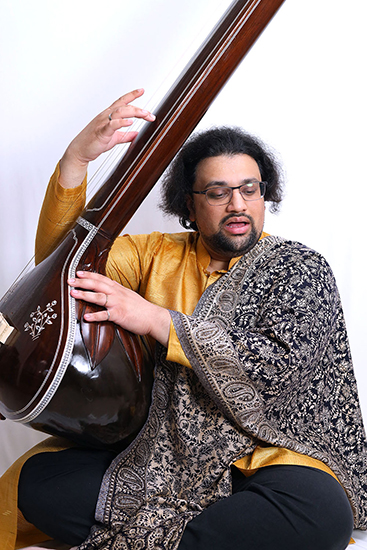
Aarshin Karande is an AI Ethicist and Indian Classical musician. He has studied AI, media ethics, and psychopolitics at the University of Washington Bothell, The London School of Economics and Political Science, the University of Oxford, and the University of Cambridge. Having previously worked at Valve Software, EY, and Infogain, Karande is Strategy Lead at EthicAI, a University of Cambridge spinout that created the world’s first cloud-based platform for ethical AI assurance. As a musician, he has performed in the US, Europe, and India at prestigious venues like Jaipur Literature Festival International, Northwest Folklife Festival, and Meany Center. He has studied the Mewati Gharana vocal music tradition with Ustad Siraj Khan (disciple of Ustad Vilayat Khan, Ustad Rais Khan, and Ustad Ghulam Qadir Khan), Sandeep Ranade «Naadrang,» and Vasu Sundarraj (disciples of Pandit Jasraj) and the Punjab Gharana tabla drumming tradition with Amit Kavthekar (disciple of Ustad Alla Rakha and Ustad Zakir Hussain). He also runs a not-for-profit, Surasik, which promotes Indian Classical music accessibility through events, free media, better data, and ethical AI resources for Indian Classical musicians.
Interview by Nad SIVARAMEN
Publicité
Publicité
Les plus récents