Publicité
Dubai and Mauritius
Turning geopolitical uncertainty into strategic opportunity
Par
Partager cet article
Dubai and Mauritius
Turning geopolitical uncertainty into strategic opportunity
Periods of geopolitical instability often reshape global financial flows. The current disturbances in parts of the Middle East have once again reminded investors of the importance of diversification, geopolitical risk management, and stable financial jurisdictions.
Major financial centers such as Dubai, Abu Dhabi, and Riyadh have demonstrated remarkable resilience over the years and are widely expected to continue their strong growth once tensions ease. However, moments of uncertainty often prompt global investors to reassess where their wealth is structured, managed, and protected.
For jurisdictions that offer stability, strong institutions, and international connectivity, such moments can also present an opportunity to reposition themselves within the global financial architecture.For Mauritius, the most important opportunity lies not simply in benefiting from temporary shifts in global capital flows, but in strengthening its long-term role as Africa’s premier financial gateway.
Mauritius and the Africa opportunity
Over the past three decades, Mauritius has quietly built one of the most credible international financial centers connected to Africa. Its combination of political stability, strong institutions, and a respected legal and regulatory framework has enabled the country to establish itself as a preferred jurisdiction for structuring investments into the African continent.
Today, the Mauritius International Financial Centre hosts more than 15,000 global business companies and investment structures, many of which are used by international investors to channel capital into African markets. Mauritius has consistently ranked among the largest sources of foreign direct investment into several African economies. Importantly, this reflects the country’s role as an investment platform rather than the origin of the capital itself. Global investors often use Mauritius’ structures to deploy capital efficiently into Africa while benefiting from regulatory certainty and tax clarity.
The country’s extensive network of more than 45 double taxation agreements and multiple investment protection treaties has further strengthened its position as a reliable gateway for cross-border investment. The real opportunity for Mauritius lies in the next phase of Africa’s economic expansion. Africa is entering a period of profound structural transformation. Rapid urbanization, digital adoption, expanding middle classes, and growing intra-African trade are creating new opportunities across infrastructure, energy, financial services, technology, healthcare, and manufacturing.
According to projections by the United Nations, Africa’s population is expected to exceed 2.5 billion people by 2050, making it the fastest-growing region in the world. At the same time, the African Development Bank estimates that the continent faces an annual infrastructure financing gap of between US$100 billion and US$170 billion. Bridging this gap will require significant volumes of global capital and sophisticated financial structuring. Mauritius is uniquely positioned to play this role.
The country already possesses the regulatory framework, financial expertise, and international credibility required to structure investments across the African continent. What is now needed is to expand that role beyond traditional private equity structures and into broader areas of global wealth management, family office platforms, infrastructure financing, and sustainable investment.
Rise of African and global family offices
One of the most important shifts in global finance today is the rapid growth of family offices. According to estimates by Deloitte, there are now more than 9,000 family offices globally, collectively managing over US$3 trillion in assets. While family offices have traditionally been concentrated in North America and Europe, new centers of private wealth are emerging across Asia, the Middle East, and increasingly Africa.
Africa itself is witnessing a growing number of entrepreneurial families building significant wealth in sectors such as technology, telecommunications, energy, mining, and financial services. As more African companies scale and eventually list on international exchanges, the number of sophisticated family investment structures is expected to grow substantially over the next decade.
Mauritius is well positioned to serve as the natural jurisdiction for African family offices seeking a stable, internationally connected base for managing multigenerational wealth. The country offers several structural advantages: political stability, a well-respected legal system based on both civil and common law traditions, and a regulatory framework aligned with international standards.
Equally important are its fiscal characteristics. The absence of capital gains tax, inheritance tax, and wealth tax makes Mauritius particularly attractive for long-term wealth planning and intergenerational asset management.
With the right policy focus, Mauritius could evolve into Africa’s leading hub for family offices, wealth structuring, and crossborder investment management.
Neutrality in a fragmenting world
Another strength Mauritius brings to the table is neutrality. In an increasingly fragmented geopolitical environment, investors are placing growing value on jurisdictions that offer political stability, regulatory predictability, and independence from major geopolitical rivalries. Mauritius has historically maintained strong diplomatic and economic relationships with Africa, Asia, Europe, and the Middle East. This balanced positioning allows the country to function as a trusted intermediary for international capital flows.
For global investors seeking to deploy capital across Africa while managing geopolitical risks, such neutrality is becoming an increasingly valuable asset.
Opportunity for a Dubai & Mauritius partnership
While Africa remains the core opportunity for Mauritius, partnerships with major global financial centers can significantly enhance this role. Dubai has emerged over the past two decades as one of the world’s most dynamic financial hubs. The Dubai International Financial Centre (DIFC) alone hosts more than 5,500 companies, including global banks, asset managers, hedge funds, and family offices. Its infrastructure, connectivity, and pro-business regulatory environment have made Dubai a major gateway for capital flows between Asia, Europe, and the Middle East. Mauritius does not need to compete with Dubai. Instead, the two jurisdictions can operate as complementary partners within the global financial system.
Dubai brings scale, capital markets depth, and a large concentration of global investors. Mauritius brings deep expertise in Africafocused investment structuring and regulatory frameworks tailored for cross-border investment into the continent. Together, the two financial centers could create a powerful corridor linking Middle Eastern capital with African growth opportunities. There are several areas where such collaboration could be particularly impactful.
Dubai is already a major global hub for commodities trading, including gold and precious metals. Mauritius could develop innovative financial products such as commodity-linked investment vehicles that connect Gulf trading activity with African resource investments.Dubai has also become a global center for fintech and digital asset innovation. Mauritius could position itself as the African node in a Dubai–Mauritius fintech corridor, supporting digital financial solutions that connect African markets with global investors.
Sustainable finance presents another promising area. Sovereign wealth funds and institutional investors across the Gulf are increasingly allocating capital toward renewable energy and green infrastructure. Mauritius could play an important role in structuring these investments across Africa while Dubai provides the capital-raising platform.
A strategic moment
Financial centers often emerge or transform during periods of global change. Singapore rose as Asia’s leading financial hub amid geopolitical shifts in the region. Dubai itself expanded rapidly by positioning strategically between continents. Luxembourg built a global funds industry through regulatory innovation and international engagement. Mauritius now stands at a similar strategic moment.
The current geopolitical uncertainty may only be temporary, and Middle Eastern financial centers will undoubtedly continue to thrive. But the long-term opportunity for Mauritius lies elsewhere, in strengthening its position as the primary financial gateway to Africa. By deepening its role in Africa-focused investment structuring while building strategic partnerships with global financial centers such as Dubai, Mauritius can evolve from a gateway jurisdiction into a globally recognized platform for crossborder investment, wealth management, and capital flows into Africa’s future growth.
In an increasingly interconnected world, the jurisdictions that succeed will not necessarily be those that compete, but those that build bridges between capital and opportunity. Mauritius is uniquely placed to do exactly that.
Bio
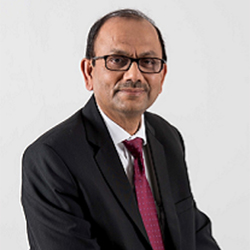
Dr. Suresh Nanda is a seasoned corporate and international banking specialist with over four and a half decades of global experience in Asia, the Middle East & Africa and has worked in leadership positions with well-known DFIs and banks. He is currently active in private equity, corporate advisory, and board governance. He is passionate about bridging businesses with the right partners and opportunities.
Publicité
Publicité
Les plus récents