Publicité
Rebuilding Mauritian agriculture
From Vulnerability to Food Sovereignty
Par

Partager cet article
Rebuilding Mauritian agriculture
From Vulnerability to Food Sovereignty
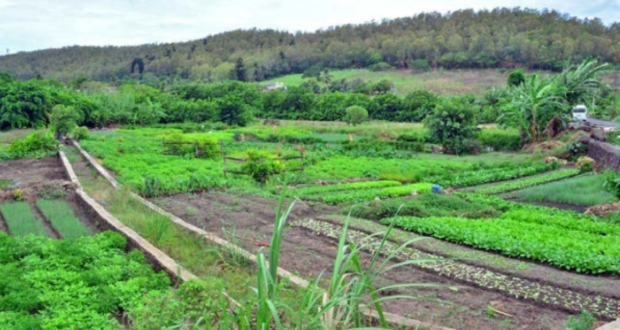
After more than one year in power, the Ministry of Agro-Industry’s decision to convene an Assises de l’Agriculture came across less as a bold policy reset than as an implicit admission of strategic drift. Marketed as a platform to chart a sustainable path towards food security, the exercise failed to confront the sector’s central weakness: the chronic fragmentation and inco- herence of public policy.
Mauritius is already littered with agricultural initiatives – from Smart Agriculture projects supported by the Mauritius Chamber of Agriculture, to the Switch Africa Green/SUS-AGRI Programme, PAGE-backed green recovery actions, and earlier mechanisms such as the Green Agriculture Scheme launched under the Maurice Île Durable framework to support the transition of some 23,000 small planters to sustainable agriculture. Yet these initiatives were never meaningfully aligned, rigorously evaluated, or scaled. Institutional memory was allowed to fade, funding streams remained siloed, and accountability was diffuse.
Rather than using the Assises to impose coherence, rationalise interventions, and clearly articulate a transition pathway for small planters – who remain central to food security – the process largely recycled familiar rhetoric. The result was not renewal, but repetition. In doing so, the exercise exposed a deeper malaise: a preference for consultation over decision-making, and announcements over implementation, at a moment when the agricultural sector can least afford further delay.
Sugar, soil and structural decline:
The Legacy of Monoculture in Mauritius
Mauritian agriculture has been shaped for over two centuries by sugar-cane monoculture. Introduced under Dutch rule and expanded under French and British administrations, sugar became the island’s economic backbone, at times accounting for nearly all export earnings. Even into the late 20th century, close to 90% of agricultural land remained under cane cultivation.
This dominance came at a cost. Intensive chemical use during the Green Revolution era degraded soil health, reduced organic matter and weakened long-term productivity. According to FAO assessments, approximately 27% of Mauritius’ land is now degraded, with major hotspots in the North, East and South-East.
Monocropping and vegetation clearance have also disrupted natural drainage, increasing flood vulnerability downstream. National mapping identifies hundreds of flood-prone zones, with a significant subset categorised as high risk – an outcome directly linked to land-use practices rather than climate alone.
The state’s broken promise – Abandoned fields, abandoned farmers
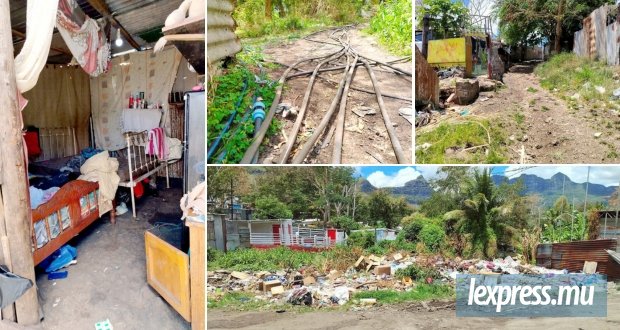
For decades, Mauritius’ small planters were promised land, support and a future. Instead, policy neglect has translated into idle fields, eroded livelihoods and rising dependency on imports. Of the approximately 10,217 acres once under state management through SPDC, SLDC and now Landscope, close to 900 hectares lie abandoned, while much of the remainder is leased but poorly utilised. Only about 30% is devoted to food crops; the rest is either planted with sugar cane or left fallow.
Pilot projects intended to reverse this decline have often collapsed under weak execution. The 22-hectare bio-farming project at Britannia is illustrative: more than half the site – 13.35 hectares – was eventually abandoned, highlighting systemic failures in planning, follow-up and farmer support.
At the same time, large tracts of agricultural land have been quietly diverted to residential, industrial or commercial use. Land that should have safeguarded rural livelihoods and strengthened food security has instead been repurposed, while small planters have been sidelined. The outcome is unmistakable: wasted land, broken promises, and a food system increasingly dependent on imports.
One case, in particular, captures the depth of this injustice.
The sugar cane planters trust as a case study in agricultural injustice
The Assises should have done more than generate reports and polite recommendations. It should have forced a reckoning with the lived experience of small planters who have repeatedly been subjected to policy experimentation – encouraged to convert, restructure and “modernise”, only to be abandoned when those policies failed.
A striking example is that of tea planters who were encouraged, and in some cases pressured, to convert their plantations to sugar cane. In 1997, the Sugar Cane Planters Trust Act was enacted to promote collective cultivation over 86.9 hectares, promising economies of scale, professional management and fair returns.
By the time the Trust was quietly dissolved in 2007, the planters concerned stated unequivocally that they had never received a single rupee of income from the project. There was no serious public accounting, no assumption of responsibility, and no compensation. The scheme simply disappeared.
This episode is not an administrative anomaly; it reflects a deeper structural injustice. Small planters have repeatedly been asked to absorb the risks of reform, while decision-making power and economic benefits remain concentrated elsewhere. The dissolution of the Sugar Cane Planters Trust without explanation or redress reinforces a fa- miliar pattern: consultation without protection, reform without accountability. – Broken Promises and Forgotten Planters.
The audit reports of the period are particularly telling. They reveal chronic mismanagement, weak governance and a complete failure of accountability – evidence that the project’s collapse was not inevitable, but the result of institutional neglect. What Happened to 86.9 hectares of Land?
Breaking the sugar barons’ grip – But at what cost?
Reforms introduced in the mid-2000s, including amendments to the Sugar Industry Efficiency framework, sought to curb unchecked land conversion and weaken the monopoly of large sugar estates. In theory, these reforms opened space for diversification and greater land retention by small planters.
In practice, agriculture continued to decline in economic relevance, now contributing only 3-4% of GDP. Land conversion accelerated, small planters exited the sector, and food import dependency deepened. The grip of monoculture loosened, but no coherent alternative system replaced it.
The land question: the silent saboteur of agricultural reform
No serious agricultural reform can succeed without confronting land ownership and use. Historically concentrated in the hands of large estates, agricultural land has increasingly been treated as a speculative asset rather than a productive resource for food security.
State-led compulsory acquisitions in the mid-2000s were intended to rebalance this system. Yet much of the acquired land remained idle, inadequately serviced, or redirected to non-agricultural uses. Where land was allocated for farming, beneficiaries often lacked secure tenure, irrigation, extension services and market access.
Land redistribution without an agricultural system is not reform. The absence of enforceable zoning, longterm leases and production-linked support discouraged investment, while fertile land continued to be lost to urban sprawl and so-called “development”.
The result is a paradox: perceived land scarcity for food production alongside visible underutilisation – a contradiction rooted in policy incoherence, not physical limitation.
An agricultural system that cannot feed its people
Mauritius today produces less than 25% of its food needs, importing the remainder. This dependency exposes the country to global price shocks, supply disruptions and currency volatility, undermining food security and affordability.
The sector remains poorly diversified, structurally weak and disconnected from consumption patterns. Sugar absorbed land, labour and policy attention for decades, while food production systems were never meaningfully built.
An ageing sector trapped by its own weaknesses
Agriculture is further constrained by rising input costs, labour shortages, an ageing farmer population and limited youth participation. Fragmented planning, weak post-harvest infrastructure and inadequate logistics result in income instability and post-harvest losses. Environ- mental degradation and climate variability compound these weaknesses.
Despite policy announcements and budgetary allocations, the sector continues to underperform against national food needs.
The illusion of reform: Why mauritian agriculture needs a clean break
Reversing this decline requires a decisive rupture with decades of cosmetic reform. Diversification into highyield food crops using modern agronomic science is no longer optional – it is a strategic necessity. This must be matched by serious investment in climate-smart agriculture, soil restoration and water-efficient systems.
Equally urgent is the rebuilding of value chains. Without storage, processing and direct market access, farmers will remain trapped in low returns. Smallholders must be treated as central actors through secure land access, affordable credit and technical support, while farming must be restored as a viable livelihood for younger generations.
Absent this structural transformation, agriculture will remain a shock-prone, food-importing sector - politically tolerated but economically indefensible.
Conclusion
Mauritius does not suffer from a lack of studies or pilot projects; it suffers from a lack of political courage. Without breaking with entrenched interests and outdated models, agriculture will continue to fail the population - economically, nutritionally and environmentally.
The Assises de l’Agriculture must therefore mark a rupture, not another cycle of well-intentioned but inconsequential dialogue.
Publicité
Publicité
Les plus récents