Publicité
The Sub-Saharan African region: from marginalisation to a bright future
Par

Partager cet article
The Sub-Saharan African region: from marginalisation to a bright future

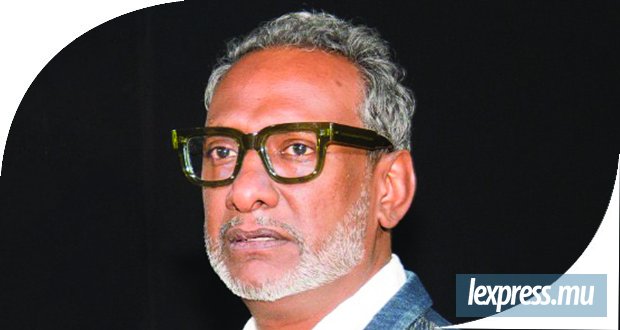
<B>By T. A. Pather</B>
Liberalisation of world trade coupled with technological advances in the field of information and communication are fostering the establishment of a “global village”. The past two decades have seen the emergence of economies in Asia and South America heralding somehow a more equitable world.
However, one region seems to be excluded from this “global village”. The Sub-Saharan African (SSA) region is, indeed, still struggling to catch the train of economic growth. In a paper issued in 1997, Dani Rodrik asserted that only “a third of the countries in Sub-Saharan Africa had higher per-capita Gross Domestic Product” than in the early 1960s (Rodrik, 1997). This tendency is confirmed by a more recent report issued by the International Monetary Fund (IMF) on the SSA region. Despite improving economic results since the 1990s, the Sub-Saharan African countries (SAC) are under-performing compared to other developing countries. And the “growth remains below the level required for SAC to reach the Millennium Development Goal”, adopted by the General Assembly of the United Nations in September 2000, “of halving income poverty by 2015” (IMF, 2005).
Furthermore, since the past three decades, the share of the SSA region in world trade has been decreasing. In 1975, this region was accounting for 3.25% of the world total merchandise exports compared to only 1.59% in 2004. The merchandise imports of the SSA region represented 3.05% of the world total merchandise imports in 1975. In 2004, this share fell significantly to reach 1.37% (UNCTAD, 2005). The SSA region is getting more and more marginalised from the world trade arena.
The gap between the SSA region and the rest of the world is not only an economic one. In 2005, about 63.5% of the people infected with HIV were living in SAC. Countries such as Swaziland, Botswana and Lesotho are hardly hit by this disease. For instance, in 2005, 33.4% of the adults aged from 15 to 49 were infected with HIV in Swaziland compared to 24.1% in Botswana (UNAIDS, 2006).
Since the independence period, the region has been undermined by political conflicts and wars. The recent conflicts in Côte-d’Ivoire and in Tchad are examples showing that the SSA region is not yet to become a peaceful one. Economic, political, social and even environmental, the challenges the SSA region has to face to play a growing role in the “global village” are without any doubt huge.
To cope with these challengers SAC have benefited since their independence from aids via international or regional organisations. Indeed, the SSA region has been relying on foreign assistance to solve their internal problems and find the pathway to sustained economic growth.
One of the major aid providers for the region has been the European Community (EC). The involvement of the EC in the economic development of this region has undoubtedly to do with the colonial links between some of its Member States (France, United Kingdom, Portugal…) and SAC. Started in 1957, the aid programme set by the EC to help the SSA region really began in 1975 with the Lomé I Convention. Preferential access to the EC market, financial aids to private sector, financing of infrastructure constructions… SAC have benefited from a “fan-aid programme”.
Yet, since the past decade, the global trade regime has been further liberalised under the guidance of the World Trade Organisation (WTO). New economies, such as China and India, have been emerging. The EC has been enlarging towards Eastern Europe and its interests in SAC have waned. Indeed, the Cotonou Agreement signed in 2000 and the recent amendment of the Sugar Protocol clearly show that the relationship between the EC and SAC has entered a new era, an era governed by economic interests.
Consequently, SAC cannot rely anymore on its relationship with the EC to sustain their economic growth. They have to take into account the changes intervened since the Lomé I Convention and establish new partnerships with emerging economies.
Although SAC are heterogeneous, they have to stand up and work together for their development. They have to collaborate to succeed in combating poverty and catching the train of sustained economic growth. Despite their differences, African countries should speak with the same voice in the international fora (e.g. the IMF, the WTO…) to defend their common interests against the leading economic powers. The New Economic Partnership for Africa’s Development launched by the former Organisation of African Unity in 2001 and the foundation of the African Union in 2000 have already set the path. “African political leaders should be committed to these initiatives as the unity and success of Africa can only be beneficial to all African countries.”
Despite the establishment of regional blocs such as the Common Market for Eastern and Southern Africa and the Southern African Development Community, intra-Sub-Saharan African trade is still very low. Therefore SAC must make efforts in order to increase effectively trade among them. Before conquering the market of their European or Asian counterparts, the SAC must first conquer the market of their African neighbours. “Indeed, intra-Sub-Saharan African trade should be considered by SAC as the first step to enter the global trade arena.”
Eventually, people are at the crux of the economic machine. Therefore, to ensure their economic future SAC need an educated, skilled and above all a healthy population. Therefore, actions against the spreading of HIV should be on top of the agenda for the countries severely hit. “The State, the private sector and the non-governmental organisations of those countries should act in partnership to sensitise and educate effectively their fellow citizens about HIV and to give them the means to protect themselves against this disease.”
As already underlined previously, issues to be tackled by political leaders of SAC at the dawn of the 21st century are huge. Yet, the future of Sub-Saharan Africa is in their hands. “Real commitment, integrity and vision from them will surely move the SSA region from marginalisation to a bright future.”
Publicité
Publicité
Les plus récents