Publicité

Symbolism, empty symbolism

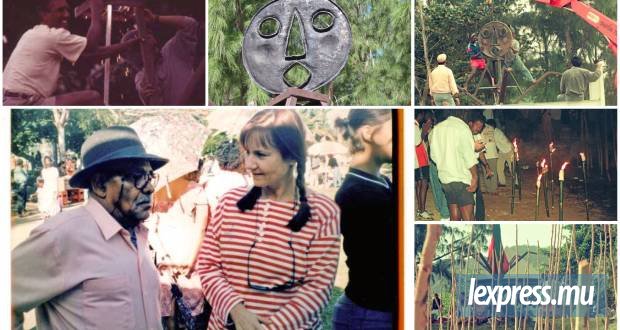
Last week, a new set of statues were unveiled in Chamarel to mark the suffering of slaves at the hands of their masters. In the last couple of years, we have marked our history with many historical sites. The Morne and Appravasi Ghat have both crept into the Unesco list. At this pace, the UN body will think that we were the centre of the historical world. Perhaps we were. We should remember that Mauritius was one of the first countries to figure prominently in the telecommunications revolution, being one of the earliest destinations of undersea telegraph cables. Again, this happened because of our colonial past, when the British decided to bypass the Middle East to connect India via Mauritius.
Since the new government was sworn into office, there has been a lot of hullabaloo about colonialism. The ‘democratisation of the economy’ itself bears a subtext of imperial encroachment on our territories. Before that, there was all the fuss over financial compensation to descendants of slaves and Indian indentured labourers. And what about the ex-prime minister smelling filthy rats when Bill Rammell visited the country. Add the ‘Father of the Nation’ myth of Sir Seewoosagur Ramgoolam that his son likes to pedal around, conferring on the old man an aura of saintliness. His near autocratic rule after independence is conveniently forgotten, brushed under the carpet. The same goes for Sir Gaetan Duval.
Symbolism in Mauritius has become the staple diet of the nation. And this is not to say that these men have not contributed massively to the country. Or that the appraisal of our slave and coolie past is not important. However, no matter how many symbols we unearth, our problem lies in our refusal to take a philosophical position. For example, you rarely hear anyone criticise either SSR or SGD. On the other hand, Paul Berenger seems to be the only one to believe in his own myth and that of his party. We tend to hide behind edifices, monuments, father figures. Meanwhile, we struggle with our identity.
Furthermore, our near sycophantic relationship with India bears all the hallmarks of our insecure nature. While we are closer to Africa geographically, we go to look further north for a soul mate. It is true that the majority of people in Mauritius are of Indian origin and it is thus natural that they turn towards the land of their ancestors for reference. But we end up with a situation where the descendants of slaves turn to Africa, those of coolies to India, those of the colonial masters to Europe and so on. No one looks inside. In the country, our rulers of the day feed us with symbols. Like docile subjects, we gobble them down.
Fostering colonial education
A lot of problems of national identity are appendages of our colonial past. Like many African countries torn by war, the racist policies of European countries have contributed to our situation in no small measure. And there is not a more insightful study of the colonised mind than the works of Franz Fanon. And here, this brings us again to our fake nationalism. Take our secondary school curriculum for both English and French. We keep forcing on generation after generation works that are completely irrelevant. What has the society described by Moliere got to do with the Mauritian experience. How are the shenanigans of Hamlet relevant to a young Mauritian child irrespective of his/her cultural background? We forget that Shakespeare wrote for his time and was in the pay of the monarchs. They might be great works of art, but their consumption should also be limited. The reading list of a 12-year old will always contain the abridged version of the Bard’s plays but none from African, Indian and least of all Mauritian literature.
Ireland, for example, which was occupied for so long by the British and during which time its Gaelic origins suffered irreversible damage, is an example of how a country should approach its identity. Its writers are given a pre-eminence over anything from its neighbour across the sea. A young student is more likely to encounter Yeats, Shaw and Wilde (who all wrote in English and not Gaelic) before the pervasive influence of Shakespeare. There are many other writers who are closer to the Mauritian experience than the ones mentioned above. From the Caribbean, we are spoiled for choice. In French, we can choose between Joseph Zobel, Patrick Chamoiseau or Aime Cesaire. In English, the works of V.S Naipaul earned him a Nobel Prize, but there is also C.L.R James or Orlando Patterson. Even Hemingway’s ‘The old man and the sea’ connects with us as Mauritians in a way that Shakespeare can only dream of.
However, in Mauritius, the government (past, present and certainly in the near future) is only interested in symbolism, which, when repeated in the national media, makes good sound-bites. After all, intellectual radicalism is rarely associated with those men and women who warm the benches of Parliament these days. Those who are in Parliament to serve the interest of the nation are very few. Since the end of the nineties, when the country needed designers and architects to steer the country in a new direction, we have instead got coarse bricklayers. And, needless to say, more and more walls rose up between the different communities, denying us any chance of national unity. Though it is too early to pass judgement on the new government, it seems that they too have caught the bug of symbolism. The country needs a radical reappraisal of how it sees itself before we can embark into cyber-island types of projects, because we could be slowly crawling towards social collapse.
<B>Diren VALAYDEN</B> <I>Outlook Correspondent in Dublin</I>
Publicité
Publicité
Les plus récents