Publicité
At the Voice and Choice Summit
No age to learn
Par
Partager cet article
At the Voice and Choice Summit
No age to learn
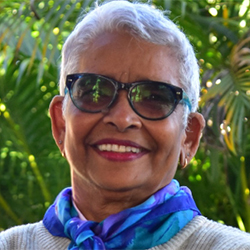
I never thought that at the age of 81, I would learn so much from young people who could have been my grandchildren. I was not lost in translation although the languages were English, French and Malagasy but lost in learning so many burning issues that affect society at large.
I was invited to the Voice and Choice Summit that took place in Johannesburg from 15th to 17th March 2026. Over 200 activists, community leaders, entrepreneurs and journalists from across Africa connected and shared experiences in advancing gender justice, diversity and inclusion.
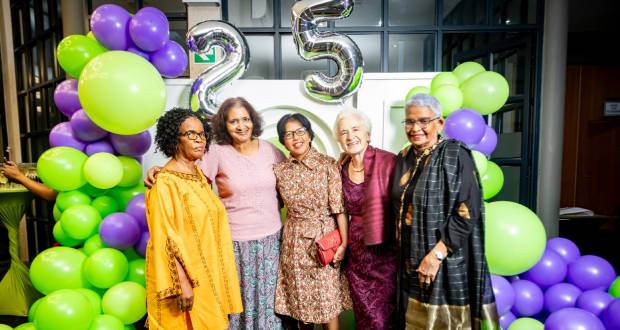
The Summit was also to celebrate the 25th anniversary of Gender Links. I was invited as a special guest having been with this organisation for so long. I thought I would only be an observer. How wrong was I? Being an observer does not exist in the vocabulary of Colleen Lowe Morna, the Founder, CEO and now the Special Adviser of Gender Links.
On the very evening of my arrival in Johannesburg, I was taken to Colleen’s house. What I thought would be a restful evening after a four-hour flight, was a working session with Colleen. “You know the work of Gender Links, Loga, I know your presence will bring value to the three days’ work.” Colleen never takes “no” for an answer. I, therefore, immediately agreed. But what I did not know was that on the very next day I would be invited to attend a whole day workshop with participants from the region. The alliance participants were divided in groups to discuss different important issues, e.g. climate change, gender-based violence, human trafficking, sexual and reproductive rights, to name just a few.
Unlike workshops that I have attended in Mauritius, this regional/alliance workshop was not only to probe into the problems that women and men are faced with but to suggest solutions and to implement them. Knowing how Gender Links work, I know each country will have to report back on what they have done at the country level and how the changes implemented are changing the lives of citizens : women, men and children. Monitoring and evaluation is the mantra of Gender Links, after all.
Colleen also encouraged me to be a judge on a panel. With my brain getting rusty with age, I thought it would be great to refresh my memory and oil my brain a bit. I immediately agreed to be a judge on the media LGBTIQ presentations followed by story of change presentations which was on challenging gender norms, economic and climate justice. My goodness! What a session!
To start with I thought I would never be able to make it at the Kopanong Hotel where all the events were taking place. There was a huge accident on the road and I even saw bodies covered with plastic. I have never encountered this in my life. I later learnt that there were three deaths.
I was a bit shattered when I entered the room. Over 20 presenters, which included Mauritians, were waiting for the judges. I introduced myself and together with the other two judges and my Mauritian colleague, Denis Ythier, who acted as a translator (for presentation in French), we started work immediately as we were over one and a half hour late.
The participants presented themselves and one by one then came in front of the audience with their PowerPoint presentations to give details of their work. This was when my brain started to work overtime. After each presentation I had to hold myself for not asking too many questions. It was not to impress the journalists but I wanted to know more about their in-depth reporting and the missing elements in their stories. These journalists were changing people’s lives. The research that they did to write or produce stories has changed the lives of people and their plan is to keep on with their awesome work until they see real changes. They have empowered communities and change mindsets on LGBTIQ.
One of them worked with localities to get a safe place for the LGBTIQ community while another one worked with a child who was an outcast in his school and finally got accepted. One journalist dared to challenge politicians by writing on a gay politician while another one worked with those who were against the LGBTIQ community. She registered the voices of those who were for as well as those who were against. She even stayed with them before airing her radio programme. In Mauritius journalists cover stories of NGOs working with LGBTIQ and those on the margin of society but never do the work of advocacy. Although as far as possible they try to be gender sensitive, they are not committed to work on those who are stigmatised. The journalists who presented their stories not only helped the LGBTQI community but they do follow up to make sure that these people become part of the society as a whole.
What an experience! I never thought that journalists can invest themselves so much to change mindsets and do work that is normally done by NGOs.
The Stories of change presenters were as thought provoking as that of the journalists. The NGOs that presented their work are the real changemakers in their countries. Their projects highlighted innovative initiatives in challenging gender norms, economic and climate justice with the result of advancing gender justice on all fronts.
I was worn out when we finished at nearly 7 p.m. But what a day! It was worth it. I learnt so much and never thought that at my age I could keep on learning. Of the 200 activists, a total of 42 awards were presented at a gala dinner honouring initiatives transforming communities and pushing for gender equality, diversity and inclusion. Mauritius was among the ten countries which won an award.
Publicité
Publicité
Les plus récents