
Publicité
Mauritius Must Hold on to Its Rain
Par

Partager cet article
Mauritius Must Hold on to Its Rain

The right to water must become a national priority measured by dependable supply in every home
Two years after the election that brought this Government to power, I see an increasingly urgent national priority: securing the right to water, our most valuable resource. My concern is the continuing uncertainty faced by too many families: whether water will be available, how long the supply will continue, and how they will meet their essential needs if it is interrupted. Reliable access to safe water is fundamental to a dignified life. Mauritius now requires a more determined, coherent and publicly accountable response to an issue that directly affects the welfare of its people.
The daily cost of interruptions
In La Caverne, Phoenix and neighbouring communities, families have reported to me that they have been without running water for several days at a time. These interruptions impose considerable hardship on households, affecting food preparation, basic hygiene and the care of vulnerable family members. An irregular tanker service compounds these difficulties, particularly for older people living alone and working parents unable to remain at home awaiting deliveries. I recognise that this Government inherited serious weaknesses and that successive administrations allowed vulnerabilities to accumulate. Addressing those deficiencies requires sustained investment. Nevertheless, inherited weaknesses cannot indefinitely justify inadequate delivery. Two years after the election, the public is entitled to a clearly defined programme and demonstrable improvements.
Delivery must follow
The emergency measures announced in October deserve acknowledgement. Government proposed additional boreholes, increased water conveyance from Mare Longue to La Marie, treatment units, strengthened tanker services and expanded assistance for household storage. These commitments are significant, but their value must be assessed through implementation. Government should now provide a clear account of the measures that are operational, those that remain outstanding and the extent to which reliable supply has been restored.
A right for every home
The internationally recognised right to water encompasses access to sufficient, safe, accessible and affordable water for personal and domestic use. These principles should guide national priorities, particularly during periods of restricted supply. I propose published service standards, a dependable commitment to emergency provision and a complaints system through which residents can monitor the handling of their concerns and receive substantive responses. Vulnerable households should receive priority assistance according to transparent criteria. Residents should also receive reliable information on the anticipated restoration of supply and timely notification of any changes.
Water insecurity deepens existing inequalities. Households with sufficient financial resources and adequate space can invest in storage tanks, pumps and supplementary supplies, while others lack those means. Assistance for domestic storage is therefore necessary, but it cannot substitute for a reliable public service. Clear drought-management rules must protect the essential domestic needs of every community. Restrictions should be proportionate, adequately explained and consistently enforced, with equitable treatment forming the basis of public confidence.
Water insecurity deepens existing inequalities.
Nevertheless, inherited weaknesses cannot indefinitely justify inadequate delivery.
Retaining rainfall and protecting the catchment
Retaining more of our rain
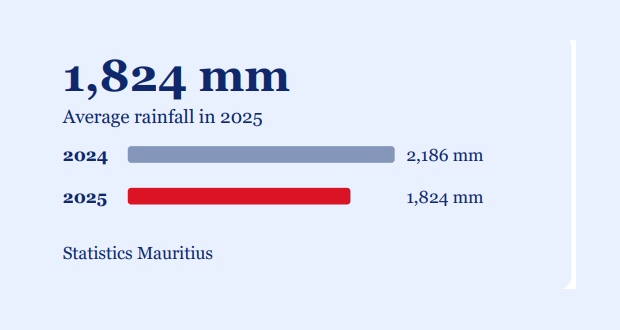
Statistics Mauritius recorded average rainfall of 1,824 millimetres in 2025, compared with 2,186 millimetres in 2024. The island received an estimated 3.402 billion cubic metres of precipitation, of which approximately 60 per cent was classified as surface runoff. These figures should not be interpreted as evidence that all runoff can be captured or that freshwater reaching the sea is necessarily wasted. Rivers, wetlands and coastal ecosystems depend on freshwater flows, while the suitability of additional storage is determined by land availability, geology, water quality and environmental safeguards. Mauritius should nevertheless undertake a systematic assessment of opportunities for additional capture where these are technically sound, environmentally acceptable and economically justified. Each project must be assessed according to the volume it can reliably provide during the dry season, the location of demand and the infrastructure required to deliver water to consumers. Catchment management, storage, treatment and distribution must therefore form part of an integrated plan.
Mare aux Vacoas needs current evidence
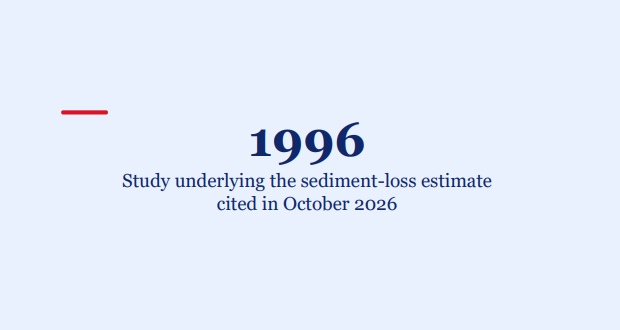
Mare aux Vacoas demonstrates the importance of decisions based on current evidence. In his reply to my parliamentary question on 27 October 2026, the Minister of Energy and Public Utilities, Patrick Assirvaden, confirmed that the estimate of sediment-related storage loss continues to rely on a 1996 study. The Minister also reported that there was no evidence of significant foundation seepage reducing the available volume. When I requested a new survey, he indicated that further studies were not envisaged at that stage, while leaving open the possibility should their necessity become evident. In my view, an updated assessment is already justified. Government should commission fresh mapping of the reservoir bed, an assessment of sediment accumulation and an independent review of the relevant structures and feeder systems. The findings should guide decisions on maintenance, repairs and any proposed sediment removal, without presuming either that sedimentation explains the shortage or that dredging would resolve it. Older storage infrastructure across Mauritius should also be assessed, with viable facilities rehabilitated and every reservoir assigned a clearly identified operator and a funded maintenance programme.
Examining the wider catchment
That assessment should also examine whether selected catchments within the wider Grand Bassin–Pétrin–Plaine Champagne uplands could provide additional water to Mare aux Vacoas. A preliminary hydrological and engineering study should establish seasonal flows, surveyed elevations and storage requirements, distinguishing additional recoverable runoff from water already conveyed through the existing feeder and diversion systems. It should compare improvements to those systems with any proposed new works, assessing gravity transfer where conditions permit and publishing the reliable yield, cost and environmental implications. The proposal must exclude abstraction from Ganga Talao and any intervention adversely affecting its recharge, ecological balance or religious setting. Protected habitats and downstream supplies must also be safeguarded. This would establish whether a further contribution is feasible without presuming that an untapped resource exists.
Recovering losses and harvesting rain
Recovering water lost in the network
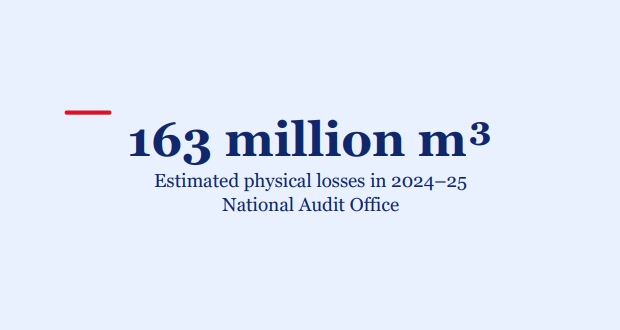
The National Audit Office’s performance audit records non-revenue water equivalent to approximately 60 per cent of production in 2024–25. Its analysis estimates physical losses through defective pipelines at about 163 million cubic metres, against total production of 327 million cubic metres. These measures must be distinguished: non-revenue water includes components other than leakage, while the physical-loss figure is an estimate. The magnitude of the losses nevertheless warrants decisive action. By way of illustration, a reduction in physical losses equivalent to five percentage points of production would save approximately 16 million cubic metres annually, assuming unchanged production. This calculation illustrates the potential significance of leakage reduction; it should not be presented as a guaranteed recovery volume.
Measure results at the tap
The Central Water Authority should publish a reliable water balance and prioritise areas recording the greatest losses and most persistent supply interruptions. District metering, pressure monitoring and systematic leak detection should guide the replacement of mains and service connections. Progress must be assessed through verified reductions in water losses and measurable improvements in service reliability. The length of pipeline replaced is a useful implementation indicator, but the decisive outcome for households is a reduction in the frequency and duration of interruptions. Maintenance funding must also be secured to preserve the condition and performance of infrastructure throughout its operational life.
Rainwater harvesting that works
Rainwater harvesting can reduce demand for treated mains water for toilet flushing, cleaning and irrigation, and should become an established component of housing and development policy. Using the 2025 island-wide rainfall average, a roof measuring 100 square metres could theoretically collect approximately 146,000 litres annually, assuming a collection efficiency of 80 per cent. The volume available for use would depend on local rainfall, storage capacity, overflow and demand. An annual collection estimate must therefore be distinguished from the volume that a household could reliably access during a prolonged dry period.
Low-income households in persistently affected areas should receive priority
Supporting complete systems
Financial assistance should support complete and operational harvesting systems, including gutters, first-flush diversion, covered mosquito-proof storage, safe overflow arrangements and separate plumbing. Any use for drinking purposes requires appropriate treatment and health safeguards. Low-income households in persistently affected areas should receive priority, with shared facilities considered where individual storage is impractical. Proportionate harvesting requirements should be incorporated into building and planning controls, beginning with larger commercial, industrial and residential developments. Schools, markets and public buildings should implement suitable systems and document the resulting savings. Local authorities must verify completed installations and maintenance arrangements as part of their oversight responsibilities.
Verified reductions in water losses and measurable improvements in service reliability.
Protection, demand and responsible use
Planning for floods and dry seasons
Flood management and water security must also be addressed within a common planning framework. Singapore requires on-site runoff controls for new developments and redevelopments of at least 0.2 hectares. Mauritius can adapt this approach through appropriate retention ponds, wetlands and off-stream storage. However, flood detention and water storage have distinct operational requirements: a storage facility at full capacity offers limited protection against additional storm runoff. Designs must therefore retain sufficient flood detention capacity, manage polluted runoff and protect downstream flows. Proposals for small dams or weirs should proceed only where catchment studies, environmental assessments and safety requirements establish their suitability.
Protecting groundwater
Additional boreholes can contribute to supply, but their effectiveness should be assessed according to sustainable dry-season yield, water quality and their contribution to service reliability, rather than the number drilled. Groundwater investigations should draw on existing records and incorporate appropriate geological surveys and pumping tests. Abstraction must be monitored to protect aquifers and neighbouring sources, including the prevention of saline intrusion into coastal groundwater. Recharge areas must also be protected from pollution and unsuitable development.
Flood management and water security must also be addressed within a common planning framework.
Measuring agricultural demand
I also propose an independently verified survey of agricultural and agro-industrial water demand and abstraction, covering sugar estates, individual planters and sugar factories. The Water Resources Commission should coordinate this exercise with the Irrigation Authority, the Mauritius Cane Industry Authority and the operators concerned. Field irrigation must be distinguished from factory processing and associated energy production. Current requirements should be compared with historical allocations, legal entitlements and measured seasonal withdrawals, accounting separately for internal recycling and return flows. The findings should identify opportunities for more efficient irrigation, conveyance repairs and industrial reuse, and establish whether resulting savings could reliably benefit public supply. Results should be published by catchment, with appropriate technical support for small planters.
Clarifying historical water rights
This assessment should be accompanied by clarification of the provisions of the Water Resources Act 2024 currently in force and the procedures applicable to historical water rights. Where the basis or quantity of an entitlement is uncertain, the appropriate legal determination should be pursued. Any adjustment must follow lawful procedures and applicable safeguards, while giving proper consideration to essential household needs, legitimate agricultural requirements and environmental protection.
Reusing water safely
The potential use of properly treated wastewater for suitable agricultural and industrial purposes should be assessed against clear quality standards. Where technically and economically feasible, reuse can reduce demand on freshwater resources and preserve them for essential needs. Each option should be evaluated according to its reliable yield, cost and environmental effects.
Investment, responsibility and delivery
Assessing desalination
I oppose committing public funds to a utility-scale desalination plant as the principal element of our response. Mauritius should first prioritise network rehabilitation, suitable freshwater storage and proven groundwater resources. Desalination provides a source less dependent on rainfall, and that advantage must be recognised. It also entails energy requirements, specialised maintenance and careful management of concentrated brine. Any proposal for national desalination capacity must therefore be compared with alternative investments on the basis of the full cost of reliable water delivered to consumers, including distribution and environmental safeguards. Government should publish this assessment before entering into a major commitment. Investment in additional production must be accompanied by effective action to reduce avoidable network losses, while the evaluation of alternatives must give appropriate weight to drought resilience as well as construction costs.
Turning budgets into results
The 2026–27 Budget earmarks Rs 6.4 billion over three years for catchment and delivery improvements and allocates Rs 175 million for household storage facilities and fittings. It also provides for boreholes, pipe replacement and additional treatment units. These commitments are welcome, but budgetary provision must translate into demonstrable service improvements. For every major project, Government should publish the responsible agency, approved cost, procurement stage, completion timetable and intended benefit. Delays should be explained and corrective measures disclosed. Adequate provision for operation and maintenance must accompany expenditure on construction.
Clear responsibility
I propose an independent statutory apex Water Authority to coordinate catchment protection, storage, supply, irrigation and reuse. Its relationship with existing institutions must be clearly defined, supported by merit-based appointments, a separation between oversight and operational responsibilities, and regular reporting to Parliament. Institutional reform must address fragmented responsibility while safeguarding the continuity of services.
100 days to set the course
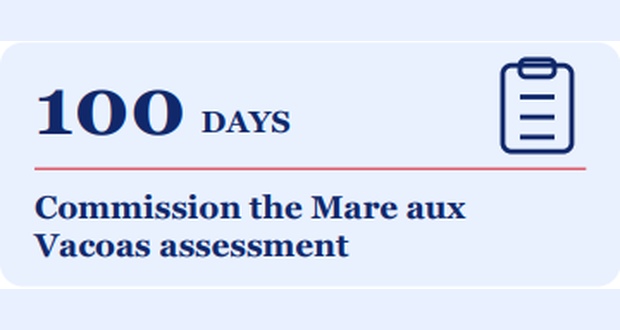
Within 100 days, Government should publish a priority programme for the localities experiencing the most serious supply difficulties, establish a credible leakage baseline, commission the Mare aux Vacoas assessment and issue draft rainwater-harvesting standards for consultation. These first steps should also include commissioning the catchment feasibility study and initiating the demand and abstraction survey. Emergency supply arrangements should provide dependable schedules and priority support for vulnerable households. Within a year, the public should have access to survey findings, verified leakage reductions, records of completed harvesting installations and measurable improvements in supply reliability. These milestones should form part of a funded ten-year plan, subject to annual parliamentary review, with results published by locality. Although the full rehabilitation of the system will require sustained effort, priorities, institutional responsibilities and mechanisms for assessing progress can and should be established without further delay.
Mauritius must retain more of its rainfall, protect its water sources and rehabilitate the infrastructure through which this essential resource reaches its people. The right to water must be given practical effect through decisions that improve household security and daily living conditions. As each dry season approaches, families should be able to rely on a dependable supply of safe water. That is the standard against which our national effort must be assessed.
Publicité
Publicité
Les plus récents