Publicité
The price to pay for clearing the road…
Par

Partager cet article
The price to pay for clearing the road…

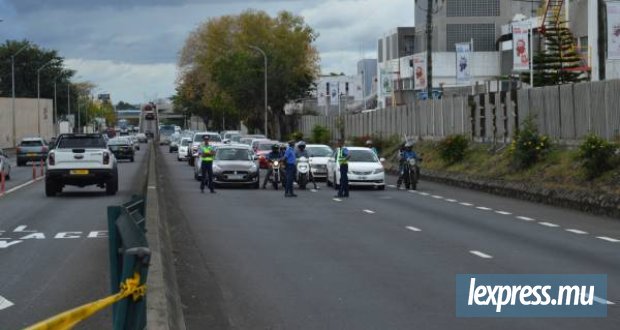
Some people could have bet on it. Even if Jonathan Richmond’s proposals have been said to be the miracle solution to get rid of road congestion, the project is being delayed at the highest level of government. It is not a question of lack of funds or even red tape. The main hurdle actually comes from a difference of opinions between the same decision-makers because of the controversial implications of congestion pricing.
When the European Union (EU) representatives were in Mauritius a few weeks ago, minister Sithanen had already shown his impatience as to the incapacity of the government to take a final decision on the issue. He revealed that the money could be easily made available – the World Bank and the EU seem ready to advance Mauritius the money – but sterile arguments were preventing the project from moving forward.
More than a month later, the situation is at a standstill. To accelerate the process, the government is studying the possibility of setting up a Land Transport Authority (LTA) – an institution which will control all the others involved in transport – which will be responsible for implementing all changes in the current system. This is one of the measures contained in Jonathan Richmond’s report.
After discussing with all stakeholders and studying the Mauritian situation, the British expert in Transport, Jonathan Richmond, gave a report to the government where he recommended the implementation of 18 measures concurrently. Among those measures, he advocated the construction of a “bus way”.
Beside the necessity of having comfortable new buses on this brand new road, the expert however made it clear that the plan would not work if people were not discouraged from using their cars. The logic is clear: not only should the driver be tempted to go to work in these comfortable new buses but he should also be discouraged from using his car. As it is the case in Great-Britain, Jonathan Richmond said the best way of achieving this objective would be the implementation of a toll fee into Port-Louis of Rs 100 for private vehicles to force people to take the bus during peak hours.
Even the prime minister, Navin Ramgoolam, said he had had the opportunity to observe the system while he was in Great Britain and that it worked very well. So why not in Mauritius? But then he realised the public is not really keen on giving up their cars or paying a Rs 100 fee everyday to go to work. Such a decision, despite its positive effects in the long-term, would be very unpopular. Even cabinet members can’t agree on congestion pricing.
One institution for all transport issuesw</B>
But the defenders of Jonathan Richmond’s report are adamant, “The investment in new infrastructures like the bus way is only one aspect of a big programme. The management of the demand for car use should go hand in hand with infrastructures. We have already made huge investments in the past but the situation has only worsened”.
So now the new hope lies in the setting up of the LTA. It will be granted the power to implement the reforms approved by the cabinet. It will be for instance in charge of determining the bus way track as well as implementing it. With only one institution responsible for transport issues, the government expects to get rid of the possible conflicts between different institutions and finally solve traffic congestion once and for all.
But there is still a long way ahead before this project materialises. After being approved by the State Law Office, the legislation will then have to go through the cabinet before its adoption by the National Assembly…
Publicité
Publicité
Les plus récents