Publicité
Presidential election in Taiwan: a tight race
Par

Partager cet article
Presidential election in Taiwan: a tight race

An estimated 1.2 million people linked hands in a human chain the length of the island Saturday as President Chen Shui-bian urged protesters to oppose China?s military threats and create the ?Great Wall of Taiwan?s democracy?.
The event was the biggest islandwide demonstration in Taiwan?s history. The protesters hoped it would win the world?s sympathy for Taiwan in its struggle against China. But it could end up further antagonizing the communist giant.
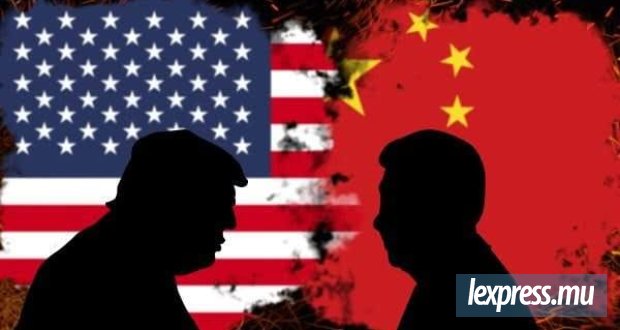
Chinese leaders insist self-ruled Taiwan belongs to China, and they have repeatedly threatened to use force to take over the island, 100 miles off the mainland. China?s massive military has nearly 500 short-range missiles pointed at Taiwan.
When Taiwanese President Chen Shui-bian started his campaign for reelection, things looked bleak. Two opposition parties had joined forces against him, backing a challenger who enjoyed a wide lead in most opinion polls. But in recent weeks, surveys say Chen has closed the gap against his opponent, former Vice President Lien Chan, and the March 20 vote promises to be one of the tightest elections in one of Asia?s most vibrant democracies.
The hot issues are relations with China and the economy. But as in past campaigns, a lot of time has been spent exchanging nasty personal attacks and digging for scandals.
A twist was added to the election when Chen decided to call for Taiwan?s first island-wide referendum, to be held on the same day as the presidential vote.
The ballot will ask voters whether Taiwan should boost its defenses if China refuses to redeploy nearly 500 missiles pointed at the island, just 160 kilometers off China?s coast.
Voters will also be asked if the government should seek a new peace framework with China. Chen?s camp sees the referendum as a vote grabber. But it is cited by the 67-year-old Lien as one of the best examples of how the president allegedly needles and demonizes China, the island?s biggest security threat. China and Taiwan separated amid civil war in 1949, and Beijing has threatened to use force to take over the island. Since the split, the rivals? leaders haven?t met.
Lien?s Nationalist Party promises voters that the former US-educated political science professor would be better able to start peace talks with China. The Nationalists support eventual unification with China, and Beijing is widely believed to favor Lien.
George W. Tsai, a researcher at the Institute of International Relations in Taipei, said that if Lien wins, relations with China will be better because ?there will be more room for cooperation, more room for imagination.?
Lien has already said he would lead a peace mission to China. He has also proposed ending a five-decade ban on direct aviation links with China and establishing an air security corridor ? like the one used in East Berlin during the Cold War?for flights between the two sides.
Lien has also accused Chen of gradually pushing toward a permanent split with China. But the president has repeated a pledge from his last campaign, saying that as long as China doesn?t attack, he won?t seek formal independence.
The 52-year-old Chen, a former Taipei mayor and attorney, has told voters that a victory on March 20 will convince Beijing that his first election win wasn?t a fluke and that he?s a force to be reckoned with. Chen also supports direct air links with China, but he?s not willing to sacrifice Taiwan?s sovereignty as part of any deal.
Lien has also promised voters that his administration would improve the economy. Lien rose up the bureaucratic ranks of the former Nationalist government ? which ruled for five straight decades. The party takes credit for Taiwan?s transformation from a poor rural economy to a manufacturing powerhouse.
Shortly after Chen?s Democratic Progressive Party won the presidency in 2000, the island?s economy slipped into recession for the first time in decades. Unemployment hit record highs as many companies moved their factories to China, where labor is cheaper.
Publicité
Publicité
Les plus récents