Publicité

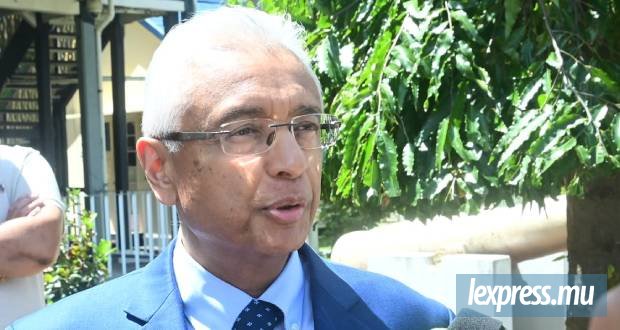
Pierre Dinan, Economist

Soon after the budget last year, you said it needed full support from the people to be successful. With hindsight, how would you qualify the population’s reaction?</B>
A mixed bag of satisfaction and dissatisfaction with boldness praised and harshness criticised. There was also a good dose of doubt as to whether the reform would be fully implemented. Many people have realised that there are challenges on the way and that no one owes us a living. It has also been realised that budgetary measures – however painful they can be on an individual basis – must be assessed in relation to benefits they are expected to yield at the national level.
To what extent did it help the government or prevent it from implementing its reform?</B>
It would have been naïve to expect unreserved support from the whole population. To the extent therefore that there has been some opposition, the pace of reform risks being slowed down. But it is obvious that there will be ups and downs in this pace. As more and more people realise the need for urgent and effective measures, the criticism or proposals will stop being negative. Of course, there will always be opportunities for positive criticism. But, in my mind, the whole package of measures should be implemented at effective speed.
The recent decision to freeze gas and flour prices appeared to some as a way of easing social tension rather than a profitable economic decision. As en economist, do you think it was the right decision?</B>
Few people seem to be aware that the price of gas has been subsidised for quite some time. If gas and flour prices remain unchanged for this reason, it should have been announced publicly. I believe in “la vérité des prix”. I believe there has been a failure in the practise of transparency and, from an economic point of view, there is a damaging flaw in maintaining subsidies. At present this is made possible through cross-subsidisation, realised by the STC out of surpluses on other commodities. This is like burying our heads in the sand. The concept of universal support should be abandoned by government in aid of targeted support, which is more rational.
Many observers appear convinced that 2007 will be a better year in terms of growth. What is your own opinion?</B>
2007 will probably be better indeed. This is a sign that Mauritian and foreign investors are reacting positively to the reform programme. However, we must be careful not to put the cart before the horse; the battle has just begun! Results will have to be assessed over the medium- and long-term. To achieve good results, the government will have to lead, inspire and decide. As for the people, we will have to be responsible and work hard and ethically as it was the case in the eighties after the shock of the devaluation of our local currency.
Our currency seems to be in a difficult situation. Do you think 2007 will bring some hope on that specific issue?</B>
The state of a currency actually reflects the state of our whole economy. From July 2004 to June 2006, Mauritius accumulated Rs 16.6 billion deficit on the current account of the balance of payments – which means that imports of goods and services were larger by Rs 16.6 billion than exports. This was not the case previously. It means that the country is living beyond its means and the demand for hard currencies has been larger than the supply. For the situation to get better, the deficit will have to be turned into a surplus – or at least reduced. But this is not enough. It is hoped that the Bank of Mauritius will intervene more to keep the situation under control. From January to June 2006, only Rs 18 million US $ were injected into the market compared to Rs 117.1 million in the corresponding period the previous year. Fortunately enough, the BoM came back on the market during the second half of the year but, by then, the crisis had built up. The market had starved so much that it had become insatiable. The situation had become a cause of panic and this must in no way be allowed to recur.
Publicité
Publicité
Les plus récents