Publicité
Media blamed for unfair image of Islam
Par

Partager cet article
Media blamed for unfair image of Islam

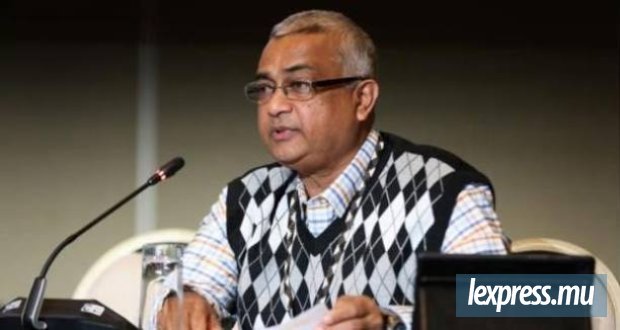
How far is the media responsible for the image conveyed of Islam? Rashid Ahmine, principal state counsel, gave his opinion on the subject at a talk held at the British Council last Thursday. The audience included public figures such as the attorney general, Rama Valayden, the vice-President of the Republic, Raouf Bhundun, as well as the High Commissioners of UK and Australia, and did not need to be persuaded to participate in the debate that followed Mr Ahmine?s presentation. As expected, the subject aroused a few passionate exchanges of views but many people in the assistance tried to have more of an intellectual vision of the situation.
The exact issue under discussion was ?Islam beyond the media perspective?. Rashid Ahmine went to the heart of the matter as from the very beginning of his presentation by quoting from a few international articles to illustrate the stand taken by many publications. ?Islam is a war-like religion? states an Australian paper; ?Muslims often legitimise intolerance and violence,? wrote an Indonesian journalist.
<B>No hidden agenda</B>
Of course, the example of the Danish cartoons was also mentioned. Fahrad Koyratty, professor at the university of Mauritius, however tried to attenuate the impact of such cartoons ?and his analysis can be applied to any other articles published. He indeed made it clear that western newspapers should not help to convey a negative and false image of the religion but ?Muslims should seize all these opportunities to correct the wrong image of their religion that is conveyed in the media?.
A young lady attending the debate went even further when she proposed that those who know what there is in the Koran should try and explain the ?delicate? passages to the public when they are given an opportunity. Because, when people use violence, they try and justify their actions with verses from the Koran and often say they are basing themselves on what the Prophet preached. ?There are indeed such passages that can be misinterpreted in the Koran[as there are in the Christian Bible] but it has to be made clear to everyone that Islam is a religion of peace and love,? the young lady commented.
For Rashid Ahmine, ?a minority of Muslims using the name of Islam for specific purposes by their actions and behaviour convey a bad image to the whole world?. But that in no way means that the religion is based on such principles. He said that the religion condoned violence and war only in extreme cases such as deterring an aggressor or as a method of self-defence, as is the case in most cultures. He insisted on the fact that Islam was ?not about killing people?, ?nor about discriminating against women? but about respect and tolerance for others.
The problem is that a minority tarnishes the reputation of a whole religion. But according to Rashid Ahmine ? and a lot of the people present ? the media also have a part to play in encouraging constructive debate and helping to bring back the truth. ?The press is responsible for giving fair and accurate information to its readers. Yes, a minority of people are using Islam for evil ends but the media should be the ones to proclaim that this is not what Islam is all about. And I am afraid that they do not always play their role in showing the truth?.
As for the high commissioner of Australia, Ian Mc Conville, he is of the opinion that ?we should not expect a lot from the media and I do not think they have any hidden agenda; they only represent the society they live in. So I believe that it is up to us all to increase dialogue and communication between our communities to try and correct the clichés we can have in our beliefs about others. Interfaith dialogue should be pushed forward?.
Michael Atchia insisted on the fact that most newspapers thrive on the sensational. According to him, the recent debate in Mauritius on the relationship between Christians and Muslims was hardly covered by the Mauritian media because it concluded that ?everyone was living very peacefully together??
 |
<B>Why the Palestine issue unleashes passions</B>
When Paula Atchia wondered why Muslims tend to take the Palestinian problem as a personal issue, some embarrassment could be felt among a few people in the audience. ?Almost everyone agrees that what is happening in Palestine is unfair so why should Muslims take it so personally?? she asked. The vice-President attempted to give a response saying, ?From what I understand, Muslims generally belong to what is known as the ?Umma?, that is the community of believers who follow the prophet. As Palestine is mainly populated with people of the Muslim faith, the whole community feels concerned and they have the feeling that the Palestinians have always been victimised?.
Publicité
Publicité
Les plus récents