Publicité
Election 2010: the perils of governance
Par

Partager cet article
Election 2010: the perils of governance

Congratulations to the incoming Social Alliance government. This electoral victory is founded on expectations and, in five years, you will be accountable on the basis of perceived achievements. The previous government failed to deliver the vision it promised five years ago but has now bequeathed to you the double jeopardy of the end of the Multi Fibre Agreement (MFA) and the withdrawal of the European Community sugar subsidies. Since neither of these events was unforeseen and the previous government simply chose to do nothing about either, the cynic in me is inclined to conclude that the MMM/MSM alliance fought the electoral campaign for victory not in the 2005 but the 2010 elections!
During the next five years, your economic policy will be volatile and, at best, fragile.
Given that you have 38 out of 70 seats, you have an overall majority of just six; defections and by-elections happen!
The adverse external effects of the removal of sugar subsidies on Agriculture (6.2% of Gross Domestic Product, GDP), of the demise of the MFA on Manufacturing (21.5%), and of increasing fuel prices (and a looming international levy on airline fuel as a means of abating global warming) on Tourism (5.8%) are beyond your control.
National debt (32% of GDP) is the highest it has ever been and unemployment (10%) is beginning to show a sustained upward trend. So is inflation (4.5%) and consumer spending, with increases in personal debt.
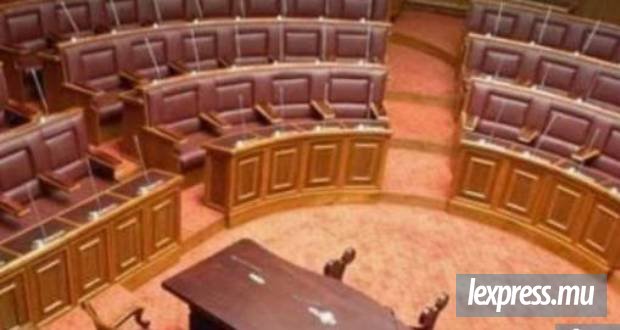
In other words, all the conditions for deep-rooted social discontent including the gestation period of five years already exist at the very beginning of your term of government. The prospects are not all gloomy. This Parliament is very different since 40% of members are new and 15.72% are female. Given the chance, new and radically different thinking in the Assembly should combine to keep your governance focused on sound social issues that affect the masses. The key to enhancing your re-election prospects lies in engineering many small changes in social policy.
Transparency in public life is a primary voter consideration. It is difficult to understand why a candidate will spend over Rs 150,000 upfront and put his/her career on hold for five years in an attempt to secure a job that pays but a fraction of that amount annually.
It is impossible to understand a government that presides over a regime that pays a pseudo governmental appointee Rs 300,000 per month (chief Executive of the ICAC) when the annual remuneration of ten well-paid teachers is less than this amount.
A sound initiative for your government is to put details of governmental expenditure into the public domain; this ought to include the expenditure of government departments and the remuneration (salaries, expenses, and other perks) of ministers, representatives, and top civil servants.
<B>Black economy of private tuition</B>
Education affects the current and forthcoming generations (the voters at the next election) of all social classes. At present, the so-called free education system up to age 18 has created deep divisions (elitism) in society and the black economy of private tuition that promotes tax evasion on a grand scale. That the erstwhile respected Education minister failed to get re-elected provides some evidence of the discontent with the contemporary situation.
Create a national watchdog body and promote local parent-teachers associations to oversee (measure and monitor) the delivery of the scholastic syllabuses across all establishments. Relate Government funding to schools? abilities to fulfil their central function of teaching and there should be an ultimate penalty that persistently failing and poor schools either have their managers/leaders removed or are simply closed. Tackling the black economy of the private tuition sector is an urgent matter for internal audit.
The current education model cannot cope with current domestic demand and there is little room for cost-effective expansion. The UK?s Open University is a good model for promoting life-long learning. Currently, some 50,000 employers sponsor the student population of over 200,000 on long-term part-time or short-term full-time training. This model ensures that education and training is not a self-fulfilling pursuit but that it is by and large self-financing, geared towards the needs of the economy and its output, and delivered very effectively via correspondence, the Internet, television, radio, and short residential programmes.
In a Republic, naming relics such as Royal or Queen Elizabeth College are distinctly out of place especially when such name associations and admission to such institutions create a two-track system in terms of access to employment and further education.
Anachronisms such as unconditional laureate awards for studies overseas are also out of place and inequitable especially since there exist several domestic universities.
The ?in one sitting? requirement is out of step with the accreditation of modern qualifications. Practically all modern examinations across the world now include some element of continuous assessment, accreditation of prior achievement, and allow re-takes of some papers.
The International Baccalaureate examinations, which are universally accepted, represent a sound and modern alternative to the current model for SC and HSC examinations conducted by Cambridge University; this model is not only out of date but has also been abandoned in the UK, the home of the examination syndicate.
Education is not a mechanism to which its beneficiaries voluntarily submit for punishment and ransom, and it is certainly not a tool at the disposal of its providers to incarcerate its recipients into pigeon holes for life.
Transportation affects the very foundation of the economics of the country. Its associated costs are borne by every citizen, directly (the costs of routine journeys) or indirectly (the incremental element on the price of goods and services). Its primary drivers are the price of imported fuel and the provision of the road network to accommodate the movement of vehicles. No country that relies on imported fuel can control its prices and there is a limit to the provision and maintenance of the road network. However, given the political will, several measures that minimize the costs of transportation are within easy reach and would reduce its impact on daily life.
<B>Uniform relocation</B>
One of the reasons why the capital faces congestion daily is that it hosts most of the critical economic functions and most governmental departments. In the long term, a uniform relocation of some government departments across the country will remove the need to converge on the capital and provide better access to both services and opportunities that exist. In the short term, the existing network of local post offices can provide access to government services; this will remove the need for journeys into the capital.
At present, there is no mechanism for scrapping or promoting the scrapping of vehicles beyond a certain age. Therefore, year after year all new vehicle registrations are cumulative. Older vehicles are less fuel efficient but they contribute as much to congestion as newer vehicles. Measures to reduce the number of vehicles on the roads are required; such measures may include the scrapping of vehicles beyond a certain age and higher levies on new registrations.
Road rationing in any form, including congestion pricing and fast lanes for multi occupancy, tend to be ineffective in the long run as the pain threshold inflicted by pricing simply increases and drivers pay up voluntarily.
A more rational strategy for reducing the number of private cars is the two-fold approach of promoting a comfortable, reliable, and cost-effective public transportation system and flexible working and schooling arrangements to redistribute the peaks in demand directly associated with the ubiquitous 9 am start of schools and offices.
The cost of transport affects the disposable income, and thus the ?feel-good? factor, of the electorate directly.
Energy provision is at the heart of the prospects that the country has for economic growth. Current energy consumption is 92.98% of capacity and 90.8% of existing capacity relies on fossil fuel. In other words, the potential for growth is restricted and cost of growth and current consumption are highly susceptible to world fuel prices. Reduction in domestic demand arising from the promotion of life style changes (such as not leaving equipment on standby, switching off unnecessary lighting, air conditioning, advertising boards, street lighting etc.) will increase the current spare capacity and decrease the exposure to volatile international prices.
Increasing the capacity for generating hydro electricity from 9.2% of capacity will also reduce the high dependence on imported fossil fuel and its fluctuating process. It is only a matter of time before fossil fuel is rationed internationally and finally runs out.
The benefits of many small enhancements not only exceed those of a few large-scale and radical changes but also benefit the electorate more evenly. This must be your cost-effective mandate for the next election: the campaign starts now. It is the perception and not the actual measure of fair play that matters.
<B>Ajay ASKOOLUM</B>
Publicité
Publicité
Les plus récents