Publicité
Celebrating Women?s Day: a time to listen
Par

Partager cet article
Celebrating Women?s Day: a time to listen

International Women?s Day will be celebrated around the world tomorrow. My local MP, Jo Swinson of the Liberal Party recently urged PM Tony Blair to do more to tackle the problem of violence against women (Kirkintilloch Herald, 15 Feb 06): She said: ?Given the 2001 British Crime Survey that 45 percent of women have been victims of domestic violence, sexual assault or stalking, this issue must be pushed into the political spotlight? The problem is a lack of leadership and cooperation of efforts to end violence against women.?
Is this the problem? Do we listen to the voice of women? Many of them will speak this week but paying any heed will as usual be short-lived. The commitment is not forthcoming; if it is, it is usually lukewarm. Press reports of a symposium on the topic ?Non-violence: a way of life? held last month in Mauritius quote Shakuntala Hawoldar condemning the ?recrudescence of violence in our society?. ?Injustice is the root of all violence? added Paula Atchia, ex-headmistress of Northfields International School, as it relates to ?a life without goals, peer pressure and wrongly channelled education?. Everyone, including politicians, talks when given the opportunity; yet, the presence of violence remains deep-rooted.
Although domestic violence is under-reported, research shows that it kills two women each week; accounts for 16% of all violent crime; has more repeat victims than any other crime (on average 35 assaults before a victim calls the police); costs in excess of GBP23 billion a year. The Government has recently overhauled domestic violence legislation with the new Domestic Violence, Crime and Victims Act, which gives the courts and police new powers to tackle offenders while ensuring victims get support and protection.
Fear of losing financial support
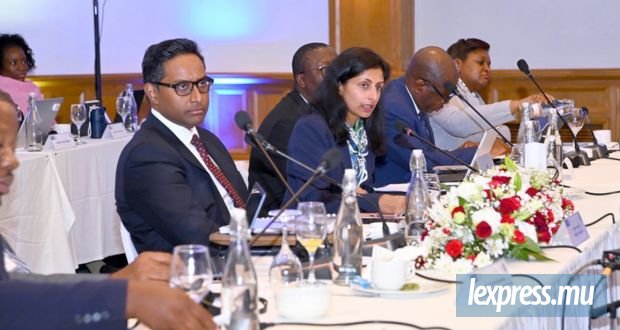
I am pleased that, in Mauritius, there are women standing up firmly to get a fair deal and movements including SOS Femmes and Media Watch have been campaigning against violence. Amnesty International (AI) and Right Now are demanding actions to improve the situation; yet there are so many obstacles on the way.
Country Reports on Human Rights Practices - 2003 (February 25, 2004 US Department of State) stated: ?Domestic violence against women, particularly spousal abuse, was a problem, according to the ministry of Women?s rights, attorneys and NGOs. The law criminalises domestic violence and provides greater powers to combat this problem. In 2001, SOS Femmes published a study on domestic violence where 84 percent of women surveyed reported being victims of physical abuse. Alcohol or drugs was a contributing factor in 70 per cent of cases. Nevertheless, many victims chose not to prosecute or report their attacker because of cultural pressures.?
Many women remain in abusive situations for fear of losing financial support. A magistrate can order a spouse to pay child support but some spouses would even stop working to avoid payment. On 25 May 2004, Mauritius amended its Domestic Violence Act to broaden its scope. The major change was to expand the definition of domestic violence to include acts by any member of the household. Other changes included protection orders; increased penalties on the perpetrator; court orders for counselling sessions for perpetuators/victims of domestic violence; and court orders to probation officers to report on the compliance of orders. What have Mauritian women achieved from that amendment? The battle is far from over. From what we read daily in our newspapers, women are raped, burnt, poisoned, murdered and buried by family members every other day.
Even here in UK, a lot still has to be done. AI has declared that: ?? a national strategy on all forms of violence against women is critical to making real progress on this issue. The government must commit resources to a strategy that properly addresses prevention; education; protection of women and their families; provision of appropriate services for all women, including black minority women, and groups of particularly vulnerable women (disabled women, women subject to immigration control); punishment and rehabilitation of offenders; access to justice and reparation for victims and survivors.? Across the globe, AI members will call on governments to abolish laws that discriminate against women and establish laws that provide protection and equality for women.
Now let?s see a few examples of what happens elsewhere:
? The Rising Nepal (17 Feb 06) ?Violence Against Women? Gitanjali Pradhananga writes: ?If there is any widespread yet most tolerated violation of human rights, it is domestic violence against women. It is widespread because it occurs in all countries and transcends social, economic, religious and cultural groups. It is tolerated because an act that otherwise would be punished, if directed at anybody else, goes unchallenged when a husband exercises it on his wife.?
? Fiji Time (16 Feb 06): ?The Fiji Women?s Crisis Centre?s Stop Rape campaign on Valentine?s Day was a plea to men to treat women with respect and love and stop committing acts of sexual violence.?
? Manila Standard Today (13 Feb 06) : ?Violence against women and their children?: Violence includes economic abuse by withdrawing financial support or preventing a woman from engaging in any legitimate occupation or activity to make her financially dependent on the husband or partner who is the offender.
Uphill struggle for equal treatment
? The Manitoban Newspaper Website (Feb 17 06) reported on a million-dollar study at the University of Manitoba by Dr. Jane Ursel. It involves the interviews of 200 abused women from nine cities across Manitoba, Saskatchewan and Alberta. ?We want to know the factors that assist women in escaping violence and the factors of hindrance to change programs and policies to assist women,? said Ursel. In 2002, some 34,000 victims of spousal abuse were reported.
? In Hindustan Times.com (16 Feb 06), Shalini Narang reported on a one-day symposium at the University of San Francisco titled ?Ending Domestic Violence and Human Trafficking in the 21st Century?. Its 450 participants included business leaders, health care providers, educators, advocates, faith leaders and policy makers. The leaders reiterated the need for greater political will, stricter laws and enforcements, increased corporate and societal responsibility and immediate holistic and collaborative actions at local, national and international levels.
Whatever be their outcome, women will still wonder why they face an uphill struggle for equal treatment at home or at work. Whether men or women are heads of state, it seems women will continue to experience hard times unless proper character building and respect through the application of human values are inculcated right from the beginning.
This is the area we must all work towards if we wish to see any change in our behaviour towards our women. Fortunately, there are people in Mauritius already labouring with love to address the deep-rooted issue of violence. Let?s join together and give them a helping hand in this all-important task. Stop the talk and get down to the real business of inculcating the principles of love, understanding and tolerance towards one another from this day onwards. This would be a better way to celebrate this special occasion.
Dr David B.LINGIAH Health and counselling psychologist
Publicité
Publicité
Les plus récents