Publicité
Cancun revisited : the ?Soap Box? opera
Par

Partager cet article
Cancun revisited : the ?Soap Box? opera

A month after Minister Derbez of Mexico, Chairman of the WTO Fifth Ministerial Conference, brought down the gavel in the early afternoon of September 14, 2003, leaving many in a state of shock, a lot has been written on the reasons for the failure to reach an agreement or on the possible impact of such a failure. Many have directly or indirectly tried to put the blame on developing countries for their inexperience or lack of flexibility. Others have seen in these events democracy at work at long last in an international organization: the law of numbers does matter. Far from these simplistic and lyrical views, respectively, I offer you (let us not be afraid of words) a more cynical perspective of things. It could prove to be healthy in these days of doubts and self-affliction.
The Prequel
An analysis of the events leading to the previous Ministerial Meetings, the conduct of the meetings proper and their outcome, lends credibility to a scenario of manipulation of the whole process by the major trading nations. Issues of interest to them (liberalization of trade on industrial goods, trade in services, environment, ?Singapore Issues?, etc) manage to remain on top of the agenda of the WTO while issues closer to the heart for the larger constituency of the WTO (agriculture, Special and Differential Treatment, ?development issues?, etc) register minimal progress. As says rightly The Economist, in its September 20-26, 2003 issue, ?Its predecessor, the old GATT system (which was folded into the WTO in 1995), was run by rich countries. Poor countries had little power??
But how can this pre-WTO scenario persist in the new democratic set-up?
Precisely because the rich countries put up a show to confuse the other players who are entangled in secondary or non-issues while they are coldly pursuing their own objectives.
This is not as far-fetched as it might appear. First, they benefit from the ?cooperation? of the WTO Secretariat and other appointed Chairmen and Facilitators all too eager to arrive at some agreement and who all apply the sacrosanct principle that no agreement can be reached if you do not have the ?majors? on your side.
Second, they capitalize on the side-plots (?Green Room? process, bilateral ?arm-twisting?, NGOs? demonstrations, and the like) to distract participants from the main story line. Third, the insufficient exposure of many actors in this complex plot (The Economist speaks about their ?delusion and incompetence?) does make the life of the true actors much easier. So after all the rhetoric, the posturing, the sleepless nights, the drama, the real outcome behind the fine wording of the Ministerial Declarations or the failure to reach agreement does in fact reflect the ?bottom line? of the main players. Happy ending in each and every episode of the WTO saga!
Now let us take a quick look at the pre-Cancun episode.
In spite of its supposedly balanced wording, the Doha Development Agenda had delivered barely nothing in 22 months. Those who had believed in its promises (always the same!) were getting more and more excited and could potentially derail the process. In order not to lose control of the WTO script, the two main players, the USA and the EU, as usual came with initiatives in Geneva. The USA which had withheld consensus since December 2002 on the issue of ?TRIPS and Public Health? gave in only days before Cancun while the EU-US joint proposal on agriculture and the submissions of the two on non-agricultural products (NAMA) were fed into the system in Geneva.
Now with hindsight it seems that this piece of the scenario was not well written as the timing of the proposals was wrong: by the time the delegations reached Cancun, the impact of the decision of the USA on ?Trips and Public Health? had waned considerably while a strong coalition had been formed against the proposals on agriculture (the G-17 in Geneva to become G-21 in Cancun) and a wider alliance of developing countries was emerging against the NAMA proposals. Seeing the danger and resourceful as they are, they brought a new element to the script (so common in ?soaps? nowadays): out of the blue the ?Singapore Issues? became suddenly an important issue in Geneva days before Cancun, a wild card for the Cancun game!
The ?Soap Box? episode
As if the plot was not complicated enough, here come four African countries (Benin, Mali, Chad and Burkina Faso) with the Cotton Initiative, which found a place on the agenda of Cancun. If extras start writing the script the film industry is dead. That is why the US, the main scriptwriter and the one whose interests were directly targeted by the Cotton Initiative, reacted so wildly to the situation. In a meeting between Ambassador Zoellick, the main negotiator of the US, and the Trade Ministers of the African Union (chaired by Minister Cuttaree of Mauritius), the Trade Minister of Benin took the floor on behalf of the four countries to express his disappointment at the reception by the US of the Initiative. Although there was some rhetoric in his intervention (which won him the applause of his African colleagues), the reaction of Ambassador Zoellick was disproportionate: he qualified the intervention of the Minister as worthy of a ?speech on a soap box?!
To make things worse, the proposal of the chair on this issue in the revised Draft Ministerial Text had drowned completely the Cotton Initiative: according to The Economist, ?this hard-line stance had American fingerprints all over it?. I spare you the side-plot in which the proposal of the AU-ACP-LDC Alliance on the text on agriculture got a sentence added to the detriment of the Cotton initiative between the drafting room and the plenary !
But was such high drama justified on such an issue? Is the fate of the 25,000 American cotton farmers so important in the outcome of the Doha Round? Then, and that is the real question, what is the margin of manoeuvre of US Trade Negotiator on the rest of American agriculture. Probably very little and certainly well below the expectations of the G-21.
The other major scriptwriter, the EU, also had worries on agriculture. Although Commissioner Lamy gave signs that he could make some concessions on agriculture (on products of interest to developing countries), he did indicate his bottom line in a meeting with the ACP group: European farmers have to be kept in the countryside at all costs. As they would not be expected to simply breathe fresh air (not a sustainable scenario even in the worst ?soap?), the concessions to agricultural exporters can only be limited.
No wonder then that both the US and EU did everything to thwart the sub-plot instigated by the G-17 group on agriculture. But the arm-twisting or other techniques resulted in only one defection. On the contrary the group grew to 22, maintained its solidarity and built bridges with other groups of developing countries (especially the AU-ACP-LDC alliance). So, this scenario which was developing was pointing clearly to a showdown on agriculture, with the ?Cotton Initiative? providing the emotional touch. A breakdown of the Cancun meeting on this issue would have certainly not been a happy ending for this WTO episode as the sympathy of the viewers would have certainly gone to the extras instead of the main characters ? a definite blow to the star system of the WTO! Fortunately the ?Singapore Issues? wild card was available for a useful twist in the scenario. It provided the means to end this episode of, the WTO Saga (the most difficult part in the scenario of a soap opera).
Let us just reflect a moment on this subject. Here is an issue on which the positions of the constituency of WTO were ?most polarized? in Geneva, in the own words of the Chairman of its General Council, and on which there must be ?explicit consensus? for negotiations to start. In Cancun a clear majority of Members pronounced themselves against starting negotiations on any of the Singapore Issues. How is it that in the script presented to all the actors (the revised Draft Ministerial Text) there was a proposal to start negotiations on two of the Singapore Issues and an ambiguous language on the other two? Was it reasonable to insist for the majority of actors, who were already unhappy with the rest of the scenario, to play the most contentious part?
It was a disguised way of putting an end to the episode. But the way it was done ensured a Hollywood ending: the good and reasonable (the two main characters) did everything to save the world (trade system) by making the necessary sacrifices (the EU was seemingly prepared at one stage to accept that negotiations proceed on only one Singapore Issue ? Trade Facilitation) while the bad and stupid wrecked the whole enterprise by being inflexible. Of course no one noticed the ugly which in the heat of debate excited the extras to harden their position (Korea insisted for negotiations in all four Singapore Issues when some developing countries had already started to give in one or two issues: we must not forget that in a side plot, the character who committed ?hara-kiri? during the anti-WTO demonstrations in Cancun was a Korean farmer).
This unusual ending of the WTO serial is still sending shock waves all over the place. The main character (Ambassador Zoellick) has declared that he was not happy with the scenario of the last episode and he might not appear in future episodes. Anyway he is taken up in other projects until 2005 he said. As for the supporting actor (Commissioner Lamy) he was not happy with the setting as he found it too ?medieval?. There are talks that the serial might be stopped (people are openly talking about the demise of the WTO) and quite surprisingly everyone (WTO Director-General, Supachai Panitchpakdi, included) seems to be concerned by the fact that the extras might lose their jobs (read: ?The losers are the poor?) as if the fate of extras ever mattered in the film industry!
Be re-assured. The script for next episode of the WTO saga will start to be written in Geneva as from this month. The location for shooting the next opus has already been identified: Hong Kong. Expect some karate sequences (already China is challenging Hong Kong for the venue) and probably a happy ending. From a latest survey that is what viewers want. The Cancun ?Soap Box? opera is behind us. Awaiting eagerly the next episode.
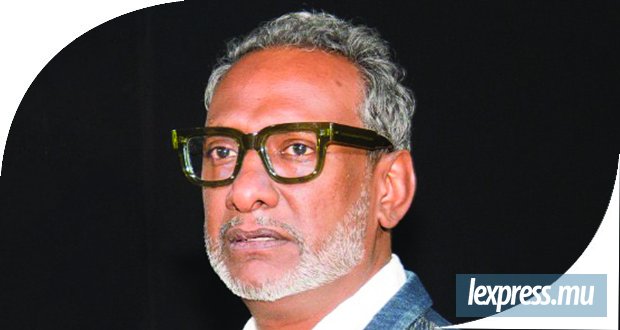
Mahmood Cheeroo Secretary-General, CCI
Publicité
Publicité
Les plus récents