Publicité
The attorney general v/s conventional wisdom
Par

Partager cet article
The attorney general v/s conventional wisdom

by Deepa BHOOKHUN
«The strength of the Constitution lies entirely in the determination of each citizen to defend it. Only if every single citizen feels duty bound to do his share in this defence are the constitutional rights secure,» said Albert Einstein. If Einstein is to be believed, then our constitutional rights might not be so secure. Or maybe they are.
But the perception, in any case, is that Mauritians are generally not aware of their rights; worse still, some don?t know what a Constitution is, what it stands for and what the laws say. Laws are regarded ? rightly or wrongly ? as yet another infraction to liberty.
On the other hand, the perception as regards redress is more than ever one of the blame diminishing as the guilt increases. As in, it is criminal to steal a purse, daring to steal a fortune and a mark of greatness to steal a crown. Which gave rise to the «two-tier justice» theory. So it was this growing perception that justice didn?t serve the rich and the poor alike that led the new government to put so much emphasis on reforming the judiciary. If people can feel that society is slowly becoming a more just and fairer place to live in, then surely, the government would score a great many points.
If the laws of the country could be seen in a more positive light than what the disenchanted Anatole France saw in them, leading him to say that «the law, in its majestic equality, forbids the rich as well as the poor to sleep under bridges, to beg in the streets and to steal bread,» (except that, in Mauritius, the law turns a blind eye to begging in the streets), then surely a great battle would have been won in the war against inequality?
Equate a court of law to a court of justice
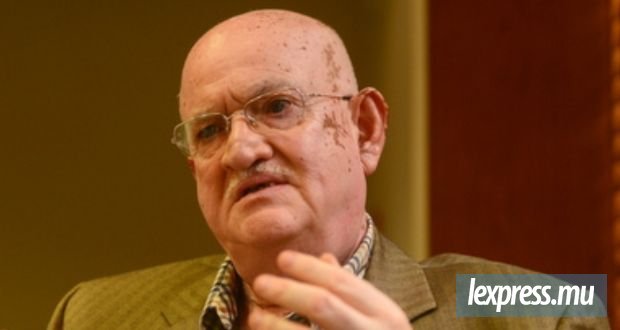
And government even managed to find the right man to lead this crusade against the judiciary. Attorney general Rama Valayden became the Moses, who would part the sea of divide to seal ? and heal ? it better. He took up office, started arranging meetings with every imaginable stakeholder in the sector and won himself the title of most hard-working minister. «We will apply the recommendations made by the Mackay Commission,» the minister has said over and over again. And recently, he made this promise to the nation: «In two years? time, you will not recognise our courts of law. They will have changed so much for the better».
And, to be fair, things are changing or at least there seems to be a tangible will of the government to reform the justice system so that it is perceived, at any rate, to be closer and more accessible to the people. The new bible of the judiciary ? the Mackay Report ? was submitted in 1997 and a large number of the recommendations have already been applied ? and have helped to render considerably easier and better the practice of law, everyone is unanimous to say. So it looks like things are going well for the minister; goodwill and support from his government, a large number of practising attorneys supporting his actions and? the silence of the judiciary as well as that of the Director of Public Prosecutions (DPP) office?
Attorney general Valayden seems to equate a court of law to a court of justice. And rightly so. But we are familiar with the age-old disagreement on this matter. Somebody once said it takes a long time to learn that a courtroom is the last place in the world for learning truth. US Supreme Court Justice Oliver Wendell reprimanded a lawyer once and told him: «This is a court of law, young man, not a court of justice!» So where does that leave us? With an attorney general who firmly believes in justice and a silent judiciary whose role is to decide on a matter of law, the outcome of litigation. «Laws should be constructed so as to leave as little as possible to the decision of those who judge?» said Aristotle. Someone else, probably a lawyer, said: ?Wise men argue cases, fools decide them.? We won?t go that far; the point being that there is a definite rift between those who write the laws, those who vote them, those who argue against them and those who interpret them. As well as those who want to reform. They are simply not on the same wavelength. Not only that but there seems to be trouble brewing even from within the judiciary. Indeed there does not seem to be much uniformity in the way those who administer the different tribunals think? and act.
When a magistrate grants bail to a suspect (Hurnam), the DPP objects and appeals (another procedure that the Mackay Report urges to abolish) against the decision and the Supreme Court severely admonishes the magistrate for having fallen into error in granting the bail request. When the accused appeals against the Supreme Court judgment to the Privy Council this time, the Law Lords congratulate the magistrate for coming to the right conclusion through the right reasoning and, in turn, admonish the Supreme Court.
This very recent judgment of the Privy Council is pregnant with symbolism about what is wrong with our courts and how they clash with government policy. Even though prime minister Ramgoolam has been silent about the judgment, the government programme says in no uncertain terms that they will «review the procedures and laws relating to bail to ensure a better protection of the constitutional rights of suspects». In other words, they are not happy with the way things are being done at the moment. The Law Lords agree. Except that they find nothing wrong with our laws and they point the finger at our judges. They say our Supreme Court is still deciding bail cases according to the Bail Act of 1989. That would have been fine, had there not been another Bail Act voted and promulgated in 1999, repealing the former. Former Attorney general Razack Peeroo, the father of the Bail Act 1999, has always affirmed that the spirit behind the legislation was that detention should be the exception and that a suspect remaining at large should be the rule.
Our courts somehow always seemed to miss the subtlety. Or they choose to. The Privy Council set matters straight. They said outright that the Mauritian courts did not give enough consideration to the fundamental principle of the right to liberty of an individual. A right guaranteed by the Constitution and reflected in the Bail Act 1999. How do we bridge this gap? More importantly, how do we bridge a gap if one of the sides doesn?t want it bridged? This is Valayden?s challenge. Will he succeed? The bets are that he won?t beat the system though he seems confident enough.
Definitely a believer in justice
The Attorney general is definitely a believer in justice. So much so, that the layperson is finding it more and more difficult to relate to the popular politician. When Valayden says remission is to be restored to all prisoners alike, so called protectors of children go public to cry out against the «scandalous» proposal. When Valayden digs up an old dossier prepared long ago by the penal institutions that recommends the complete reviewing of the sentencing policy, prosecutors are unhappy because they think their job is to send the bad people to Beau-Bassin.
Mauritians tend to selectively adhere to this concept of fundamental rights. They seem comfortable enough with protecting the rights of the victim, but the minute someone mentions the fact that a suspect is innocent until proven guilty and hence has the same rights as the victim, there is mayhem. Therein lies the tragedy. It is said, isn?t it that no written law has been more binding than unwritten custom supported by popular opinion? This may be the biggest obstacle Valayden will have to reckon with?
 |
What the judges say?</B>
«The whole set up has to be changed,» says a former Supreme Court judge. Most judges agree; it is high time for an in-depth reform of the judiciary. ?We can either make a pretence of reforming, by implementing a few measures of the Mackay report or we do it the right way and get out of our comfort zones and stop being so conventional in the way we administer justice,? adds a practising judge.
Another judge adds that the people need to be able to trust the institution that has been created to protect and uphold his rights. ?But instead of a justice system that serves the people, we have a system that works only for the bench and the bar. The language is not one that the citizen understands; the procedures are alien to him. He is getting more and more estranged from an institution that should protect him,? is another final ? and harsh ? judgment.
Is such an in-depth reform feasible? «We have to stop being confirmed pessimists,» replies a judge. In other countries, it is the ministry of Justice that is responsible for reforms in the judiciary. «But here, we are so busy brandishing our independence every time someone mentions the word reform, that the Attorney general?s office can only give us the logistics,» deplores a retired judge.
So, do we have the will to change? «When we get rid of our obsession for amateurism, we may just do it,» says a former judge. Why the obsession? «Do you know how many enthusiastic young people I have seen, who want to change the world when they first join? Until, five years later, they are swallowed by the system and they become adherents to conventionalism. It?s always the same story, they have a family, and they need a secure job and so on. What about the country?» So do they believe that the promised reforms will actually take place? «We have no choice; there is no place for a Victorian justice system anymore,? says one of them. « The minister seems keen enough. I don?t know how far he will get it right,» adds another. «I don?t think so, there will be too much resistance,» adds yet another one. «When professionals stop being amateurs, we might have a chance,» concludes a former judge.
Publicité
Publicité
Les plus récents